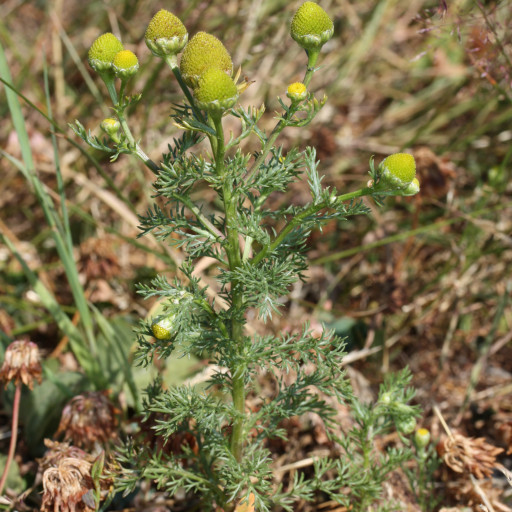
Plant Overview
Known as the "Pineapple Weed" or "Wild Chamomile," Matricaria discoidea is a humble champion of the rugged outdoors. Unlike its showy chamomile cousins, this plant lacks bright white petals, appearing instead as small, greenish-yellow cones scattered along path edges. It is famous for its surprising tropical aroma, which releases a sweet scent of pineapple when crushed underfoot or between fingers.
🔍 How to Identify
- 🌼 The "Flower" Heads: The plant produces small, cone-shaped flower heads that are greenish-yellow. Notably, they lack the white ray florets (petals) typical of most daisies, making them look like "naked" chamomile.
- 🌿 Feathery Foliage: The leaves are finely divided and feathery, resembling a miniature fern or a soft carrot top. They are bright green and grow in a dense, bushy habit close to the ground.
- 👃 The Scent Test: This is the most reliable identifier. If you crush the flower head or leaves, it emits a distinct, powerful fragrance of pineapple and sweet chamomile.
🏡 In Your Garden
- 🌱 The Sidewalk Survivor: This plant thrives in "high-stress" environments where others fail, such as compacted gravel, driveway cracks, and heavily trodden paths. It actually prefers poor, hard-packed soil because it faces less competition from taller grasses there.
- ☀️ Sun-Loving Pioneer: As a pioneer species, it is one of the first to colonize disturbed ground. In a garden setting, it rarely needs watering or fertilizer, but it can spread quickly via seed if not managed, though its low profile makes it an unobtrusive "weed."
⚠️ Safety & Toxicity
- ✅ Safe for Most: Pineapple Weed is generally considered non-toxic and is frequently used by foragers to make herbal teas or as a garnish in salads.
- 🚗 Location Warning: Because this plant loves roadsides and footpaths, the primary danger is environmental. Always avoid harvesting plants near busy roads or areas treated with chemical pesticides, as they can absorb heavy metals and toxins from runoff.
- 🤧 Allergy Alert: Those with severe allergies to the Asteraceae (Daisy/Ragweed) family should use caution, as it may cause a mild allergic reaction or skin irritation in sensitive individuals.
✨ Fun Fact
Pineapple Weed was used for centuries by various Indigenous North American tribes as a natural insect repellent. They would dry the plant and hang it in bundles or rub the crushed leaves on the skin to keep flies and mosquitoes at bay during the summer months.

Detailed Care Instructions
| Humidity | Dry |
| Lighting | Part Sun |
| Toxicity | Poisonous |
| Difficulty | Easy |
| Hibernation | Cold Period |
| Hardiness Zones | 5 - 9 |
To grow Matricaria discoidea, also known as pineappleweed or wild chamomile, follow these steps:
- Find the right location: Matricaria discoidea prefers full sun or light shade and well-drained soil. Choose a spot in your garden or a container with these growing conditions.
- Prepare the soil: Before planting, prepare the soil by removing any weeds or grass. Loosen the soil to a depth of around 6 inches to allow for good root development.
- Sow the seeds: Matricaria discoidea is best grown from seeds. Scatter the seeds on the prepared soil, ensuring they are spaced evenly. Gently press the seeds into the soil, but avoid burying them too deeply.
- Water regularly: Keep the soil moist but not waterlogged. Water the seeds gently, using a watering can or a gentle spray from a hose. Ensure that the soil stays moist until the plants are established.
- Thin the seedlings: Once the seedlings have reached a few inches in height, thin them out to provide enough space for each plant to grow. Ideally, they should be spaced about 6-8 inches apart.
- Mulch: Apply a layer of organic mulch, such as straw or wood chips, around the base of the plants. Mulching helps retain moisture, suppresses weed growth, and keeps the soil temperature more stable.
- Fertilize: Matricaria discoidea does not typically require heavy fertilization. However, you can apply a balanced, slow-release fertilizer once or twice during the growing season to provide essential nutrients.
- Prune or harvest: To promote bushier growth, pinch back the tips of the plants when they reach a height of 6-8 inches. You can also harvest the flowers and leaves for herbal or culinary use throughout the growing season.
- Monitor pests and diseases: Matricaria discoidea is generally resilient to pests and diseases. However, keep an eye out for aphids, caterpillars, or fungal diseases. If necessary, treat accordingly using organic or chemical solutions.
- Winter care: In colder climates, Matricaria discoidea may die back in winter. Mulching around the plants can help protect the roots from freezing temperatures. If growing in containers, move them indoors to a cool, bright location.
By following these steps, you can successfully grow Matricaria discoidea and enjoy its unique pineapple-like fragrance and attractive flowers.

Place in a window with dappled sun or a spot in the middle of a room. Or directly in a window facing west or east.

This plant prefers moist but well-drained soil. Water it deeply and thoroughly when the soil begins to dry out, but do not allow the soil to remain soggy or waterlogged. Avoid getting water on the foliage to prevent disease. It is best to water in the morning so that any excess moisture can evaporate during the day. In dry or hot weather, the plant may require more frequent watering. Be sure to adjust the watering schedule during periods of rainfall.
To fertilize this plant, you should use a balanced liquid fertilizer during the growing season, following the package instructions for the recommended dosage. Avoid fertilizing during periods of drought or extreme heat, as this can cause damage to the plant. Also, be sure to water the plant thoroughly before and after fertilizing to prevent burning of the roots. If the plant is in a container, be sure to fertilize more frequently as nutrients can be leached out by watering.
Matricaria Discoidea is a plant that requires well-draining soil that is rich in organic matter. The ideal soil pH for this plant ranges from 6.0 to 7.5, and it prefers a soil that is moist but not waterlogged. It is important to avoid using heavy clay soil, as it can become easily compacted and lead to problems with drainage. Instead, a light, sandy loam or loamy soil that is high in humus is recommended. Adding compost or aged manure to the soil can help to increase its fertility and improve its structure. Additionally, adding perlite or vermiculite to the soil can help improve drainage and prevent waterlogging. Overall, the key to successful growth of Matricaria Discoidea is to provide it with a well-draining, nutrient-rich soil that is kept moist but not waterlogged.
To propagate this plant, select a healthy and mature stem from the mother plant. Use a sharp and sterilized pair of scissors to cut the stem at a 45-degree angle. Remove the bottom leaves from the stem, leaving only a few at the top. Dip the cut end of the stem in rooting hormone powder and gently tap off any excess. Prepare a pot with well-draining potting soil and create a hole for the stem. Place the stem in the hole and cover it with soil. Water the soil gently to keep it moist but not waterlogged. Place the pot in indirect sunlight and keep it warm and humid by covering it with a plastic bag or dome. Check the soil moisture regularly and water as needed. In a few weeks, the stem should start to root and new growth should appear. Once the new plant is established, it can be transplanted into a larger pot or directly into the garden.
Common pests of the pineapple weed include Spider mites, aphids. Make a habit of checking your pineapple weed frequently for pests so that any infestations can be caught and managed early.








