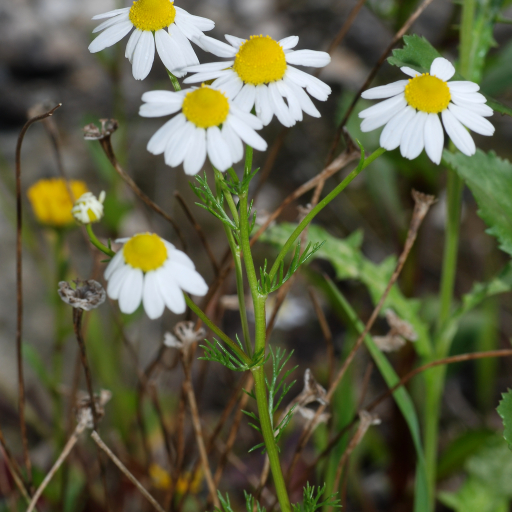
Plant Overview
Often called the "Plant Physician," German Chamomile is more than just a sleepy tea ingredient. Originating from Europe and Western Asia, this cheerful wildflower is famous for its ability to improve the health of neighboring plants in the garden. Its sweet, apple-like fragrance and delicate appearance have made it a staple in herbal folklore and cottage gardens for centuries.
🔍 How to Identify
- 🌼 The Flowers: Features classic daisy-like blossoms with white petals surrounding a bright yellow, cone-shaped center.
- 🌿 The Foliage: The leaves are light green, thin, and feathery, resembling the texture of dill or fennel.
- 👃 The Scent: When crushed, both the flowers and the leaves release a distinct, soothing aroma that smells remarkably like crisp green apples.
🏡 In Your Garden
- 🌱 The Self-Starter: This plant is a prolific self-sower. Once you plant it, it will likely return year after year by dropping its own seeds, creating a natural, informal meadow look.
- 🪴 Soil Nuance: Unlike many fussy garden flowers, German Chamomile prefers "lean" soil. If the soil is too rich or over-fertilized, the plant will produce plenty of leaves but very few of those iconic aromatic flowers.
⚠️ Safety & Toxicity
- 🐾 Pet Sensitivity: While often used in small medicinal doses for pets, the plant contains volatile oils (like bisabolol) that can be toxic to cats, dogs, and horses if eaten in large quantities.
- 🤧 Allergy Warning: Because it is a member of the Daisy family (Asteraceae), individuals who are allergic to ragweed or marigolds may experience skin irritation or hay fever symptoms when handling it.
✨ Fun Fact
- 🍏 The Ground Apple: The name "Chamomile" is derived from the Greek words chamos (ground) and milos (apple), specifically because of its low-growing habit and its unmistakable fruity scent.

Detailed Care Instructions
| Color | White Petals With Yellow Center |
| Soil Ph | 5.6 To 7.5 |
| Invasive | Weed |
| Lighting | Full Sun |
| Soil Type | Not Too Rich, Organic Soil |
| Bloom Time | Spring And Summer |
| Plant Type | German Chamomile Is An Annual Flower |
| Mature Size | 8 To 24 Inches |
| Native Area | Central And Southern Europe |
| Sun Exposure | Full Sun |
| Hardiness Zones | 3 To 9 |
Here are some steps to help you grow Matricaria Recutita (chamomile) plant:
- Choose the right location: Chamomile prefers full sun but can tolerate partial shade. Select a well-drained spot with fertile soil.
- Prepare the soil: Loosen the soil using a garden fork or tiller. Remove any rocks, weeds, or debris. Chamomile prefers slightly acidic to neutral soil (pH around 5.6-7.5). You can add organic matter like compost to improve the soil's fertility and drainage.
- Planting seeds or seedlings: Chamomile can be grown from either seeds or seedlings. If starting from seeds, sow them directly into the soil in spring after the last frost. You can lightly rake the soil to cover the seeds with a thin layer or leave them exposed. If using seedlings, transplant them carefully into the prepared soil, ensuring they are at least 6 inches apart.
- Watering: Water the chamomile thoroughly after planting and keep the soil consistently moist during the germination period. Once established, chamomile is drought-tolerant and only needs watering when the top inch of soil feels dry.
- Pruning and harvesting: Chamomile plants will form small, daisy-like flowers. Regularly deadhead or prune off spent blooms to encourage more flower production. Harvest chamomile flowers when they are fully open but before they begin to wilt. You can pluck individual flowers or cut the entire stem.
- Pests and diseases: Chamomile plants are generally resistant to pests and diseases. However, keep an eye out for aphids, leafhoppers, or chamomile rust. If necessary, treat with organic insecticides or fungicides.
- Mulching and fertilizing: Apply a layer of organic mulch, such as straw or shredded leaves, around the chamomile plants to suppress weeds and conserve moisture. Chamomile doesn't require much fertilizer but can benefit from a balanced organic fertilizer once or twice during the growing season.
- Overwintering: Chamomile is an annual or short-lived perennial. In colder climates, it may die off in winter. Mulch the plants heavily in late fall to protect them from freezing temperatures. In milder regions, chamomile may remain evergreen with careful winter maintenance.
By following these steps, you should be able to grow healthy Matricaria Recutita plants and enjoy the aromatic and medicinal benefits of chamomile flowers.

Place in a bright room that is sun drenched almost all day. Or directly in a south-facing window.

1. Determine the soil moisture level: Before watering the plant, check the soil moisture level. Stick your finger into the soil to a depth of about 1-2 inches. If the soil feels dry, then it's time to water the plant.
2. Watering method: Matricaria recutita doesn't like to sit in water for too long, so it's best to water it with a gentle stream of water. You can use a watering can or hose with a gentle nozzle to water the plant.
3. Watering frequency: Matricaria recutita should be watered regularly, preferably once every other day. However, the frequency of watering should be adjusted based on the weather, soil, and the humidity level of the surrounding environment.
4. Watering duration: The duration of watering should be sufficient to provide the plant with enough water. Water the plant until water starts to drain out of the bottom of the pot. Ensure that the plant is watered thoroughly.
5. Watering conditions: Matricaria recutita doesn’t like to be over-watered, so make sure to water the plant only when it's needed. Inadequate watering can lead to the plant drying out, while over watering can cause the roots to rot.
6. Water temperature: Matricaria recutita should be watered with room temperature water. Water that is too hot or too cold can lead to temperature shock, which can damage the plant.
To fertilize this plant, use a balanced fertilizer with equal amounts of nitrogen, phosphorus, and potassium. Apply the fertilizer in early spring, just as new growth begins. Water the plant beforehand to ensure that the fertilizer is well-distributed throughout the soil. Mix the fertilizer with water according to the package directions and pour it over the soil. Avoid getting the fertilizer on the leaves or stems as this can burn the plant. Fertilize every 4-6 weeks during the growing season.
Matricaria Recutita is a perennial plant that prefers well-drained soil. The soil composition for this plant should have a slightly acidic to neutral pH. It should be rich in organic matter, with a good balance of nutrients. The plant thrives best in a fertile, loamy soil that is moist but not waterlogged. If the soil is too heavy, it may impede the drainage and cause root rot. It is best to mix the soil with perlite or vermiculite to improve drainage. A sandy soil that provides good drainage is also suitable for growing this plant. It is essential to avoid using heavy clay soils or those that are high in alkaline, as the plant may not grow well in such soils. Overall, the best soil for Matricaria Recutita is a well-drained and fertile soil that is rich in organic matter.
- Start by obtaining a mature plant. Look for one with healthy leaves and stems.
- Gently remove a stem or cutting from the plant. Choose a green, flexible stem about six inches long.
- Remove all the leaves from the bottom half of the stem. Make a clean cut just below the bottom node, where the leaves were removed.
- Dip the cut end of the stem into a rooting hormone. This will encourage the formation of new roots.
- Fill a small pot with soil and make a hole in the center. Insert the cutting into the hole and gently pack the soil around it.
- Water the cutting well, making sure the soil is evenly moist but not waterlogged.
- Place the pot in a bright, warm location with indirect sunlight. Keep the soil moist, but not waterlogged.
- After a few weeks, check for new growth. Once new leaves or shoots appear, the cutting has successfully rooted.
- Gradually increase the amount of sunlight the plant receives over the course of a few days, acclimating it to the brighter conditions.
- Once the plant is established, it can be transplanted into a larger container or planted outdoors in a suitable location.
Common pests of the scented mayweed include Spider mites, aphids. Make a habit of checking your scented mayweed frequently for pests so that any infestations can be caught and managed early.








