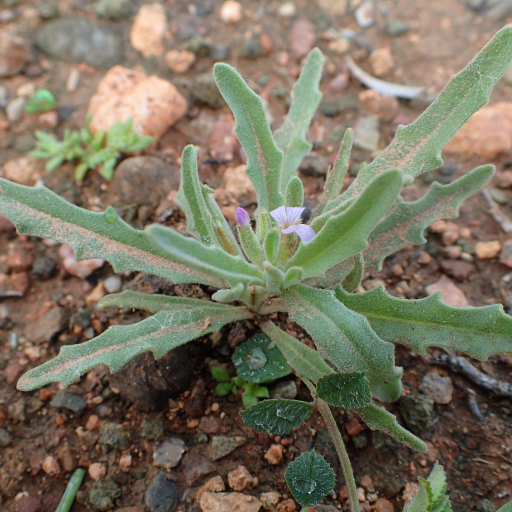
Plant Overview
Often called the "Small-flowered Stock," Matthiola parviflora is a delicate Mediterranean traveler that brings a touch of wild coastal beauty to arid landscapes. While it might look like a humble wildflower during the day, this plant is a sensory powerhouse, waiting for the sun to dip before releasing its sweet, spicy perfume. It is a master of survival, often found clinging to sandy dunes or rocky crevices where other plants might wither.
🔍 How to Identify
- 🌸 Petal Form: Small, four-petaled flowers typically ranging from a pale, dusty lilac to a deeper purple, often appearing in loose clusters.
- 🍃 Velvety Foliage: The leaves are narrow, grayish-green, and covered in fine, downy hairs that provide a soft texture and help the plant retain moisture.
- 🌱 Seed Pods: After blooming, it develops long, slender pods known as "siliques" that curve outward, giving the plant a spindly, architectural look in late summer.
🏡 In Your Garden
- 🏖️ The Sand Lover: True to its coastal origins, this plant hates "wet feet." It thrives in sandy, well-draining soil and is an excellent candidate for rock gardens or coastal xeriscaping where salt spray might be an issue.
- 🌙 Nocturnal Fragrance: Unlike many garden stars that show off for the sun, the Small-flowered Stock saves its energy for the evening. Its scent is specifically evolved to attract nocturnal moths, making it a perfect addition to a "Moon Garden."
⚠️ Safety & Toxicity
- 🐾 Safe for Pets: Matthiola parviflora is generally considered non-toxic to dogs, cats, and horses, making it a worry-free addition to a pet-friendly backyard.
- 👶 Low Risk: While not edible, it doesn't carry the high-alkaloid risks of some other garden flowers. However, it’s always best to discourage children from sampling the seed pods to avoid any minor stomach upset.
✨ Fun Fact
The genus Matthiola was named in honor of Pietro Andrea Mattioli, a 16th-century Italian physician and botanist. He was famous for his "Commentaries on Dioscorides," a massive botanical text that remained a primary reference for doctors and herbalists for over two centuries!

Detailed Care Instructions

Place in a bright room that is sun drenched almost all day. Or directly in a south-facing window.

1. Choose a watering can or hose that has a gentle spray setting. A strong stream of water can damage the delicate foliage of Matthiola Parviflora.
2. Determine the moisture level of the soil by sticking your finger approximately 2 inches into the soil. If it feels dry, it's time to water.
3. Slowly pour water onto the soil around the base of the plant. Avoid getting water on the leaves or flowers.
4. Water deeply enough to saturate the soil to a depth of at least 6 inches. If the top layer of soil is dry, make sure to water for a longer period of time to ensure the water reaches the roots.
5. Avoid overwatering, as this can lead to root rot. Only water when the soil is dry to the touch.
6. In dry weather conditions, water more frequently to ensure the plant stays hydrated.
7. Water in the early morning or in the evening when the sun is not as strong. This will prevent the water from evaporating too quickly and also prevent the leaves from burning.
8. Monitor the plant's growth and adjust watering frequency as needed. If the leaves start to droop or turn yellow, the plant may be receiving too much or too little water.
Matthiola Parviflora plant require a well-draining soil that is rich in organic matter. The soil should have a pH level of around 6.5 to 7.5. It is recommended to use a mixture of loam, peat moss, and sand to create a well-draining soil that will allow for proper root growth. It is also important to ensure that the soil is not too compact and has enough aeration to allow for oxygen to reach the roots. Additionally, adding fertilizer to the soil can improve plant growth and overall health. It is important to monitor soil moisture levels and ensure that the plant is not over or under-watered.








