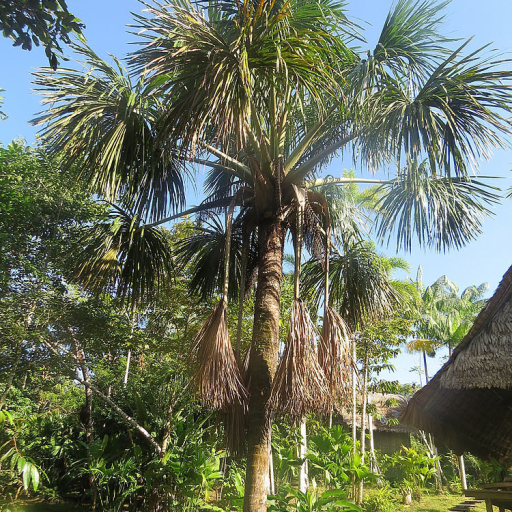
Plant Overview
Known across the Amazon as the "Tree of Life" (Árbol de la Vida), the Moriche Palm is more than just a plant—it is a vital ecosystem in itself. This towering giant thrives in swampy wetlands, where it provides food, shelter, and materials for countless species and human communities. In South American folklore, it is often seen as a symbol of abundance and fertility, standing tall as a sentinel of the tropical waterways.
🔍 How to Identify
- 🍃 Crown of Fans: It features massive, circular, fan-shaped leaves (fronds) that can grow up to 13 feet long, creating a distinctive "explosion" of green at the top of the trunk.
- 🍎 Scaly Fruit: The most recognizable feature is its fruit—oval-shaped drupes covered in shiny, reddish-brown scales that look remarkably like snakeskin or armor.
- 📏 Stately Trunk: The trunk is smooth, cylindrical, and straight as an arrow, often reaching heights of 115 feet, usually lacking the thorns found on other palm species.
🏡 Habitat & Care Context
- 💧 The Swamp King: This palm is "hydrophilic," meaning it loves water. In the wild, it forms massive colonies called aguajales in poorly drained or flooded soils; if you attempt to grow one, "wet feet" is a requirement, not a suggestion.
- ☀️ Sun Seeker: As a canopy giant, it demands full, unobstructed tropical sun from a young age and will fail to thrive in even moderate shade or temperate climates.
- 🌱 Root Sensitivity: Like many palms with deep-reaching roots, it resents being moved once established. It is best started from seed in its permanent, soggy location.
⚠️ Safety & Toxicity
- ✅ Safe & Nutritious: The Mauritia flexuosa is non-toxic and is actually a nutritional powerhouse. The orange pulp inside the fruit is a staple food source for many indigenous groups.
- 🐕 Pet Friendly: There are no known toxicities for cats, dogs, or horses, making it a safe (though very large) addition to tropical landscapes.
- 🦶 Physical Hazard: While the plant isn't poisonous, the heavy, armored fruits falling from a great height can be a physical hazard, and the discarded fronds are tough and fibrous.
✨ Fun Fact
The fruit of the Moriche Palm is a "superfood" of the jungle; it contains concentrations of Vitamin A (beta-carotene) that are five times higher than those found in carrots! The oil extracted from the fruit is also widely used in high-end skincare as a natural UV protectant.

Detailed Care Instructions
To grow Mauritia Flexuosa, also known as the Moriche palm or the Buriti palm, you can follow these steps:
- Climate and location: Mauritia Flexuosa is native to swampy areas of tropical South America. It requires a warm climate with temperatures consistently above 60°F (15°C) and high humidity. Ensure your growing area can provide these conditions.
- Soil: The plant thrives in moist, well-draining soil. It prefers slightly acidic soil with a pH of 5.5 to 6.5. You can amend the soil with peat moss or compost to improve its moisture-retaining capacity.
- Planting: Plant the seeds immediately after harvesting because they have a short viability period. Soak the seeds in warm water for 24 hours to enhance germination.
- Germination: Plant the seeds in pots or directly in the ground. Roughen the surface of the seed to aid germination, but do not damage the seed embryo. Plant them about 1 inch deep in the soil. Keep the soil evenly moist.
- Watering: Young plants require regular watering, but make sure not to overwater as it can lead to root rot. Once established, the mature palm can tolerate brief periods of drought.
- Light and shade: Mauritia Flexuosa prefers full sun. After the seedlings emerge, gradually increase their exposure to direct sunlight to avoid leaf burn.
- Fertilization: Apply a slow-release palm fertilizer according to the package instructions during the growing season to promote healthy growth. Avoid fertilizers high in nitrogen as they can cause weak or rapid growth.
- Pruning: Remove any dead or yellowing fronds to maintain the plant's health and appearance. However, avoid excessive pruning as it can stress the plant.
- Pest and disease control: Mauritia Flexuosa is relatively resistant to pests and diseases. However, you should regularly inspect the plant for any signs of disease or pest infestation. If necessary, treat the plant with appropriate organic or chemical controls.
- Patience: Growing a Mauritia Flexuosa plant requires patience as it can take several years for it to reach maturity. Be consistent in providing the necessary care and be patient for your plant to grow into its full splendor.
Remember to check local regulations before planting Mauritia Flexuosa, as it may be invasive in some regions.

Place in a window with dappled sun or a spot in the middle of a room. Or directly in a window facing west or east.

Mauritia Flexuosa is a type of plant that requires moist soil to grow. It is important to water it regularly to maintain the moisture in the soil. To water Mauritia Flexuosa, fill a watering can or hose with water and pour it over the soil until it is well-soaked. Make sure you apply water to the base of the plant and avoid getting the leaves wet. It is best to water in the early morning or late evening to avoid evaporation and to ensure the plant has enough time to absorb the water before the sun becomes too strong. It is important not to overwater the plant, as this can lead to root rot. Therefore, it is recommended to let the top inch of soil dry out between waterings to avoid waterlogged soil.
To fertilize this plant, it is recommended to use a balanced, slow-release fertilizer that is high in nitrogen, phosphorus, and potassium. The fertilizer should be applied every two to three months during the growing season, which typically occurs from spring to autumn. It is important to follow the instructions on the fertilizer packaging and not to over-fertilize, as this can damage the plant and lead to poor growth or even death. Additionally, it is best to apply the fertilizer to the soil around the plant rather than directly to the leaves or stem.
Mauritia Flexuosa is a plant that is native to South America. It requires a specific type of soil to thrive, and therefore, it is essential to choose the right soil type for this plant. The best soil to use for Mauritia Flexuosa is a mixture of sand, silt, and clay, with appropriate amounts of organic matter. The soil should be well-draining, with a pH level ranging from slightly acidic to slightly alkaline. The soil should also hold moisture well but should not be waterlogged. The organic matter in the soil will help to retain moisture and improve the texture of the soil. It's also essential to ensure that the soil is fertile and has an appropriate blend of minerals and nutrients to provide the plant with the perfect growing environment.
Mauritia Flexuosa is a type of plant that can be propagated through various methods. One way to propagate this plant is by using its seeds. To do this, collect the ripe seeds and clean them by removing any flesh or pulp. Afterwards, soak the seeds in water for 24 hours to help promote germination. Once the seeds have sprouted, transfer the seedlings to a pot or planting bed with moist soil.
Another way to propagate Mauritia Flexuosa is through division. This can be done by separating the plant into smaller sections with roots. Carefully dig up the plant and gently separate the roots and shoots into smaller sections. Transplant each section into a pot or planting bed with moist soil and water it well.
Lastly, you can propagate Mauritia Flexuosa through cuttings. This method involves taking a stem cutting from the plant, removing the lower leaves, and sticking the cutting into moist soil. Keep the soil moist and place the cutting in a warm, bright location. Over time, the cutting should develop roots and begin to grow into a new plant.








