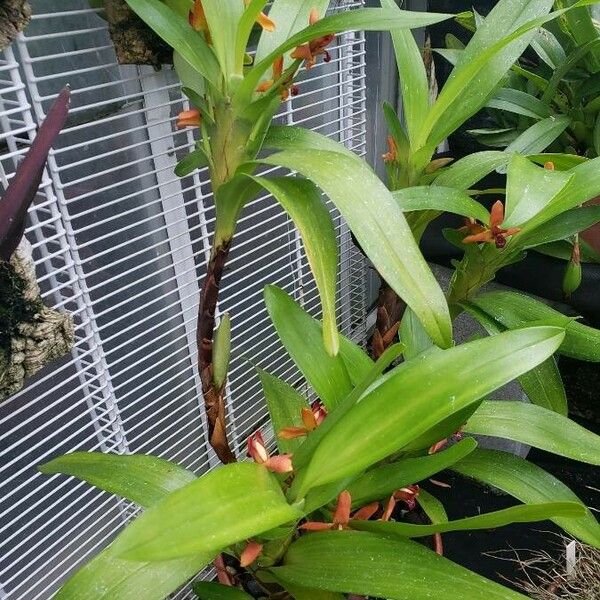
Plant Overview
Known as the Tall Maxillaria, this Central American orchid is a bit of a rebel in the orchid world. Unlike its cousins that grow in neat, tight clumps, Maxillaria elatior is a "scrambler" that loves to climb upward, making it look more like a leafy vine than a traditional flower. Found in the humid forests from Mexico down to Panama, it is prized by collectors for its waxy, sunset-colored blooms and sweet fragrance.
🔍 How to Identify
- 🧗 Growth Habit: Unlike most orchids, it features pseudobulbs that grow spaced out along a tall, upright-climbing rhizome, often requiring a stake or a totem for support.
- ⭐ Waxy Blooms: The flowers are star-shaped, thick, and fleshy, appearing in shades of golden yellow, deep orange, or reddish-brown.
- 🍃 Leathery Foliage: Each pseudobulb typically carries two long, strap-shaped leaves that feel tough and leathery to the touch, designed to hold moisture.
🏡 In Your Garden
- 🪵 Mounting vs. Potting: Because of its "walking" growth habit, this orchid thrives when mounted on a piece of cork bark or a cedar slab where its roots can breathe and its stem can climb.
- 💧 Humidity over Wetness: It craves high humidity and frequent misting but hates sitting in soggy soil. If you use a pot, ensure the medium is very chunky (like large fir bark) to prevent root rot.
- 🌤️ Light Nuance: It prefers bright, filtered light. If the leaves turn a very dark green, it’s likely not getting enough light to produce those famous fragrant flowers.
⚠️ Safety & Toxicity
- ✅ Status: Generally considered non-toxic.
- 🐾 Details: Like most members of the Orchidaceae family, Maxillaria elatior is not known to be poisonous to cats, dogs, or humans. However, its stiff leaves can be a choking hazard or cause mild stomach upset if chewed by curious pets.
✨ Fun Fact
The genus name Maxillaria is derived from the Latin word maxilla, meaning "jawbone." This refers to the way the base of the flower's lip and columns resemble the hinged jaw of an insect when viewed from the side!

Detailed Care Instructions

Place in a window with dappled sun or a spot in the middle of a room. Or directly in a window facing west or east.

Water-loving plants flourish in wet or sloppy soil and near ponds. The extensive root system enables these plants to absorb plenty of water. The surface of the soil should be kept moist at all times. Place your pot in a container filled with water to guarantee that plants get enough water. If the ground becomes dry, it is recommended that you water it well. Plants in smaller pots will need to be watered more frequently. Water the soil in which the plant is standing thoroughly using a watering can.








