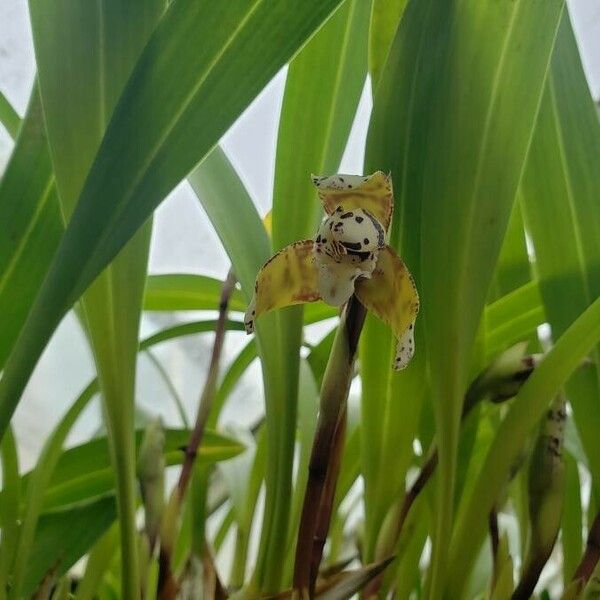
Plant Overview
Known as the Painted Maxillaria, this charming orchid is a vibrant treasure hailing from the cool, misty Atlantic Forests of Brazil and Argentina. It is a favorite among orchid enthusiasts not just for its striking, tiger-striped blooms, but for a fragrance so powerful it can fill an entire room with the sweet scent of honey and vanilla. This robust grower is perfect for those looking to move beyond the common Phalaenopsis and into the world of "botanical" orchids.
🔍 How to Identify
- 🎨 The Flowers: The petals and sepals are typically a creamy yellow on the outside, but the "painted" interior is heavily marked with bold maroon or purple spots and streaks.
- 🍃 The Foliage: Long, narrow, strap-like leaves emerge in pairs from the top of the pseudobulbs, giving the plant a grassy, elegant silhouette.
- 🍐 The Pseudobulbs: Look for egg-shaped, slightly flattened green bulbs at the base; these act as water storage tanks for the plant during drier spells.
🏡 In Your Garden
- 🌬️ Air and Moisture: As an epiphyte (a plant that grows on trees), it craves "buoyant" air. It loves a chunky bark mix that stays moist but never soggy—think of it as a sponge that has been wrung out.
- 🌡️ Cooler Transitions: This orchid enjoys a distinct drop in temperature at night. To trigger a spectacular winter bloom, it appreciates being kept slightly cooler and a bit drier during the late autumn months.
⚠️ Safety & Toxicity
- 🌿 Safe Status: Like most members of the Orchidaceae family, Maxillaria picta is considered non-toxic to humans.
- 🐾 Pet Friendly: It is generally safe for cats and dogs, though its grassy leaves may be tempting for pets to nibble on, which can cause mild stomach upset or vomiting simply due to the fiber.
✨ Fun Fact
The Maxillaria picta is a master of "mass blooming." While many orchids produce one long spike, a healthy Painted Maxillaria can produce dozens of individual flower stalks at once from the base of a single pseudobulb, creating a spectacular ring of color!

Detailed Care Instructions
Maxillaria picta is a beautiful and easy-to-grow orchid species. Here are some tips to help you grow a healthy Maxillaria picta plant:
- Light: Maxillaria picta plants prefer bright, indirect light. Place your plant where it will receive plenty of bright, filtered light, but avoid direct sunlight as it can damage the leaves.
- Temperature: Maxillaria picta plants thrive in warm temperatures between 65-85°F (18-29°C) during the day and slightly cooler temperatures at night.
- Humidity: These orchids prefer high humidity levels, around 50-70%. You can increase humidity by misting the plant regularly, placing a humidifier nearby, or setting the pot on a tray filled with pebbles and water.
- Watering: Maxillaria picta plants like to be kept consistently moist but not waterlogged. Water your plant when the top inch of the soil feels dry, usually every 7-10 days. Avoid letting the plant sit in standing water as this can lead to root rot.
- Fertilizing: Feed your Maxillaria picta plant with a balanced orchid fertilizer once a month during the growing season (spring and summer). Reduce fertilization during the fall and winter months.
- Potting and repotting: Maxillaria picta plants prefer to be grown in a well-draining orchid mix, such as bark, perlite, and sphagnum moss. Repot your plant every 1-2 years to refresh the potting mix and provide room for growth.
- Pests and diseases: Keep an eye out for common orchid pests like spider mites, mealybugs, and scale insects. Treat any infestations promptly with insecticidal soap or neem oil. Also, watch for signs of root rot and adjust your watering practices if necessary.
By following these care tips, you can help your Maxillaria picta plant thrive and produce beautiful flowers. Enjoy growing this gorgeous orchid species!

Place in a window with dappled sun or a spot in the middle of a room. Or directly in a window facing west or east.

Maxillaria Picta is a tropical orchid plant that requires a specific watering routine to thrive. To water this plant, fill a watering can with lukewarm water and slowly pour it over the soil in the pot until it starts to drain out of the bottom. Make sure that the water reaches all parts of the root system. Allow the top layer of soil to dry out slightly before watering again, as overwatering can lead to root rot. It is important to avoid getting water on the leaves or flowers of the plant, as this can cause damage or disease. Additionally, it is best to water in the morning to give the plant time to dry out before the cooler evening temperatures set in. This will help prevent the growth of mold or mildew. Adjust the watering frequency based on the specific needs of your Maxillaria Picta plant and the conditions in your home or greenhouse.
To fertilize the Maxillaria Picta plant, mix a balanced liquid fertilizer at half the recommended strength. Apply the fertilizer to the soil once a month during the plant's growing season, which typically lasts from spring to fall. Avoid fertilizing in the winter months when the plant is dormant. Water the plant before and after fertilizing to prevent burning the roots.
Maxillaria Picta plants thrive in a well-draining soil mix that is rich in organic matter. A suitable soil mix for this plant should be composed of a combination of potting soil, coarse sand, perlite, and bark chips. This mix allows for proper aeration and drainage, which is essential for the health of Maxillaria Picta plants. Additionally, adding some charcoal to the soil mix can help prevent root rot by absorbing excess moisture. It is important to repot Maxillaria Picta plants every few years to refresh the soil and provide the plant with fresh nutrients.
To propagate the Maxillaria Picta plant, you can use either division or stem cuttings.
For division, carefully remove the plant from its pot and separate the rhizomes or pseudobulbs. Make sure each division has at least one healthy root system attached. Plant the divisions in individual pots with well-draining potting mix and keep them in a warm, humid environment until new growth appears.
For stem cuttings, select a healthy, mature stem and cut it just below a node. Dip the cut end in rooting hormone and plant it in a small pot with moist potting mix. Keep the cutting in a warm, humid environment and mist regularly to keep the soil moist. Once new growth appears, you can transplant the cutting into a larger pot.
Both methods may take some time for the new plants to establish and grow, so be patient and provide the proper care and environment for the best results.
Common pests of the maxillaria picta include Scale insect, mealybugs, spider mites, thrips. Make a habit of checking your maxillaria picta frequently for pests so that any infestations can be caught and managed early.








