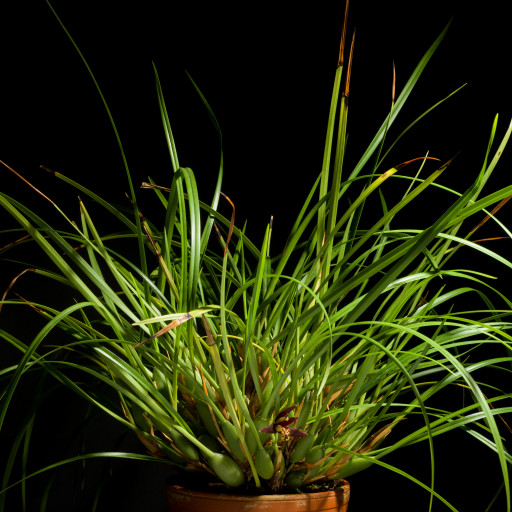
Plant Overview
Often called the Coconut Orchid or "Coconut Pie Orchid," this Central American treasure is a favorite among indoor gardeners for one primary reason: its incredible fragrance. When in bloom, a single plant can fill an entire room with the aroma of freshly toasted coconut or tropical suntan lotion, instantly transporting you to a Caribbean beach. It is a hardy, "rambling" orchid that is as much a delight for the nose as it is for the eyes.
🔍 How to Identify
- 🌿 The Foliage: Unlike the broad, flat leaves of common Phalaenopsis orchids, this species has very long, grass-like, slender leaves that arch gracefully from the top of the bulbs.
- 🏮 The Blooms: The flowers are small but striking, featuring a deep mahogany or "oxblood" red color with a yellowish lip that is heavily speckled with dark spots.
- 🥚 The Pseudobulbs: Look for smooth, oval-shaped green bulbs at the base of the leaves; these act as water storage tanks and grow in a unique "staircase" fashion along a creeping rhizome.
🏡 In Your Garden
- 🪜 The Climbing Habit: This orchid is a "rambler." Instead of staying in a neat clump, it tends to grow upward and outward. Because of this, it often performs better in a wooden basket or mounted on a cedar slab rather than in a traditional plastic pot.
- ☀️ The Light-Scent Connection: To trigger those famous coconut-scented flowers, the plant needs very bright, indirect light. If the leaves are a dark, forest green, it likely isn't getting enough light to bloom; look for a "light apple green" leaf color as a sign of perfect health.
⚠️ Safety & Toxicity
- 🐾 Pet Friendly: Good news for pet owners! The Maxillaria tenuifolia is generally considered non-toxic to cats, dogs, and horses.
- 🚫 Ornamental Only: While the fragrance might smell like a bakery, the plant itself is not edible. Handling the roots or sap during repotting can occasionally cause mild skin irritation for those with highly sensitive skin.
✨ Fun Fact
The scent of the Coconut Orchid is "thermogenic," meaning it is most potent during the brightest, warmest part of the day. The plant uses the midday sun to help vaporize its fragrant oils, ensuring its scent travels as far as possible to attract pollinators in the wild.

Detailed Care Instructions
To grow Maxillaria Tenuifolia (also known as the Coconut Orchid or the Christmas Orchid), follow these steps:
- Choose a suitable pot or container: Select a container that is slightly larger than the current root system of the plant. Ensure it has drainage holes to prevent waterlogging.
- Potting mix: Use a well-draining orchid potting mix that contains a combination of bark, sphagnum moss, or fir bark. Avoid using regular potting soil as it retains too much moisture.
- Light requirements: Maxillaria Tenuifolia thrives in bright, indirect light. Place the plant near a south or east facing window where it can receive filtered sunlight. Avoid direct sunlight, as it can scorch the leaves.
- Temperature and humidity: This orchid prefers warm temperatures between 65-80°F (18-27°C) during the day and slightly cooler temperatures at night. It also appreciates moderate to high humidity levels. You can increase humidity by using a humidifier, placing a tray of water near the plant, or misting the leaves regularly.
- Watering: Water the plant thoroughly when the top inch of the potting mix feels dry. Ensure excess water drains out through the drainage holes. Avoid letting the roots sit in water as it can cause root rot. Only water again when the potting mix has dried out slightly.
- Fertilizing: Feed the Maxillaria Tenuifolia orchid with a balanced orchid fertilizer once a month during the growing season (spring to fall). Dilute the fertilizer to half the recommended strength. Avoid fertilizing during the winter months when the plant is in its resting phase.
- Repotting: Repot the orchid every 1-2 years or when it becomes crowded in its current pot. Do this in the spring when new growth starts. Gently remove the plant from its old pot, trim any damaged or dead roots, and place it in a slightly larger pot with fresh orchid potting mix.
- Pruning: Remove any yellow or dead leaves to improve the overall appearance of the plant. Be careful not to damage healthy leaves or pseudobulbs.
Following these care tips should help you successfully grow Maxillaria Tenuifolia. It's a unique and fragrant orchid that can bring beauty to your indoor plant collection.

Place in a window with dappled sun or a spot in the middle of a room. Or directly in a window facing west or east.

Maxillaria Tenuifolia is a type of orchid plant that requires specific watering techniques to ensure optimal growth and health. Watering the plant is an important part of its care and should be done carefully to avoid overwatering or underwatering.
When watering, it is important to use room temperature water and avoid letting the plant sit in standing water. Water should be applied directly to the soil, being cautious not to get water on the leaves or flowers.
The frequency of watering will depend on the climate and environment where the plant is located. Typically, Maxillaria Tenuifolia will require watering once a week, but this may need to be adjusted depending on the humidity and temperature of its surroundings.
In addition to regular watering, the plant will benefit from occasional misting with room temperature water to increase humidity levels around the plant and reduce the risk of dryness.
Overall, it is important to monitor the moisture level of the soil and adjust watering as necessary to keep the plant healthy and happy.
To fertilize Maxillaria Tenuifolia, use a balanced water-soluble fertilizer with an NPK ratio of 20-20-20 or 10-10-10. Dilute the fertilizer according to the manufacturer's instructions, usually at a rate of about half or one-quarter strength.
During the growing season, which is typically from spring to early fall, fertilize the plant every two weeks. Reduce the frequency to once a month during the dormant period in winter. Apply the fertilizer solution to the soil, avoiding direct contact with the plant's foliage.
Before fertilizing, make sure the plant's potting medium is moist. Water it lightly before applying the fertilizer solution. This helps prevent any potential root damage caused by applying fertilizer to dry soil.
Additionally, it is crucial not to over-fertilize the Maxillaria Tenuifolia plant as it can lead to salt build-up in the soil, causing damage to the root system. Therefore, always follow the recommended dilution rates and adjust accordingly based on the plant's response.
Regular fertilization, combined with proper watering and light requirements, will provide the necessary nutrients for healthy growth and vibrant blooms.
For Maxillaria Tenuifolia plant, it is recommended to use a well-draining soil mix that consists of a blend of organic materials such as peat moss, perlite, and bark. The soil should have good aeration, moisture retention, and the ability to retain nutrients. It is also essential to ensure that the soil is slightly acidic, with a pH level between 5.5 to 6.5, as this plant thrives in slightly acidic soil conditions. Using a good quality soil mix will provide a healthy growing environment for Maxillaria Tenuifolia plant, promoting healthy root growth and overall plant development.
Maxillaria Tenuifolia plant can be propagated through division. This process involves carefully separating the plant into two or more sections and replanting each section in its own pot.
To begin, gently remove the plant from its pot and inspect the roots. Look for natural divisions or areas where the plant can be separated without causing damage to the roots. Use a sterilized knife or scissors to carefully cut the plant into sections, making sure each section has a portion of the root system.
Before replanting, make sure to clean and sterilize the pots and soil to prevent any potential pests or diseases. Place each section of the plant in its own pot with fresh potting soil and water thoroughly.
It's important to provide the newly propagated plants with the proper care to ensure their survival. Place them in a well-lit area but out of direct sunlight and keep the soil moist but not waterlogged. As the plants grow and become established, they can gradually be acclimated to more light and normal watering routines.
Common pests of the coconut orchid include Scale insect, mealybugs, spider mites, thrips. Make a habit of checking your coconut orchid frequently for pests so that any infestations can be caught and managed early.








