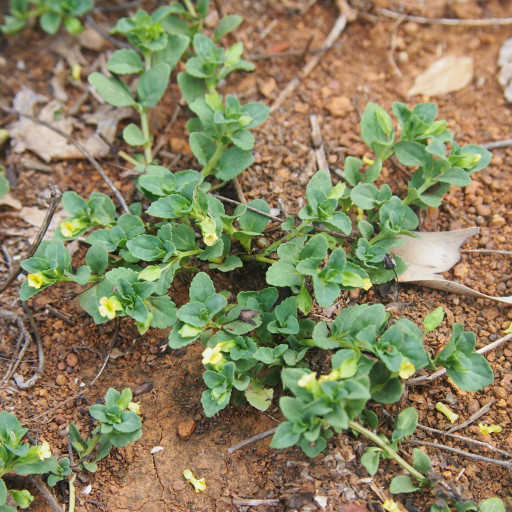
Plant Overview
Commonly known as the Yellow Carpet or Baby Jump Up, Mecardonia procumbens is a cheerful, low-growing treasure native to the tropical and subtropical Americas. This resilient groundcover is a favorite for those looking to fill gaps in sunny pathways or spill over the edges of hanging baskets. Its ability to withstand sweltering heat while maintaining a blanket of bright gold makes it a "tough-as-nails" beauty in any landscape.
🔍 How to Identify
- 🌼 The Flowers: Look for tiny, five-lobed yellow blossoms that appear at the leaf axils. If you look closely, you’ll often see delicate reddish-brown "nectar guides" or veins inside the throat of the flower.
- 🍃 The Foliage: The leaves are small, bright green, and oval-shaped with slightly serrated (toothed) edges. They grow in opposite pairs along the stems, creating a dense mat.
- 🌱 Growth Habit: This plant is "procumbens," meaning it trails along the ground. It stays very low (usually under 4 inches) and spreads outward, making it an excellent natural mulch.
🏡 In Your Garden
- ☀️ Sun-Soaked Performance: Unlike many delicate-looking flowers, Mecardonia thrives in the heat. It uses full sun to fuel its "ever-blooming" habit; the more light it gets, the more flowers it produces.
- 💧 Moisture Balance: While it loves a good drink and prefers consistently moist soil, it is surprisingly forgiving. It’s a great choice for areas near sprinklers or low spots in the garden that don’t drain rapidly, though it hates sitting in stagnant "swampy" water.
- 🧱 The "Stepable" Factor: Because of its creeping nature, it is often used between stepping stones. While it can’t handle heavy foot traffic like grass, it can bounce back from the occasional stray step.
⚠️ Safety & Toxicity
- ✅ Low Risk: Mecardonia procumbens is generally considered non-toxic and safe for home gardens.
- 🐾 Pets & Kids: There are no documented reports of major toxicity toward cats, dogs, or humans. However, as with any ornamental plant, it’s best to discourage curious toddlers or pets from snacking on the foliage to avoid minor tummy upsets.
✨ Fun Fact
Mecardonia is a member of the Plantain family, but it acts more like a "heat-seeking" version of the Pansy. While Pansies wither and die when the summer heat hits, Mecardonia actually waits for the temperature to rise before it begins its most spectacular floral display!

Detailed Care Instructions
To grow Mecardonia Procumbens (also known as Creeping Mazus), you can follow these steps:
- Choose a suitable location: Mecardonia Procumbens thrives in full sun to partial shade. Choose a location that receives at least 6 hours of direct sunlight per day.
- Prepare the soil: The plant prefers well-draining soil. Prepare the soil by removing any weeds or debris and incorporating organic matter like compost to improve drainage and fertility.
- Sow the seeds or plant the seedlings: The plant can be started from seeds or propagated through cuttings. If starting from seeds, sow them directly into the prepared soil and lightly cover them with a thin layer of soil. If using seedlings, dig holes at a spacing of about 6-12 inches and place the seedlings in the holes.
- Water regularly: Keep the soil consistently moist, but avoid overwatering as it can cause root rot. Water deeply whenever the top inch of soil feels dry. During hot and dry periods, you may need to water more frequently.
- Mulch: Applying a layer of mulch around the plants can help retain moisture, control weeds, and regulate soil temperature.
- Fertilize: Feed the plants with a balanced, slow-release fertilizer once every 4-6 weeks during the growing season to promote healthy growth.
- Pruning: Trim back any leggy or overgrown stems to encourage bushier growth. Pruning also helps maintain a neat and tidy appearance.
- Pest and disease control: Monitor the plants regularly for any signs of pests or diseases. If any issues are detected, treat them promptly with appropriate organic or chemical remedies.
- Winter care: Mecardonia Procumbens is typically considered an annual plant, but it may survive in mild winter conditions. In colder regions, it's best to treat it as an annual and replant the following spring.
By following these steps, you can successfully grow Mecardonia Procumbens in your garden or container.

Place in a bright room that is sun drenched almost all day. Or directly in a south-facing window.

To water this plant, it is important to check the soil moisture level by inserting a finger about an inch deep into the soil. If the soil feels dry at this depth, it's time to water. When watering, aim to saturate the entire root system by watering deeply and slowly. Avoid getting water on the leaves as this can promote disease. Allow the top inch of soil to dry out before watering again. In hot, dry weather, this plant may need to be watered more frequently.
To fertilize this plant, use a balanced, water-soluble fertilizer. Dilute the fertilizer according to package instructions and apply it to the soil around the plant's base. Be careful not to allow the fertilizer to touch the plant's leaves or stem, as this could cause damage. Fertilize the plant every 2-3 weeks during the growing season, and reduce or stop fertilization in the winter months. Water the plant lightly before and after applying fertilizer to help it absorb the nutrients.
It is recommended to use well-draining soil with adequate organic matter content for the optimal growth of this plant. The pH range of the soil should be slightly acidic to neutral, between 6.0 to 7.0. It is also important to ensure that the soil provides sufficient moisture to the plant without waterlogging it. This plant can thrive in various soil types, including loamy, sandy, and clay soils, as long as they are well-draining and fertile. The use of fertilizers should be moderate, as excessive nutrient application can lead to poor growth and flower quality.
Mecardonia Procumbens can be propagated through stem cuttings. First, select a healthy stem from the parent plant that is about 3-4 inches long. Make a clean cut on the stem using a sterilized knife or pruning shears just below a node (the point where a leaf attaches to the stem). Remove all leaves and flowers from the bottom 2 inches of the stem.
Prepare a pot with well-draining soil and water it thoroughly. Make a hole in the soil using a pencil or a stick and insert the stem cutting into it, making sure at least one node is buried in the soil. Gently press the soil around the stem to hold it in place.
Cover the pot with a plastic bag or a clear plastic container to create a mini greenhouse. This will help retain moisture and humidity, which is essential for root development. Place the pot in a bright, indirect light location, but not in direct sun.
Check the soil moisture daily and water as needed to keep the soil damp but not waterlogged. After a few weeks, gently tug on the stem cutting to see if it has rooted. Once roots have formed, remove the plastic covering and move the plant to a slightly sunnier location. Gradually increase the amount of light it receives over time.
Wait until the plant is growing vigorously before transplanting it to a larger pot or the garden.
Common pests of the baby jump-up include Spider mites, aphids, whiteflies. Make a habit of checking your baby jump-up frequently for pests so that any infestations can be caught and managed early.








