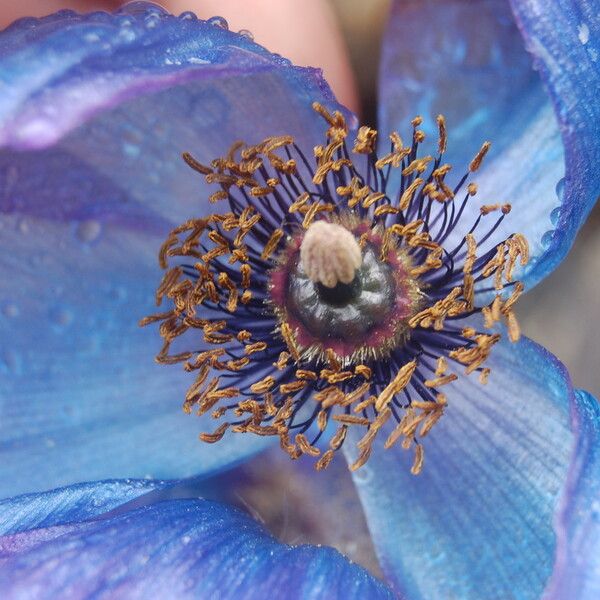
Plant Overview
Often hailed as the "Queen of the Himalayas," the Meconopsis bhutanica is the legendary blue poppy that serves as the national flower of Bhutan. These ethereal blooms are famous for their "Himalayan Blue" hue—a color so pure and vivid it seems almost artificial against the rugged mountain terrain. For decades, it remained a botanical mystery, tucked away in the high-altitude mists of the eastern Himalayas, symbolizing the serene and untouched beauty of its homeland.
🔍 How to Identify
- 🌸 The Bloom: Large, nodding flowers with four to six delicate, silky petals that range from a translucent sky blue to a deep violet-blue.
- ☀️ The Core: A striking cluster of bright golden-yellow stamens sits at the center, providing a sharp, beautiful contrast to the cool-toned petals.
- 🌿 The Foliage: The leaves and stems are covered in fine, bristly hairs and often have a slightly glaucous (waxy blue-green) tint, which helps the plant trap moisture.
🏡 In Your Garden
- ☁️ The "Diva" Factor: This plant is notoriously difficult to grow outside of its alpine home. It demands cool, damp summers and "Himalayan-like" conditions; it will quickly wilt in high heat or stagnant, humid air.
- 🧪 Soil Nuance: It thrives in rich, acidic soil that stays consistently moist but never waterlogged. Because it has a sensitive taproot, it absolutely loathes being moved once planted, so choose its "forever home" carefully.
⚠️ Safety & Toxicity
- 🐾 Mildly Toxic: While not considered deadly, most poppies in the Meconopsis genus contain alkaloids that can cause stomach upset or lethargy if ingested.
- 👶 Keep Distance: It is best to keep this plant away from curious pets or toddlers. The bristly hairs on the stems can also cause mild skin irritation for those with sensitive skin.
✨ Fun Fact
For nearly a century, botanists confused this specific species with other blue poppies. It wasn't until 2011 that researchers officially realized the national flower of Bhutan was a distinct, unique species and gave it the name Meconopsis bhutanica.

Detailed Care Instructions








