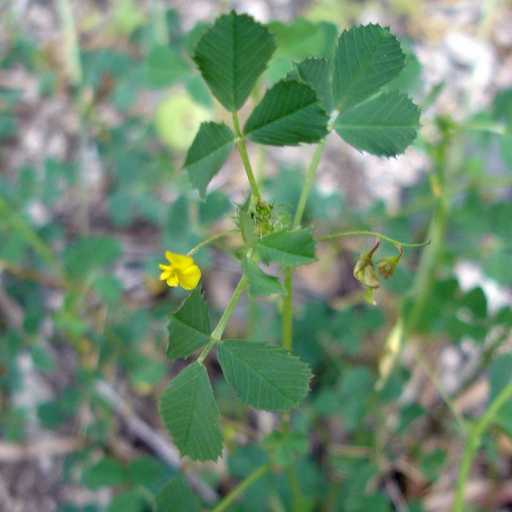
Plant Overview
Often called the Button Medick or Blackdisk Medick, this Mediterranean native is a master of architectural geometry. While it might look like a simple clover at first glance, it is famous for its bizarre, flattened seed pods that look exactly like tiny, hand-carved wooden buttons or coiled snail shells strewn across the ground. It is a hardy traveler, having spread from its sunny coastal origins to gardens and grasslands across the globe.
🔍 How to Identify
- 🍀 The Leaves: Look for "trifoliate" leaves (groups of three) that resemble clover or alfalfa. Each leaflet is teardrop-shaped with tiny, fine teeth along the upper edges.
- 🌼 The Flowers: In spring and summer, it produces small, cheerful pea-like flowers in a bright lemon-yellow hue, usually growing in clusters of one to five.
- 🐌 The "Buttons": Its most iconic feature is the seed pod. These are hairless, flat, spiral disks about 10–15mm wide. They start a vivid green and age to a deep, earthy brown or black.
🏡 In Your Garden
- 🌱 Nitrogen Power: Like many members of the legume family, this plant is a natural fertilizer. It works with soil bacteria to "fix" nitrogen from the air, enriching the earth for neighboring plants.
- ☀️ Drought Warrior: It prefers dry, sunny spots and well-drained soil. Because it has a sturdy taproot, it can survive in cracked earth where more delicate groundcovers might wither.
- 🐝 Pollinator Magnet: Though the flowers are tiny, they are rich in nectar and highly attractive to small native bees and butterflies.
⚠️ Safety & Toxicity
- ✅ General Safety: Medicago orbicularis is generally considered non-toxic to humans and is often used as a high-protein forage for livestock.
- 🐾 Pet Note: While safe for cats and dogs, large-scale ingestion by horses or ruminants can sometimes cause "bloat," similar to other clover species, so it’s best kept as an ornamental or soil-builder rather than a primary snack.
✨ Fun Fact
The genus name Medicago is derived from "Media," an ancient region in modern-day Iran. Ancient Greeks believed these plants were brought to their lands during the Persian Wars in the 5th century BCE!

Detailed Care Instructions
| Humidity | High |
| Lighting | Full Sun |
| Difficulty | Easy |
| Hibernation | Cold Period |
| Temperature | 18°C - 27°C |
To grow Medicago orbicularis plants, you can follow these steps:
- Obtaining seeds: Purchase Medicago orbicularis seeds online or from a reputable nursery. Alternatively, you can collect seeds from mature plants if they are available in your region.
- Soil preparation: These plants prefer well-draining soil that is slightly alkaline with a pH of around 7. Prepare the soil by removing any weeds or debris and breaking up any clumps. Additionally, you can improve drainage by adding organic matter such as compost.
- Planting the seeds: Sow the Medicago orbicularis seeds directly in the prepared soil. Place the seeds about 1-2 inches apart and cover them with a thin layer of soil. Gently press down to ensure good seed-to-soil contact.
- Watering: Moisten the soil thoroughly after planting. Water regularly to keep the soil consistently moist, but be careful not to overwater as it can cause root rot.
- Sunlight requirements: Medicago orbicularis plants thrive in full sunlight. Ensure they receive at least 6-8 hours of direct sunlight each day.
- Maintenance: Remove any weeds that compete for nutrients and water with the Medicago orbicularis plants. Mulching around the plants can help suppress weeds and retain soil moisture.
- Fertilizing: These plants generally do not require much fertilizer. However, if your soil is lacking in nutrients, you can use a balanced, slow-release fertilizer according to the package instructions.
- Harvesting: Medicago orbicularis plants produce small, rounded yellow flowers followed by seed pods. You can harvest the seeds for propagation if desired. Allow the seed pods to fully mature and dry on the plant before collecting them.
Note: Medicago orbicularis is a plant native to the Mediterranean region and may have specific temperature and climate requirements. Ensure you are in an appropriate hardiness zone before growing these plants.

Place in a bright room that is sun drenched almost all day. Or directly in a south-facing window.

To water this plant, you should ensure that the soil is moist but not waterlogged. It is important to avoid letting the soil dry out completely, as this can harm the plant. The amount of water required will depend on the specific needs of the plant, as well as the environmental conditions in which it is growing. It is a good idea to water the plant deeply, allowing the water to penetrate the soil and reach the roots. This will encourage healthy growth and help the plant to establish itself in its surroundings. It is also important to avoid getting water on the foliage of the plant, as this can increase the risk of disease and pest infestation. Instead, water at the base of the plant, using a watering can or hose with a gentle spray attachment.
To fertilize this plant, use a balanced, slow-release fertilizer with equal amounts of nitrogen, phosphorus, and potassium. Apply the fertilizer twice a year - once in the spring and again in the fall. Use the recommended amount of fertilizer for the size of the plant. Spread the fertilizer evenly over the soil, being careful not to get it on the leaves or stems. Water the plant immediately after applying the fertilizer to help it absorb the nutrients. Avoid over-fertilizing as this can lead to nutrient burn or damage to the plant.
Medicago Orbicularis requires a specific type of soil that is rich in nutrients. The soil should be well-draining and have a pH level between 6.0 and 8.5. It should be composed of a mix of sand, clay, and organic matter, such as compost or peat moss. The soil should also be relatively loose to allow for adequate oxygen flow to the roots. When planting Medicago Orbicularis, it is important to ensure the soil is moist but not waterlogged. Overwatering can lead to root rot and other diseases. Additionally, the plant should be given regular fertilization to ensure it receives all the necessary nutrients to thrive.
The first step in propagating this plant is to collect its seeds once they have ripened. Next, prepare a well-draining soil mix by combining sand, perlite, and peat moss in equal parts. Fill small pots with this mixture and moisten it.
Sow the seeds on top of the soil and cover them with a thin layer of the soil mix. Water gently and place the pots in a warm location with bright but indirect light. Maintain the soil moist but not overly wet.
Once the seedlings have emerged and have grown at least two sets of true leaves, they can be transplanted to larger pots or into the garden. When transplanting, be sure to disturb the roots as little as possible.
The plant can also be propagated by taking cuttings from healthy, mature stems. Cut a 4-6 inch section of the stem and remove the leaves from the bottom half of the cutting. Dip the end in rooting hormone and plant it in a well-draining soil mix.
Keep the cutting in a warm and humid location, watering it sparingly. Once new growth appears, transfer the cutting to a larger pot or into the garden.








