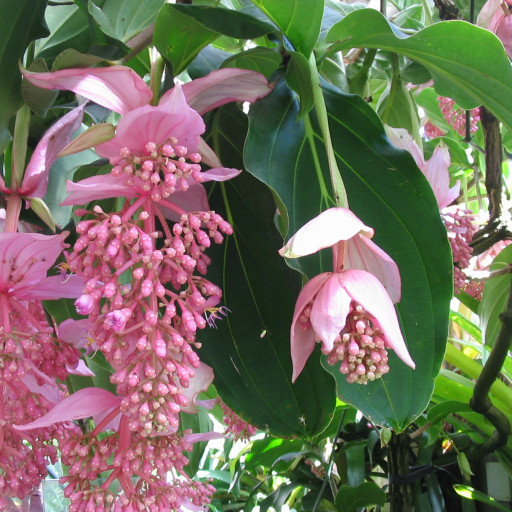
Plant Overview
Known as the "Rose Grape" or "Philippine Orchid," the Medinilla magnifica is the undisputed queen of the tropical houseplant world. This regal epiphyte hails from the humid rainforests of the Philippines, where it naturally grows tucked into the mossy crooks of tall trees. With its oversized, leathery leaves and massive, cascading pink blossoms, it looks more like a living sculpture than a typical houseplant.
🔍 How to Identify
- 🌸 Showy Bracts: The "flowers" are actually large, pendulous pink leaf-like bracts that shelter tiny, grape-like clusters of true flowers hidden underneath.
- 🍃 Architectural Foliage: The leaves are thick, glossy, and deeply veined, often growing up to a foot long with a stiff, leathery texture.
- 🪵 Square Stems: A unique feature of this plant is its sturdy, four-angled or "winged" woody stems that support the heavy weight of the massive blooms.
🏡 In Your Garden
- ☁️ Humidity is King: Because it is an epiphyte (living on trees in the wild), it drinks moisture from the air. If your home is too dry, the plant may drop its flower buds in protest, so a humidifier is its best friend.
- 💧 The "Goldilocks" Watering: It hates "wet feet" due to its shallow root system. It is best to wait until the top few inches of soil are dry before giving it a thorough soak to mimic a tropical downpour.
- 🏺 Orchid-Style Care: It thrives best in a well-draining orchid bark mix rather than heavy potting soil, allowing its roots to breathe just as they would in the jungle canopy.
⚠️ Safety & Toxicity
- 🐾 Safe Status: Medinilla magnifica is generally considered non-toxic to cats, dogs, and humans, making it a "worry-free" choice for pet owners.
- 🧼 Leaf Maintenance: While not poisonous, the large leaves can collect heavy dust which blocks sunlight; wiping them periodically with a damp cloth keeps the plant healthy and prevents pest hideouts.
✨ Fun Fact
In the mid-20th century, this plant was so highly prized in Europe that it was featured on the Belgian 10,000 franc banknote, cementing its status as a true symbol of luxury and botanical prestige.

Detailed Care Instructions
| Color | Pink To Coral Red |
| Soil Ph | 6.1 To 6.5 (Slightly Acidic) |
| Humidity | High |
| Lighting | Part Sun |
| Soil Type | Well-Drained Potting Mix |
| Bloom Time | Sporadically From April To August |
| Difficulty | Hard |
| Plant Type | Broadleaf Evergreen |
| Hibernation | Cold Period |
| Mature Size | 2 To 4 Feet Tall; 1- To 3-Foot Spread |
| Native Area | Phillipines, Java, Malay Peninsula, Sumatra |
| Temperature | 18°C - 25°C |
| Sun Exposure | Part Shade |
| Hardiness Zones | 10 To 11 (Usda) |
To grow a Medinilla Magnifica plant, you can follow these steps:
- Choose the right location: Medinilla Magnifica plants prefer bright but indirect sunlight. Find a location in your home or garden that provides filtered sunlight or shade. Keep the plant away from direct sunlight as it can scorch the leaves.
- Provide the right temperature and humidity: Medinilla Magnifica plants thrive in warm temperatures between 65-75°F (18-24°C). They also prefer high humidity levels, around 60-70%. You can mist the leaves occasionally or place a humidifier nearby.
- Optimal soil and potting: Medinilla Magnifica plants prefer well-draining soil that is slightly acidic. You can use a mixture of peat moss, perlite, and sand for the soil. Choose a pot that is slightly larger than the current root ball of the plant to allow room for growth.
- Watering: Keep the soil evenly moist but not waterlogged. Water the plant when the top inch of soil feels dry. Avoid letting the soil dry out completely or letting it sit in water, as both can harm the plant.
- Fertilizing: Feed the Medinilla Magnifica plant with a balanced houseplant fertilizer every 2-4 weeks during the growing season (spring and summer). Follow the instructions on the fertilizer packaging for the correct dosage.
- Pruning: Prune the plant to maintain its shape and size. Remove any dead or yellowing leaves, as well as spent flowers. Prune back unruly or long stems to promote bushier growth.
- Repotting: If the plant outgrows its pot, you can repot it in a slightly larger container. Spring is the best time to repot Medinilla Magnifica plants.
- Propagation: You can propagate Medinilla Magnifica plants through stem cuttings or by division. Stem cuttings should be taken from healthy stems and placed in a well-draining rooting medium. Division involves separating the plant into individual sections with roots and repotting them.
By following these guidelines, you can successfully grow a Medinilla Magnifica plant and enjoy its beautiful flowers and foliage.

Place in a window with dappled sun or a spot in the middle of a room. Or directly in a window facing west or east.

To water this plant, one should check the soil's moisture level before watering and ensure that the water is distributed evenly. Water should be applied to the soil and not the foliage. The plant should not be allowed to sit in standing water as it may cause root rot. In addition, the frequency of watering should depend on the environment it is in, the temperature and moisture levels.
To fertilize the plant, mix a balanced, water-soluble fertilizer with equal amounts of water. Apply the fertilizer to the soil once every two weeks during the growing season. Be sure not to over-fertilize, as this can cause damage to the plant. Additionally, always water the plant thoroughly before and after fertilizing.
The ideal soil for this plant should be rich, well-draining, and acidic. It should contain a mixture of organic matter, such as peat moss or coconut coir, and a good quality potting mix. Avoid using heavy, compacted soils or those that contain high levels of nutrients, as these can lead to root rot and other issues. Additionally, the soil should be kept moist but not waterlogged, and the plant should be fertilized regularly with a balanced, water-soluble fertilizer.
Medinilla Magnifica can be propagated by taking stem cuttings in the spring or summer. Select a healthy stem and make a clean cut just below a leaf node. Remove the lower leaves and dip the cut end in rooting hormone powder. Plant the cutting in a pot filled with a well-draining potting mix and keep it moist. Cover the pot with a plastic bag or a clear plastic container to create a humid environment, which will help the cutting root. Keep the cutting in bright, indirect light and avoid direct sunlight. After a few weeks, check for signs of roots by gently tugging on the stem. Once roots have formed, remove the plastic cover and begin to acclimate the plant to its new environment by gradually increasing the amount of light it receives.
Common pests of the pink medinilla include Scale insect, mealybugs, spider mites. Make a habit of checking your pink medinilla frequently for pests so that any infestations can be caught and managed early.








