Plant Overview
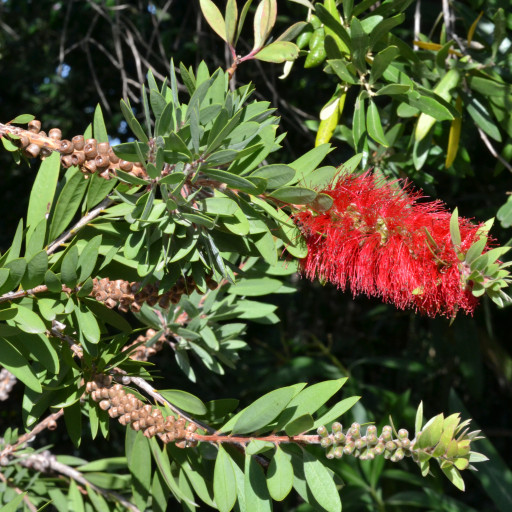
Often called the Crimson Bottlebrush, Melaleuca citrina is a classic Australian beauty that looks like it belongs in a kitchen drawer rather than a garden. Its vibrant, fuzzy red spikes are legendary for attracting a parade of hummingbirds, butterflies, and bees. If you crush its stiff leaves, you’ll be rewarded with a refreshing citrus scent, which is exactly how it earned its "citrina" name.
🔍 How to Identify
- 🌺 Floral Brushes: The standout feature is the brilliant red stamens arranged in dense, cylindrical spikes that look exactly like a traditional bottle brush.
- 🍃 Aromatic Foliage: The leaves are narrow, lance-shaped, and leathery. When bruised, they release a distinct, zesty lemon aroma.
- 🪵 Woody Capsules: After the flowers fade, they leave behind small, grey, button-like woody seed pods that hug the stem and can remain there for many years.
🏡 In Your Garden
- ☀️ Sun-Driven Blooms: This plant is a sun-worshipper. It needs maximum light to fuel its intense flowering; in deep shade, it will grow leggy and refuse to produce those iconic red brushes.
- 🛡️ Resilient Roots: Thanks to its rugged Australian heritage, it is incredibly hardy. It can tolerate "wet feet" (poor drainage) better than most shrubs and is remarkably salt-tolerant, making it a favorite for coastal gardens.
- ✂️ Pruning Magic: To keep it from looking "woody" or sparse, prune it right behind the spent flower spikes. This encourages a bushier habit and more blooms for the next season.
⚠️ Safety & Toxicity
- ✅ Generally Safe: This plant is non-toxic to humans and is generally considered safe for cats, dogs, and horses.
- 🐝 Busy Visitors: While the plant itself isn't dangerous, it is a high-octane nectar producer. It attracts large numbers of bees, so those with allergies should place it away from doorways or frequent seating areas.
✨ Fun Fact
The first specimens of this plant were collected in 1770 at Botany Bay by Joseph Banks, the legendary botanist aboard Captain James Cook’s first voyage to Australia!

Detailed Care Instructions
To grow a Melaleuca Citrina plant, also known as the Lemon Scented Tea Tree, you can follow these steps:
- Choose a suitable location: Lemon Scented Tea Trees prefer full sun but can tolerate some partial shade. Ensure the location has well-draining soil as these plants don't like sitting in water.
- Prepare the soil: Before planting, loosen the soil and remove any weeds or grass. Add organic matter like compost or well-rotted manure to improve soil fertility and drainage.
- Planting: Dig a hole that is slightly larger than the plant's root ball. Place the Melaleuca Citrina in the hole, ensuring the top of the root ball is level with the ground. Backfill the hole with soil, firming it gently around the base of the plant. Water thoroughly after planting.
- Watering: Water regularly to keep the soil consistently moist but not waterlogged. These plants prefer regular watering, especially during dry periods. Avoid letting the soil completely dry out between watering.
- Mulching: Apply a layer of organic mulch around the base of the plant to retain moisture, suppress weeds, and provide some insulation for the roots. Keep the mulch a few inches away from the trunk to avoid rotting.
- Pruning: Light pruning can be done to maintain the shape and remove damaged or dead branches. Pruning is best done after flowering.
- Fertilizing: In general, Lemon Scented Tea Trees don't require much fertilizer. If desired, you can apply a slow-release balanced fertilizer in spring and early summer to provide some nutrients.
- Protection from frost: Melaleuca Citrina is sensitive to frost. If you live in a colder climate, consider planting it in a pot that can be moved indoors during freezing temperatures.
- Pests and diseases: These trees are generally resistant to pests and diseases. However, you should monitor for any signs of plant stress or insect infestation and take appropriate action if necessary.
By following these guidelines, you should be able to successfully grow a Melaleuca Citrina plant. Remember to provide proper care, including watering, mulching, pruning, and protecting it from frost, to ensure its health and growth.

Place in a bright room that is sun drenched almost all day. Or directly in a south-facing window.

The best way to water this plant is to check the soil moisture level before watering. Gently insert your index finger into the soil up to the first knuckle. If the soil feels dry, it is time to water. Use room temperature water and pour it slowly at the base of the plant, avoiding getting water on the leaves. Ensure that the water reaches the root zone of the plant. Wait for the water to drain out of the drainage holes of the pot before returning it to the saucer. Avoid overwatering as it can lead to root rot. Water the plant only when the soil feels dry to the touch.
- Begin by ensuring that the soil around the Melaleuca Citrina plant is moist before applying any fertilizer.
- Choose a balanced fertilizer with equal amounts of nitrogen, phosphorus, and potassium (NPK ratio of 10-10-10 or similar). This will provide a good overall nutrient boost for the plant.
- Follow the instructions on the fertilizer package to determine the appropriate amount to use based on the size and age of your plant.
- Apply the fertilizer evenly around the base of the plant, keeping it away from the stem or foliage to prevent burning.
- Gently work the fertilizer into the top layer of soil using a small shovel or hand spade, being careful not to damage any roots.
- After fertilizing, water the plant thoroughly to help the nutrients reach the root zone.
- Monitor the plant for any signs of over-fertilization, such as wilting, yellowing leaves, or stunted growth. If these symptoms occur, flush the soil with water to remove excess fertilizer and reduce the amount used in future applications.
- Repeat the fertilization process every 6-8 weeks during the growing season, typically from spring to early autumn. Be sure to adjust the fertilizer amount and frequency based on the specific needs and growth of your Melaleuca Citrina plant.
Melaleuca Citrina prefers soil that is well-draining, slightly acidic, and rich in organic matter. A good soil mix for this plant can contain a combination of peat moss, perlite, and coarse sand to ensure proper drainage while retaining moisture. Additionally, adding some natural, slow-release fertilizer can help to provide the necessary nutrients for growth. It is important to avoid using heavy, clay-based soils or soils that are prone to waterlogging, as this can lead to root rot and other issues with the plant's health.
Melaleuca citrina, also known by its common name(s), is a small evergreen tree or shrub known for its fragrant foliage and vibrant flowers. Here is how you can propagate this plant:
- Propagation by Seeds:
- Harvest the seeds from ripe Melaleuca citrina fruits.
- Soak the seeds in warm water for 24 hours to enhance germination.
- Fill seed trays or pots with a well-draining potting mix, preferably consisting of equal parts of peat and sand.
- Moisten the soil and sow the seeds on the surface, pressing them lightly into the soil.
- Cover the tray with a plastic bag or plastic wrap to create a greenhouse effect.
- Place the tray in a warm location with indirect sunlight and maintain a consistent temperature of 70-75°F (21-24°C).
- Keep the soil consistently moist, but not waterlogged.
- Germination typically takes 3-4 weeks. Once the seedlings have grown to about 2 inches tall, transplant them into individual pots.
- Harvest the seeds from ripe Melaleuca citrina fruits.
- Propagation by Stem Cuttings:
- Select a healthy, non-flowering stem from an established Melaleuca citrina plant.
- Using a clean, sharp knife or pruning shears, cut a 4-6 inch (10-15 cm) section of the stem just below a leaf node.
- Remove any leaves from the lower half of the cutting, leaving only a few at the tip.
- Fill a pot or tray with a well-draining rooting medium, such as a mixture of equal parts peat and perlite.
- Dip the cut end of the stem in a rooting hormone powder to promote root development (optional but recommended).
- Make a hole in the rooting medium using a pencil or dibber and insert the cutting, burying it up to the first set of leaves.
- Gently firm the medium around the cutting, ensuring it stands upright.
- Place the pot or tray in a warm location with bright, indirect light.
- Mist the cutting with water regularly to maintain moisture levels.
- After several weeks, roots should begin to form. You can check for root development by gently tugging the cutting; resistance indicates root growth.
- Once a good root system has developed, typically within 6-8 weeks, transplant the cutting into a larger pot.
Remember, Melaleuca citrina may have different common names in different regions, so make sure to consult local resources or a horticulturist for specific information.
- Select a healthy, non-flowering stem from an established Melaleuca citrina plant.
Common pests of the crimson bottlebrush include Scale insect, mealybugs, spider mites, aphids. Make a habit of checking your crimson bottlebrush frequently for pests so that any infestations can be caught and managed early.








