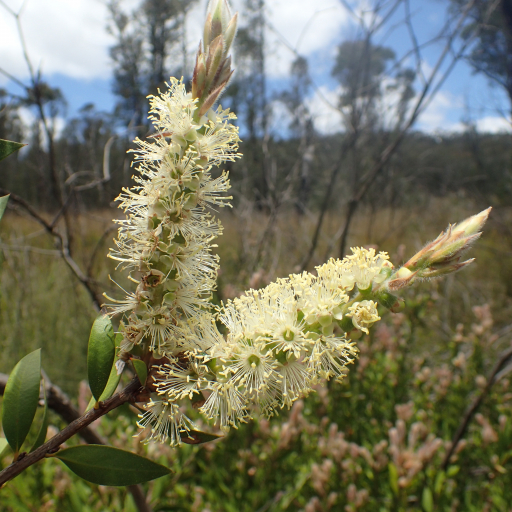
Plant Overview
Known as the Lemon Bottlebrush, this Australian native is a breath of fresh air for any landscape. While its cousins often sport fiery reds, Melaleuca pallida offers a more sophisticated palette of creamy, pale-yellow blooms that resemble soft glowing lanterns. It is a rugged survivor, naturally found along rocky streambeds and damp mountain slopes, making it as tough as it is beautiful.
🔍 How to Identify
- 🍋 The "Bottlebrush": The flower spikes are 3–10 cm long, composed of dozens of individual flowers with long, lemon-yellow stamens that give the plant its signature "brush" look.
- 🍃 Silvery Foliage: The leaves are lance-shaped and often have a subtle silvery-green hue, especially when young, providing a soft texture to the garden.
- 🪵 Growth Habit: It typically grows as an upright, woody shrub or small tree, reaching heights of 2 to 5 meters depending on the environment.
🏡 In Your Garden
- 💧 The "Damp Foot" Rule: Unlike many Mediterranean-style shrubs, this plant is exceptionally tolerant of "wet feet." It thrives in poorly drained soil or areas that stay moist after rain, though it is surprisingly drought-tolerant once its roots are deep.
- 🐝 Nature’s Diner: If you love birdwatching, this is a must-have. The nectar-rich spikes are a primary food source for honeyeaters, bees, and butterflies, turning your garden into a buzzing hub of activity during late spring and summer.
- ✂️ Pruning for Shape: To keep it from becoming "leggy" or sparse, give it a light prune immediately after the flowers fade. Cutting back just below the spent flower heads encourages a flush of new, dense growth.
⚠️ Safety & Toxicity
- ✅ Safe Profile: Melaleuca pallida is generally considered non-toxic to humans and common garden visitors.
- 🐾 Pets & Kids: It is not known to be poisonous to dogs or cats. However, the leaves contain essential oils that, if ingested in large quantities, might cause mild stomach upset. It’s always best to discourage curious pets from using the woody branches as chew toys.
✨ Fun Fact
Though it is a member of the "Tea Tree" family, its old name was Callistemon, which comes from the Greek words kallos (beauty) and stemon (stamen). In recent years, scientists moved it to the Melaleuca genus because its stamens are fused into bundles—a tiny detail that changed its entire botanical identity!

Detailed Care Instructions
Melaleuca pallida, commonly known as the lemon tea tree, is a species of shrub or small tree native to Australia. It is known for its aromatic leaves and attractive white flowers. Here are some tips on how to grow Melaleuca pallida plant:
- Climate: Melaleuca pallida thrives in warm and sunny climates. It is best suited for USDA hardiness zones 9-11.
- Soil: This plant prefers well-draining soil with a slightly acidic to neutral pH. Amend the soil with organic matter like compost before planting.
- Watering: Lemon tea tree plants need regular watering to keep the soil moist. However, they do not like to sit in soggy soil, so make sure the soil drains well.
- Sunlight: Melaleuca pallida prefers full sun to partial shade. Choose a location that receives at least 6-8 hours of sunlight per day.
- Fertilization: Fertilize the plant with a balanced fertilizer in spring to promote healthy growth and blooming.
- Pruning: Prune Melaleuca pallida to maintain its shape and size. Remove any dead or damaged branches and trim back any overgrown growth.
- Propagation: Lemon tea tree plants can be propagated from seeds or cuttings. Take stem cuttings in spring or summer and root them in a well-draining rooting medium.
- Pests and diseases: Lemon tea tree plants are relatively pest and disease-resistant. However, keep an eye out for common garden pests like aphids or spider mites and treat them promptly.
By following these tips, you can successfully grow a healthy and thriving Melaleuca pallida plant in your garden.

Place in a bright room that is sun drenched almost all day. Or directly in a south-facing window.

Melaleuca pallida plants should be watered regularly, but care should be taken to not overwater them. When watering, it is important to allow the soil to partially dry out between waterings to prevent waterlogged conditions. It is best to water the plant at its base, avoiding wetting the foliage to prevent disease. Additionally, ensure that the water drains properly from the pot or soil to prevent root rot. Monitor the moisture levels of the soil regularly to ensure that the plant is receiving the appropriate amount of water for its growth.
To fertilize the Melaleuca Pallida plant, use a balanced liquid fertilizer with a ratio of 10-10-10. Apply the fertilizer in the spring and summer months, diluting it according to the instructions on the packaging. Water the plant before and after applying the fertilizer to help it absorb the nutrients. Avoid over-fertilizing as it can harm the plant.
Melaleuca Pallida plants thrive in well-draining soil that is slightly acidic to neutral pH. A suitable soil mix for these plants should consist of a combination of organic matter such as peat moss or compost, along with perlite or coarse sand to ensure good drainage. Avoid using heavy clay soils that may retain too much moisture and lead to root rot.
It is recommended to plant Melaleuca Pallida in a pot or container with drainage holes to prevent water from pooling at the roots. Regularly check the moisture level of the soil and water the plant when the top inch of soil feels dry to the touch.
Additionally, adding a slow-release fertilizer specifically formulated for flowering shrubs can help enhance the growth and blooming of Melaleuca Pallida plants. Over-fertilizing should be avoided as it can lead to nutrient imbalances and damage to the plant.
Melaleuca Pallida plant can be propagated through various methods such as seeds, cuttings, and division.
To propagate Melaleuca Pallida plant from seeds, collect mature seeds from the plant and sow them in a well-drained potting mix. Keep the soil moist and place the pot in a warm and sunny location. The seeds should germinate within a few weeks.
To propagate Melaleuca Pallida plant from cuttings, take a 4-6 inch cutting from the plant at a 45-degree angle just below a leaf node. Remove the lower leaves and dip the cut end in a rooting hormone powder. Plant the cutting in a well-draining potting mix and keep it in a warm and humid environment. The cutting should develop roots in a few weeks.
To propagate Melaleuca Pallida plant by division, carefully divide the plant's root ball into smaller sections, making sure each section has roots attached. Plant the divided sections in individual pots with well-draining soil and keep them moist until they establish roots.
Regardless of the method used, it is important to provide the right growing conditions, such as adequate sunlight, water, and nutrients, to help the propagated plants thrive.








