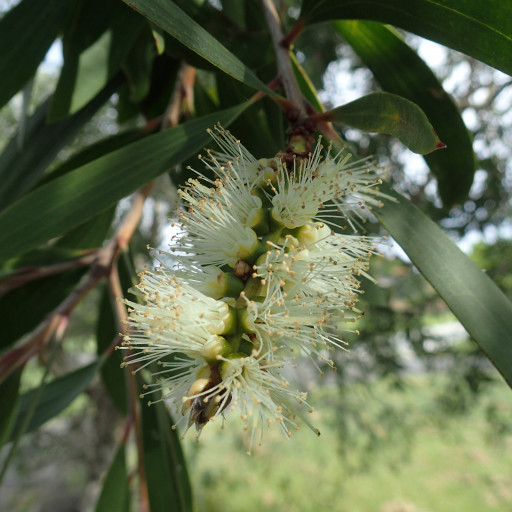
Plant Overview
Meet the Broad-leaved Paperbark, a tree with "layers of personality." Often called the "Punk Tree" or "Paperbark Tea Tree," it hails from the wetlands of Australia and New Caledonia. Known for its distinct, spongy bark that peels away like sheets of ancient parchment, it is a striking symbol of resilience and adaptation.
🔍 How to Identify
- 🧻 The Bark: The most iconic feature—thick, creamy-white bark that peels off in soft, paper-like layers. It feels almost like cork or dry sponge when pressed.
- 🍃 The Leaves: Stiff, lance-shaped, grey-green leaves. If you crush one between your fingers, it releases a sharp, medicinal scent similar to eucalyptus or camphor.
- 🍼 The Flowers: Produces creamy-white flower spikes that resemble small "bottle brushes." These fluffy clusters usually appear in late autumn and winter, attracting a frenzy of nectar-seeking birds.
🏡 In Your Garden
- 💧 The Hydrology Master: This tree is a specialist in "wet feet." It thrives in swampy, poorly drained soils where other trees might succumb to root rot, making it an excellent choice for boggy corners of a large landscape.
- 🔥 Fire-Ready Armor: Those thick, papery layers aren't just for show; they insulate the tree's inner core against heat. In its native habitat, the outer bark may burn, but the tree itself survives and regenerates quickly.
- 🚫 Invasive Warning: While beautiful, it is a aggressive grower. In regions like the Florida Everglades, it is considered a major invasive species because it can quickly outcompete native vegetation and dry out wetlands. Always check local environmental lists before planting.
⚠️ Safety & Toxicity
- 🤧 Respiratory Sensitivity: The heavy, sweet scent of the flowers and the fine pollen can trigger hay fever or asthma in sensitive individuals during peak blooming seasons.
- 🐾 Pet Safety: While the tree is generally not considered highly toxic, the leaves contain essential oils (similar to Tea Tree oil) that can cause digestive upset or lethargy in dogs and cats if ingested in large quantities.
✨ Fun Fact
Indigenous Australians traditionally used the waterproof, flexible bark of this tree for a variety of purposes, including wrapping food for earth-oven cooking, lining baby cradles, and even constructing temporary, water-resistant shelters.

Detailed Care Instructions
| Toxicity | Poisonous |
Here are some steps you can follow to grow Melaleuca quinquenervia plants:
- Obtain seeds or seedlings: You can either purchase Melaleuca quinquenervia seeds from a nursery or online, or you can collect seeds from mature plants if they are locally available. Alternatively, you can obtain small seedlings from a nursery or propagate them from cuttings.
- Choose the right planting location: Melaleuca quinquenervia plants prefer full sun but can tolerate partial shade. They also like well-draining soil and can tolerate a range of soil types, including sandy or clay soil. Ensure that the planting location provides enough space for the plant to grow to its full size, as these plants can reach heights of 30-50 feet (9-15 meters) and spread outwards.
- Prepare the soil: Before planting, prepare the soil by loosening it and removing any weeds or grass. If the soil is heavy clay, you can add organic matter such as compost or well-rotted manure to improve drainage.
- Plant the seeds or seedlings: If you are planting seeds, sow them at a depth of around 0.25 inches (0.6 cm) in the prepared soil. If you are planting seedlings, dig a hole slightly larger than the size of the root ball and place the seedling in the hole, making sure it sits at the same depth as it was in the container. Backfill the hole with soil, gently firming it around the roots.
- Water regularly: Keep the soil evenly moist during the initial few weeks after planting to help the roots establish. Afterward, Melaleuca quinquenervia plants are moderately drought-tolerant and only need to be watered during dry spells or prolonged periods without rain.
- Mulch: Apply a layer of organic mulch around the base of the plant to help retain moisture, suppress weeds, and regulate soil temperature. Keep the mulch a few inches away from the trunk to prevent rot.
- Prune as necessary: Melaleuca quinquenervia plants generally do not require heavy pruning. However, if you need to shape the plant or remove any dead or damaged branches, prune during the dormant season in late winter or early spring.
- Monitor and control pests: Keep an eye out for any insect pests, such as scale insects or borers, and promptly address any infestations using appropriate insecticides or natural remedies.
By following these steps, you can successfully grow Melaleuca quinquenervia plants. Remember to check specific care instructions for your specific region, as conditions may vary slightly.

Place in a bright room that is sun drenched almost all day. Or directly in a south-facing window.

1. Determine frequency: Observe the soil moisture level regularly and water the plant only when the soil has become slightly dry.
2. Watering method: The best way to water this plant is by saturating the soil around the root system. Pour the water slowly and allow it to seep into the soil, ensuring that the soil is thoroughly hydrated.
3. Watering amount: The amount of water required depends on the size of the plant and its water requirements. It is recommended that you water the plant until the water runs out of the drainage holes.
4. Time of day: It is best to water the plant during the early morning or late afternoon to prevent evaporation, which can cause water loss.
5. Avoid overwatering: Melaleuca Quinquenervia plants are susceptible to root rot, so ensure that the soil is not left waterlogged. Too much water can cause the roots to rot and damage the plant.
6. Use distilled water: This plant is sensitive to high levels of minerals and salts, so it is best to use distilled water or rainwater to water this plant. Avoid using tap water, as it may contain harmful chemicals that can damage the plant.
To provide adequate nutrition for this plant, you should apply a balanced fertilizer with equal ratios of nitrogen, phosphorus, and potassium. This can be done during the growing season, which is typically in the spring and summer months. You should dilute the fertilizer according to the product instructions and apply it to the soil around the base of the plant. Be sure to water the plant thoroughly after fertilizing to ensure the nutrients are absorbed by the roots. Avoid over-fertilizing, as this can lead to excessive growth and may harm the plant.
Melaleuca Quinquenervia requires a well-draining soil that is acidic to slightly alkaline in nature. It grows best in soils that are rich in organic matter and have good moisture retention capabilities. The ideal soil for this plant is loamy, sandy or clay soil that is free from salts and other harmful chemicals. The soil should be kept moist but not waterlogged, as excessive watering can lead to root rot. When planting Melaleuca Quinquenervia, it is important to ensure that the soil is adequately prepared before planting, with added compost or organic matter if necessary.
To propagate this plant, first take stem cuttings that are approximately four inches in length and include several leaves. Remove the bottom leaves, leaving only two or three at the top, and dip the cut ends in rooting hormone. Plant the cuttings in a well-draining soil mixture and keep them moist, but not waterlogged. Place the cuttings in a warm, bright location, but out of direct sunlight. The roots should begin to form in two to four weeks, at which point the cuttings can be transplanted into individual pots with a general-purpose potting mix. Keep the new plants moist and in indirect sunlight until they become established.








