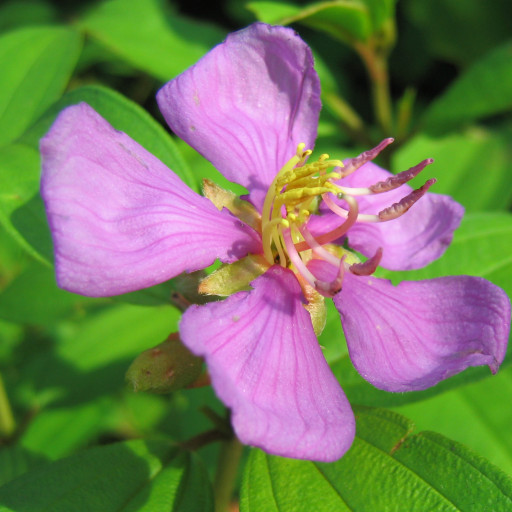
Plant Overview
Known affectionately as the Singapore Rhododendron or Senduduk, this vibrant shrub is a resilient beauty found across Southeast Asia and Australia. Despite its nickname, it isn’t a true rhododendron, but it earns the title with its stunning, crown-like purple blooms. It is a "pioneer species," often the first plant to bravely colonize disturbed soil, bringing life and color back to cleared lands.
🔍 How to Identify
- 🍃 The Veins: Look for the signature "longitudinal" veins—usually 3 to 5 deep grooves that run parallel from the base of the leaf all the way to the tip.
- 🌸 The Bloom: Large, five-petaled flowers in shades of mauve, magenta, or deep purple, featuring two distinct types of yellow stamens that look like tiny hooks.
- 🪵 The Texture: The stems and leaves are covered in fine, bristly hairs, giving the plant a rough, sandpaper-like feel when touched.
🏡 In Your Garden
- ☀️ Sun Seeker: This plant is a sun-worshipper. It requires bright, direct light to produce its famous flowers and will become "leggy" and sparse if tucked away in the shade.
- 🌱 Soil & Stability: It prefers acidic soil and is excellent for stabilizing slopes or edges of the garden. However, be mindful that it is a vigorous grower; in some tropical regions like Hawaii, it is considered an invasive guest because it spreads so quickly!
⚠️ Safety & Toxicity
- ✅ Non-Toxic: Good news for families—the Singapore Rhododendron is generally considered non-toxic to humans, dogs, and cats.
- 👅 The Staining Berry: While the berries are technically edible and used in traditional medicine, they contain a powerful natural dye. If children or pets snack on them, expect their mouths to be stained a deep, dark purple for quite a while.
✨ Fun Fact
The name Melastoma literally translates from Greek to "Black Mouth." This refers to the dark pulp of its fruit, which famously dyes the tongue and mouth of any bird (or adventurous human) that eats them!

Detailed Care Instructions
To grow a Melastoma malabathricum plant, also known as the Indian Rhododendron, follow these steps:
- Obtain seeds or a young plant from a reputable source. Melastoma malabathricum can be grown from both seeds and cuttings.
- Choose a suitable location with partial shade to full sun. Melastoma malabathricum prefers well-draining soil with a slightly acidic to neutral pH (around 6.0-7.0).
- Prepare the soil by loosening it and removing any weeds or debris. Improve the soil by incorporating organic matter like compost or well-rotted manure.
- If growing from seeds, sow them about 1/4 inch deep in the prepared soil. Cover the seeds lightly with soil, and water gently to keep the soil moist but not waterlogged. Germination usually takes around 2-3 weeks.
- If growing from cuttings, take a cutting from a healthy mature plant during the growing season. Remove a 3-4 inch long stem with a pair of sharp, sterilized pruners. Dip the cut end in rooting hormone powder, and insert it into a container filled with a well-draining potting mix. Water the cutting and keep it in a warm, humid environment until roots form.
- Water the plant regularly, keeping the soil consistently moist but not overly saturated. Melastoma malabathricum can withstand short periods of drought but prefers evenly moist soil.
- Fertilize the plant every 4-6 weeks during the growing season with a balanced, slow-release fertilizer. Follow the package instructions for dosage.
- Prune the plant lightly to remove any dead or damaged branches and to maintain a desirable shape. This can be done during the dormant period or after flowering.
- Protect the plant from extreme temperatures and frost. In colder climates, it is best to grow Melastoma malabathricum as a container plant and bring it indoors in winter.
- Watch out for pests and diseases such as aphids, mealybugs, and leaf spot. Treat any infestations or diseases promptly with appropriate organic or chemical remedies.
With proper care and suitable growing conditions, your Melastoma malabathricum plant should thrive and produce beautiful flowers.

Place in a window with dappled sun or a spot in the middle of a room. Or directly in a window facing west or east.

When it comes to watering this particular plant, it is important to keep in mind that it requires consistent moisture for its optimal growth. You should aim to water it deeply, but infrequently, making sure that the soil is evenly moist but not waterlogged.
One effective way to determine whether or not your plant needs water is to observe the top inch of soil. If it feels dry to the touch, it is time to water your plant.
You can either water your plant from above or below. When watering from above, pour water slowly onto the soil surface, being careful not to splash water onto the leaves or flowers. If you prefer watering from below, fill a saucer with water and place the pot in it. The soil will soak up the water through the drainage holes at the bottom of the pot.
It is important to avoid letting your plant sit in standing water, as this can lead to root rot and other issues. Additionally, be sure to use room temperature water rather than cold water, as cold water can shock the roots and damage the plant.
Overall, with proper watering and care, your Melastoma Malabathricum plant can thrive and reward you with its gorgeous blooms.
To fertilize this plant, it is recommended to use a balanced fertilizer with equal amounts of nitrogen, phosphorus, and potassium. The fertilizer should be applied during the growing season, usually in the spring and summer months.
Before applying the fertilizer, make sure the soil is moist and the plant is well-hydrated. You can either apply the fertilizer directly to the soil or mix it with water and apply as a liquid feed.
It is important not to over-fertilize, as this can cause damage to the plant. Follow the instructions on the fertilizer package carefully and avoid applying too much.
Regular fertilization will help promote healthy growth and vibrant blooms on this plant.
When planting this particular plant, it is recommended to use a well-draining soil that is rich in nutrients. The ideal pH range for the soil should be between 5.5 to 7.5. It is also important to ensure that the soil is moist but not waterlogged, as excessive watering may lead to root rot and other issues. Additionally, adding organic matter to the soil can help to promote healthy growth and ensure that the plant receives the nutrients it needs to thrive.
To propagate this plant, first identify a healthy and mature specimen with vigorous growth. Take a cutting from a stem that is at least 6 inches long and has several leaves attached. Remove the lower leaves from the stem, leaving only a few at the top. Dip the cut end of the stem in rooting hormone powder and plant it in a pot filled with well-draining, moist soil. Place the pot in a warm and bright spot, but out of direct sunlight. Cover the pot with a plastic bag or a clear plastic container to create a humid environment. Keep the soil moist but not waterlogged and remove any dead or yellowing leaves. After a few weeks, the cutting should develop new roots and leaves. Gradually acclimate the new plant to brighter light and less humidity by removing the plastic cover for a few hours every day until it can survive on its own. Transplant the plant to a larger pot or in the ground when it outgrows its container.








