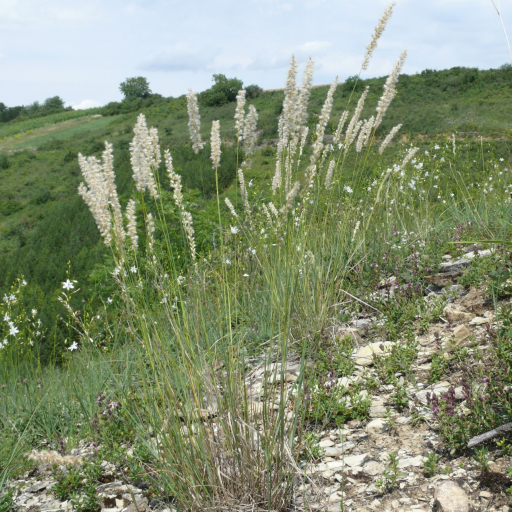
Plant Overview
Known affectionately as the Silky Spike Melic, this ornamental grass is a master of texture and movement. Native to the rocky slopes and sun-drenched meadows of Europe and North Africa, it is beloved by gardeners for its luminous, pearl-like flowering heads that catch the light. It is often described as a "weaver" plant, perfectly filling gaps in a landscape with a soft, romantic haze.
🔍 How to Identify
- 🌾 The Spikes: Narrow, upright flowering panicles that look like soft, silvery-white "brushes" or eyelashes.
- 🍃 The Foliage: Slender, arching grayish-green leaves that form tidy, dense mounds approximately 12 to 24 inches tall.
- ⚪ The Texture: The flower glumes are covered in tiny, fine hairs (cilia), giving the entire plant a distinctively fuzzy, shimmering appearance.
🏡 In Your Garden
- ☀️ The Sun-Worshipper: Unlike many woodland grasses, Melica ciliata thrives in full sun and actually prefers poor, well-drained, or rocky soils where other plants might struggle.
- 🌬️ Visual Rhythm: Because the stems are so lightweight, they react to the slightest breeze. It is best planted in "drifts" (groups) to create a wave-like effect in the wind.
- ✂️ Spring Refresh: It is a cool-season grass, meaning it looks best in spring and early summer. Cut the clumps back to the ground in late winter to make room for fresh, vibrant green growth.
⚠️ Safety & Toxicity
- ✅ Non-Toxic: Melica ciliata is generally considered safe and non-toxic for dogs, cats, and horses.
- 🧸 Child Safe: The foliage is soft rather than sharp, making it an excellent choice for tactile "sensory gardens" where children are encouraged to touch the plants.
✨ Fun Fact
The species name ciliata comes from the Latin word cilium, meaning "eyelash." If you look closely at the individual seeds, you’ll see the tiny, hair-like fringes that earned the plant its name!

Detailed Care Instructions
| Humidity | Normal |
| Lighting | Part Sun |
| Toxicity | Poisonous |
| Difficulty | Easy |
| Temperature | 20°C - 30°C |
| Hardiness Zones | 4 - 8 |
To grow Melica ciliata plant, follow these steps:
- Select a location: Choose a sunny or partially shaded spot in your garden that has well-drained soil. Melica ciliata plants prefer moist but not waterlogged soil.
- Prepare the soil: Dig the planting area to loosen the soil and remove any weeds or large rocks. Add organic matter, such as compost or well-rotted manure, to improve soil fertility and drainage.
- Sow the seeds: Scatter the seeds evenly over the prepared soil. Melica ciliata seeds are small, so sprinkle them lightly and cover with a thin layer of soil. Lightly press the soil to ensure good seed-to-soil contact.
- Water regularly: Keep the soil evenly moist, especially during the germination period. Water gently to avoid dislodging the seeds. Once the plants are established, you can reduce the watering frequency, but the soil should never completely dry out.
- Thin the seedlings: Once the seedlings have grown a few inches tall, thin them to allow enough space for the remaining plants to develop. Space them 8-12 inches apart to give the plants room to spread.
- Mulch the plants: Apply a layer of organic mulch, such as wood chips or straw, around the base of the plants to conserve moisture, suppress weeds, and protect the roots during extreme temperatures.
- Provide some shade: Melica ciliata plants prefer partially shaded areas, so consider providing some shade during the hottest part of the day, especially in regions with intense summer heat.
- Fertilize as needed: If your soil is poor or lacking in nutrients, you can apply a balanced, slow-release fertilizer in spring or early summer. Follow the package instructions for application rates.
- Prune and divide: Melica ciliata plants might require occasional pruning to remove dead or damaged leaves. You can also divide established clumps every few years to rejuvenate the plants and promote healthier growth.
- Monitor for pests and diseases: Check the plants regularly for signs of pests, such as aphids or grasshoppers. If you notice any issues, treat them promptly using organic or chemical pest control methods.
With proper care and maintenance, your Melica ciliata plants should thrive and provide you with beautiful grass-like foliage and delicate flowers.

Place in a window with dappled sun or a spot in the middle of a room. Or directly in a window facing west or east.

To water this plant, it is important to ensure that the soil is moist but not waterlogged. This can be achieved by watering deeply and allowing the soil to dry out slightly before watering again. It is important to avoid letting the soil completely dry out as this can harm the plant. Additionally, it is recommended to water directly onto the soil rather than the leaves to prevent fungal growth. It is also important to avoid getting water on the flowers or seed heads to prevent damage.
To fertilize the Melica Ciliata plant, follow these instructions:
- Choose a slow-release organic fertilizer suitable for ornamental grasses.
- Apply the fertilizer during the spring, just as new growth begins.
- Scatter the granules evenly around the base of the plant, avoiding direct contact with the foliage.
- Use a garden rake or your fingers to lightly work the fertilizer into the topsoil, being cautious not to disturb the roots.
- Water the plant thoroughly after fertilizing to help dissolve the nutrients and ensure proper absorption.
- Avoid over-fertilizing, as it can lead to excessive foliage growth and weaken the plant.
- Repeat the fertilization process once or twice a year, depending on the health and growth rate of the plant.
- Monitor the plant's overall health and adjust the fertilizer application accordingly.
Remember to always read and follow the instructions provided by the specific fertilizer product you choose, as they may vary slightly.
Melica ciliata requires a well-draining soil that is rich in organic matter. The ideal pH range for this plant is between 5.5 and 7.5. It is best to plant Melica ciliata in an area that receives full sun to partial shade. The soil should be kept moist but not overly wet, as this can lead to root rot. It is recommended to incorporate compost or aged manure into the soil before planting to improve fertility and drainage. Mulching around the base of the plant can help to retain moisture and suppress weed growth.
Melica ciliata is a perennial grass native to Europe and Asia. Propagating this plant can be achieved through several methods, including seed propagation and division.
Seed Propagation:
- Collect mature seeds from the Melica ciliata plant during late summer or early fall. Choose healthy, well-formed seeds for the best results.
- Prepare a seed tray or small pots with well-draining soil mix. Ensure the soil is moist but not waterlogged.
- Sow the Melica ciliata seeds on the soil surface, spacing them evenly and lightly pressing them into the soil. Cover the seeds with a thin layer of soil.
- Place the seed tray or pots in a warm, bright location, such as a greenhouse or a sunny windowsill. Maintain a consistent temperature of around 70-75°F (21-24°C).
- Regularly water the seeds to keep the soil moist but not saturated. Avoid overwatering as it can lead to rot.
- Germination typically occurs within 2-4 weeks. Once the seedlings have grown to a reasonable size, transplant them into individual pots or into a prepared garden bed.
Division: - Choose a suitable time for division, preferably during early spring or early fall when the plant is not actively growing. Water the plant a day before division to ensure the roots are hydrated.
- Carefully dig up the Melica ciliata plant using a garden fork, ensuring you go deep enough to loosen the soil around the roots.
- Shake off excess soil gently to expose the root system. The roots of Melica ciliata are typically quite fibrous.
- Use a sharp, clean garden tool to divide the clump into smaller sections. Ensure each division has a good portion of roots and shoots.
- Replant the divided sections immediately in prepared areas with well-draining soil. Space them apart according to the desired growth pattern.
- Water the newly planted divisions thoroughly, ensuring the soil is moist but not waterlogged.
- Provide appropriate care, including regular watering, mulching, and protecting the plant from extreme weather conditions, until the divisions establish themselves.
By following these methods, you can successfully propagate Melica ciliata and enjoy the growth and beauty of this perennial grass in your garden.








