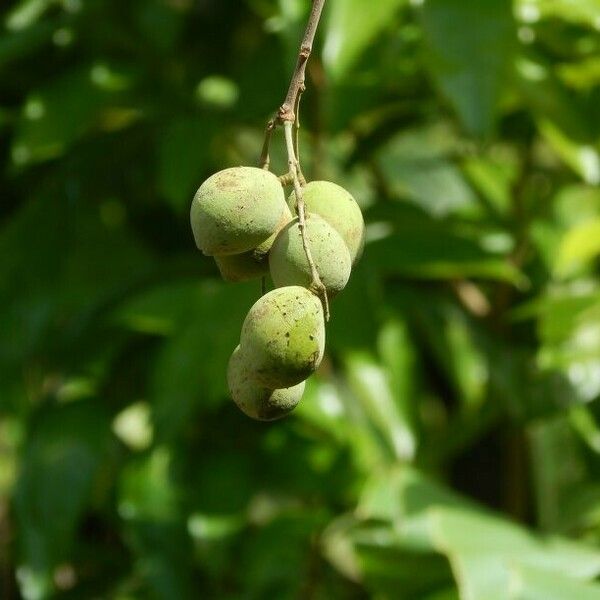
Plant Overview
Often referred to as the Yellow Spanish Lime or Guaya de Monte, Melicoccus oliviformis is the wilder, more slender cousin of the popular Mamoncillo. Native to the tropical dry forests of Central and South America, this tree is a hidden gem of the Sapindaceae family. While it looks like a cluster of oversized olives hanging from the branches, one bite reveals a tangy, translucent pulp that bridges the gap between a lime and a lychee.
🔍 How to Identify
- 🍃 The Leaves: Features glossy, deep green compound leaves usually arranged in two pairs of leaflets. They have a distinctively smooth, waxy texture that helps the tree retain moisture.
- 🟡 The Fruit: Unlike its rounder relatives, these fruits are ovoid (olive-shaped). They transition from a bright green to a pale, matte yellow when fully ripe.
- 🌳 The Structure: A medium-sized evergreen tree with a dense, spreading canopy and smooth, light-grey bark that provides a stately look to any tropical landscape.
🏡 In Your Garden
- ☀️ Sun & Space: This is a sun-worshipper that requires plenty of vertical space. It is a slow-growing tree, but because it develops a deep, sturdy taproot, it is notoriously difficult to transplant once it has been in the ground for more than a year.
- 💧 Drought Resilience: Once established, the Guaya de Monte is remarkably tough. It prefers well-draining, slightly acidic soil and can survive long dry seasons, making it an excellent choice for "set-it-and-forget-it" tropical edible landscapes.
⚠️ Safety & Toxicity
- ✅ Status: The fruit pulp is edible and highly prized for its tart, refreshing flavor.
- 🛑 Choking Hazard: The seeds are large, smooth, and very slippery. They pose a significant choking risk, especially for young children and pets. Always supervise kids when they are "popping" the fruit into their mouths.
- 🐾 Pet Safety: While the fruit is non-toxic, the hard seeds are indigestible and can cause intestinal blockages if swallowed by dogs or cats.
✨ Fun Fact
Despite its common name "Spanish Lime," this tree isn't a citrus at all! It is actually a member of the Soapberry family, making it a closer relative to the Lychee, Rambutan, and even the Maple tree than to any lemon or lime.

Detailed Care Instructions







