Plant Overview
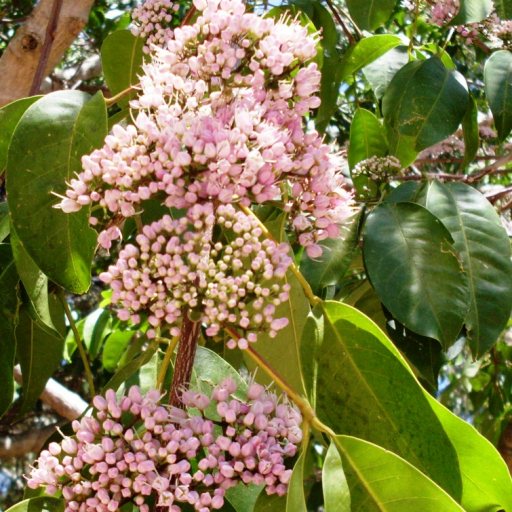
The Pink Euodia, often whispered about by butterfly enthusiasts as the "Ulysses Tree," is a radiant gem of the Australian rainforest. Known for its breathtaking display of pink blossoms that erupt directly from its branches, it transforms any landscape into a tropical fairytale. It is a vital pillar of its ecosystem, acting as the primary nursery for one of the world’s most beautiful butterflies.
🔍 How to Identify
- 🌸 Branch-Borne Flowers: Look for dense, fluffy clusters of small pink to mauve flowers that grow directly out of the woody branches (a trait called cauliflory) rather than just the tips.
- 🍃 Trifoliate Leaves: The foliage consists of large, glossy green leaves that always grow in sets of three, giving the canopy a lush, full appearance.
- 🪵 Corky Bark: The trunk features a distinctively soft, pale, and deeply fissured bark that feels slightly spongy to the touch, earning it the nickname "Corkwood."
🏡 In Your Garden
- 🦋 Butterfly Sanctuary: This is the "must-have" tree for attracting the iconic, electric-blue Ulysses Butterfly. It provides the essential food source for their caterpillars, making your garden a critical link in their lifecycle.
- 🚀 Fast-Growing Shade: If you have a larger space, this tree is an excellent choice for quick screening. It loves a sunny spot with plenty of mulch to keep its roots cool and moist, mimicking the humid floor of a rainforest.
⚠️ Safety & Toxicity
- ✅ Pet & Human Safe: Melicope elleryana is generally considered non-toxic and safe to plant in family gardens where children and pets play.
- 🧤 Sap Precaution: While not poisonous, the sap can occasionally cause mild skin irritation for those with very sensitive skin. It is always a good idea to wear gloves when performing heavy pruning.
✨ Fun Fact
The Pink Euodia is a "cauliflorous" plant, meaning it flowers from its "stem." Scientists believe this evolution allows the tree to be pollinated by larger animals, like honeyeaters and fruit bats, who can easily perch on the sturdy woody branches while sipping nectar!

Detailed Care Instructions
To grow Melicope elleryana, also known as the Pink Euodia or Pink Evodia plant, follow these steps:
- Select a suitable location: These plants prefer a warm and humid climate. Choose a spot that receives partial shade or filtered sunlight. Avoid areas with strong winds or extreme temperatures.
- Prepare the soil: Melicope elleryana thrives in fertile, well-draining soil. Amend the soil with organic matter, such as compost, to improve its fertility and drainage. Ensure the pH level is slightly acidic to neutral (around 6.0-7.0).
- Propagation: There are two common methods to propagate Melicope elleryana: through seeds or cuttings.
a. Seeds: Collect ripe seeds from the plant or purchase them from a reputable supplier. Before sowing, soak the seeds in warm water for 24 hours to facilitate germination. Sow the seeds in pots or a nursery bed, barely covering them with a thin layer of soil. Keep the soil consistently moist, and germination should occur within 2-4 weeks.
b. Cuttings: Take a 4-6 inch (10-15 cm) stem cutting from a healthy, mature plant during the warmer months. Remove leaves from the lower half of the stem and dip the cut end in rooting hormone powder. Insert the cutting into a pot filled with well-draining potting mix, and keep it in a warm, humid environment. Mist the cutting regularly to keep the humidity high. After 6-8 weeks, roots should develop, and the cutting can be transplanted to a larger container or directly into the ground.
- Planting: Once the seedlings or rooted cuttings are ready, transplant them into containers or the garden bed. Make sure the planting holes are wide and deep enough to accommodate the root system. Space the plants about 3-6 feet (1-2 meters) apart to allow for their eventual size and spread.
- Watering: Melicope elleryana prefers consistently moist soil but avoids waterlogging. Water the plants regularly, especially during dry periods or when they are young and establishing. Mulching around the base of the plant can help retain moisture and suppress weed growth.
- Pruning and care: Prune any dead or damaged branches to maintain a tidy appearance and promote new growth. Regularly check for pests and diseases, such as scale insects or powdery mildew, and take appropriate measures to control them. Fertilize the plants with a balanced slow-release fertilizer in spring and late summer to promote healthy growth.
By following these guidelines, you can successfully grow Melicope elleryana and enjoy its attractive pink flowers and glossy foliage.

Place in a bright room that is sun drenched almost all day. Or directly in a south-facing window.

Melicope Elleryana plant requires regular watering to ensure that the soil remains damp but not overwatered. The best way to water this plant is to water it deeply once a week, ensuring that the water reaches deep into the soil. Avoid waterlogging the soil as this can lead to root rot and other issues.
To check if the soil is dry, insert your finger into the soil up to your second knuckle. If the soil feels dry at this depth, then it is time to water the plant. When watering, pour water around the base of the plant, avoiding getting water on the foliage.
If you notice the plant leaves are beginning to wilt, then the plant needs more water. However, be careful not to overwater the plant as this can lead to issues with drainage and root rot.
To fertilize this particular plant, use a balanced fertilizer with equal amounts of nitrogen, phosphorous, and potassium. Apply the fertilizer in early spring as the new growth begins. Alternatively, you can use slow-release fertilizer pellets that will feed the plant over time. Water the plant thoroughly before and after fertilizing to avoid root burn. Avoid using high-nitrogen fertilizer as it may cause excessive foliage growth at the expense of flowers and fruit production. Follow the instructions on the fertilizer package for the correct dosage and application method.
Melicope Elleryana prefers well-draining soil that is slightly acidic with a pH range of 5.5 to 6.5. The soil should be rich in organic matter with a good amount of nutrients and minerals. A mix of perlite and peat moss can be ideal for ensuring good drainage while retaining enough moisture for the plant to thrive. The soil should be loose and porous to promote root development and allow air circulation. It is important to avoid heavy clay soils that tend to retain water and can lead to root rot. A balanced fertilizer can be added to the soil to provide the necessary nutrients for the plant during the growing season.
Melicope Elleryana can be propagated through a number of methods, including seed propagation, cutting propagation, and grafting. Seed propagation involves collecting seeds from the plant and planting them in soil. This method can be unpredictable, as the resulting plants may not be identical to the parent plant. Cutting propagation involves taking a stem or leaf from the parent plant and rooting it in soil or water. This method can produce clones of the parent plant, but may not be as reliable as grafting. Grafting involves taking a stem or bud from the parent plant and attaching it to a rootstock plant. This method can produce consistent plants with desirable traits and is commonly used in commercial plant production. Regardless of the propagation method chosen, proper care and attention should be given to the young plants to ensure their successful growth and development.








