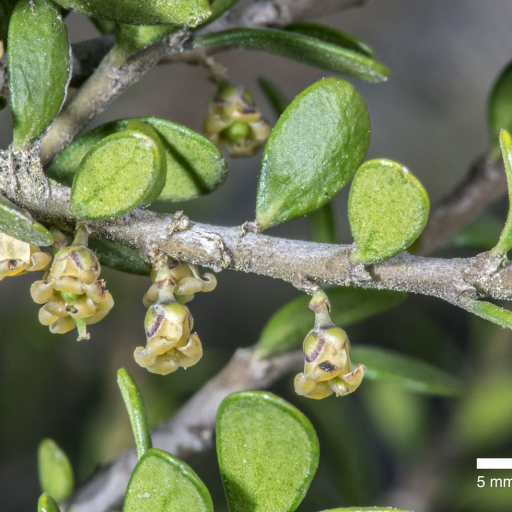
Plant Overview
Meet the Porcupine Shrub, a master of architectural defense from the rugged mountain landscapes of New Zealand. Looking more like a tangled bundle of silver barbed wire than a traditional bush, this plant has evolved to survive the harshest alpine winds and hungry grazing animals. Its stark, minimalist aesthetic makes it a favorite for modern xeriscaping and high-contrast rock gardens.
🔍 How to Identify
- 🌵 Zig-Zag Stems: The most striking feature is its stiff, interlaced grey branches that grow in a chaotic, zig-zag pattern, tapering into sharp, needle-like tips.
- 🍃 Minimalist Foliage: It sports very tiny, narrow green leaves that often hide deep within the inner branches to protect themselves from the elements.
- ⚪ Under-Branch Berries: In late summer, it produces small, fleshy white or pale-violet berries that look like tiny pearls clinging to the underside of the thorny stems.
🏡 In Your Garden
- 🪨 The Scree Specialist: Because it originates in rocky outcrops, this plant demands exceptional drainage. It is the perfect choice for "set and forget" landscaping, as it thrives on neglect and can handle extreme wind and frost.
- 🛡️ Architectural Interest: It doesn't need pruning to look "designed." Its natural growth habit creates a living sculpture that provides a sharp, silver-blue contrast against softer green ferns or grasses.
⚠️ Safety & Toxicity
- 🩹 Physical Hazard: While not chemically toxic, the stem tips are genuinely sharp. Avoid planting it right next to narrow walkways where guests might brush against it with bare skin.
- 🐾 Pet Safety: It is generally considered non-toxic to cats and dogs, though the prickly texture usually acts as a natural deterrent that keeps pets from chewing on it.
✨ Fun Fact
- 🦎 A Lizard's Fortress: The Porcupine Shrub has a unique ecological partnership with lizards. Because the berries grow tucked away under the prickly branches, they are protected from birds but perfectly positioned for native skinks to find and eat, helping the plant spread its seeds across the rocky terrain.

Detailed Care Instructions

Place in a window with dappled sun or a spot in the middle of a room. Or directly in a window facing west or east.

When the top few inches of soil dry out, water your plants. If the top few inches of soil are still moist, do not water your plant. Wait a few days, then poke your finger into the soil to see if anything has changed. Overwatering poses a disease risk, such as the development of fungal diseases in the roots. These plants have adaptations in there leaves that allow them to survive in low water supply.








