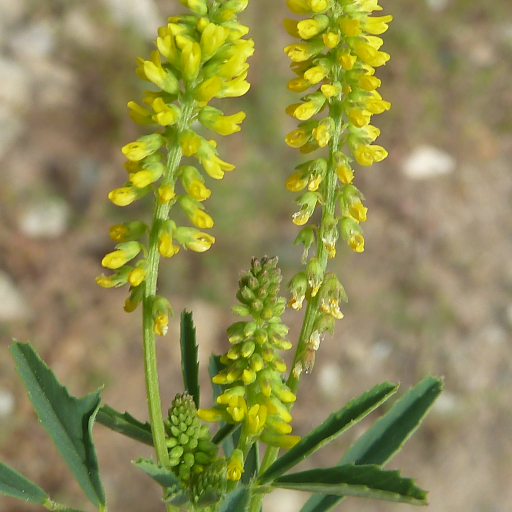
Plant Overview
Commonly known as the Mediterranean Sweet Clover or Furrowed Melilot, this delicate yellow wildflower is a sun-loving traveler from the Mediterranean basin. It is often found dancing in the coastal breeze or reclaiming disturbed soils in sandy fields. While it may look like a common weed to the untrained eye, it is a master of soil chemistry, quietly enriching the ground wherever it takes root.
🔍 How to Identify
- 🌼 Golden Spikes: It features tiny, bright yellow pea-shaped flowers that grow in slender, upright clusters (racemes). These blooms typically appear from late spring through mid-summer.
- 🍃 Toothed Leaves: The foliage is "trifoliate," meaning it has three leaflets like a clover. Each leaflet has a distinctively serrated or "saw-toothed" edge, particularly near the tip.
- 🌰 Furrowed Pods: The plant gets its name, sulcatus, from its seed pods. Unlike other melilots, its tiny pods are marked with deep, concentric ridges or "furrows" that look like miniature carvings.
🏡 In Your Garden
- 🌱 The Soil Healer: This plant is a "nitrogen fixer." It hosts special bacteria in its roots that pull nitrogen from the air and pump it into the soil, making it a natural fertilizer for neighboring plants.
- 🐝 A Bee’s Favorite: It is an exceptional "honey plant." If you find it on your property, you’ll notice it acts as a magnetic hub for honeybees, butterflies, and other beneficial pollinators looking for high-quality nectar.
- 🌾 Hardy Pioneer: It thrives in poor, sandy, or even slightly salty soils where other garden plants might wither. It is incredibly drought-tolerant once established, thanks to its deep-reaching root system.
⚠️ Safety & Toxicity
- 🐾 Livestock Warning: While beautiful, the plant contains coumarin. If the plant becomes moldy (usually when harvested for hay in damp conditions), this chemical can transform into a dangerous anticoagulant. It is generally safe for humans to touch, but keep an eye on grazing pets.
- 👶 Kid & Pet Safety: While not typically considered "poisonous" to the touch, ingestion in large quantities should be avoided. It is best treated as an ornamental or ecological plant rather than an edible one.
✨ Fun Fact
The "sweet" scent of the Mediterranean Sweet Clover comes from its coumarin content, which smells exactly like freshly mown hay. In the past, people would dry the leaves and flowers to use as a natural "sweet bag" to scent their linen closets and keep clothes smelling fresh!

Detailed Care Instructions
To grow Melilotus sulcatus, also known as Yellow Sweet Clover or Sour Clover, follow these steps:
- Climate and conditions: Determine if your climate and soil conditions are suitable for growing Melilotus sulcatus. It thrives best in USDA hardiness zones 3-8, which have cool to mild summers and adequate rainfall. It prefers well-drained, sandy or loamy soil.
- Select a location: Choose a sunny spot in your garden where the Melilotus sulcatus can receive at least 6-8 hours of direct sunlight daily. Ensure the soil is well-drained and not excessively compacted.
- Prepare the soil: Prepare the soil by removing any weeds, rocks, or debris. Loosen the soil using a garden fork or tiller. Add organic matter, such as compost, to improve soil fertility and drainage.
- Sow the seeds: Sow the Melilotus sulcatus seeds directly into the prepared soil during the spring or early fall. Scatter the seeds evenly across the soil's surface and lightly rake them in, covering them with a thin layer of soil.
- Watering: Water the area gently after sowing to ensure the soil is moist, but avoid overwatering. Once the plants establish and develop a strong root system, they become drought-tolerant and less dependent on regular watering.
- Maintenance: Keep the area weed-free, as weeds can compete for nutrients and sunlight. Mulching around the plants can help suppress weeds and retain moisture.
- Harvesting: Melilotus sulcatus can be harvested when the plants reach their full height of around 3-4 feet. Cut the plants close to the ground with sharp shears or a scythe, leaving behind a few inches of stubble for regrowth.
- Regrowth: After harvesting, Melilotus sulcatus often regrows from its stubble, producing new growth in subsequent years. This allows for sustainable harvests or natural reseeding.
Remember to check local regulations and habits of Melilotus sulcatus in your region, as it can be considered invasive in some areas.

Place in a bright room that is sun drenched almost all day. Or directly in a south-facing window.

To properly water this plant, you should check the soil moisture level regularly by inserting your finger into the soil to a depth of two inches. If the soil feels dry, it is time to water. When watering, do so thoroughly and deeply, making sure to saturate the soil completely. Be careful not to let the water pool on top of the soil, as this can lead to root rot. It is also important to avoid letting the soil dry out completely between watering, as this can cause stress to the plant and negatively affect its growth. Finally, it is recommended to water in the morning or late evening, as watering during the heat of the day can cause the water to evaporate quickly, leaving the plant without proper hydration.
To properly fertilize this plant, it is important to use a balanced fertilizer with equal amounts of nitrogen, phosphorus, and potassium. Apply the fertilizer in the early spring, just before new growth begins, and again in the early summer when the plant is actively growing. Use caution not to over-fertilize, as this can lead to excessive foliage growth at the expense of blooms. Follow the instructions on the fertilizer package and water the plant well after applying the fertilizer.
Melilotus Sulcatus plant prefers a well-draining soil that is rich in organic matter. The soil should have a neutral to slightly alkaline pH and should be moderately fertile. The plant can tolerate drought, but it prefers to be in soil that is slightly moist most of the time. It is also important to avoid compacted soil around the root zone as this can limit root growth and lead to poor plant development. Avoid using soils that are heavy in clay or soils that are poorly drained as this can cause root rot and other plant diseases. Ultimately, the ideal soil for Melilotus Sulcatus is a well-balanced, nutrient-rich soil with good drainage and enough moisture to support healthy plant growth.
Melilotus sulcatus can be propagated by collecting the mature seeds from the plant in autumn or winter. The seeds should be sown in well-draining soil, which has been moistened beforehand. Germination can take place in both spring and autumn. The new plants should be watered regularly until they become established. Alternatively, individual stem cuttings can be taken in early spring and planted in a well-draining potting mix. It is recommended to keep the cuttings in a humid environment until they have established roots.








