Plant Overview
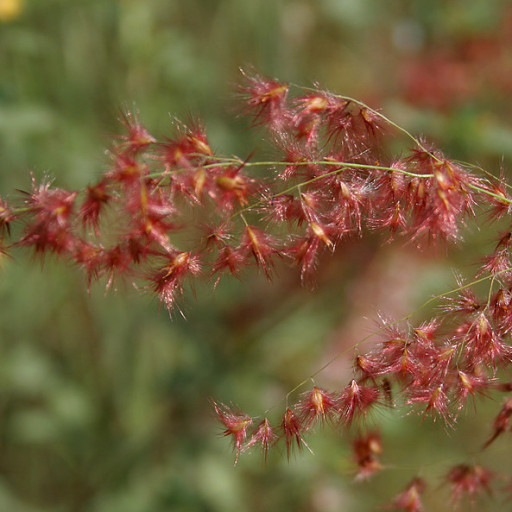
Known widely as Rose Natal Grass or Ruby Grass, this shimmering South African native is beloved for its ethereal, candy-pink plumes. While it looks like something out of a dreamscape, it is a hardy survivor that often thrives in disturbed soils where other plants struggle. Though beautiful, it is a spirited traveler and is often classified as a "beautiful weed" due to its ability to spread rapidly across warm landscapes.
🔍 How to Identify
- 🌸 The Flower Plumes: Striking reddish-pink or ruby-colored flower heads (panicles) that are covered in soft, silky hairs, giving them a fuzzy, glowing appearance.
- 🍃 The Foliage: Slender, blue-green linear leaves that form a dense, fountain-like clump before the tall flower stalks emerge.
- 🌬️ Seed Transition: As the flowers age, they lose their vibrant pink hue and transition into a shimmering, silvery-white color before the seeds are carried away by the wind.
🏡 In Your Garden
- ☀️ Sun-Seeker: This grass is a true sun-worshipper and requires intense light to develop its signature rosy color; in shaded areas, the stalks will weaken and the colors will remain dull.
- 🌱 Opportunistic Spreader: It is a "pioneer plant," meaning it is often the first to colonize cleared or poor soil. Because it produces thousands of wind-borne seeds, it can quickly escape garden beds and naturalize in nearby lawns or wild spaces.
- 🏜️ Drought Specialist: It thrives on neglect and prefers well-draining, sandy soil. Once established, it rarely needs supplemental watering, making it a favorite for low-maintenance xeriscaping.
⚠️ Safety & Toxicity
- 🐾 Pet Friendly: Melinis repens is generally considered non-toxic to cats, dogs, and livestock.
- 🌾 Respiratory Irritant: While not poisonous, the fine, silky hairs on the seeds and the abundant pollen can be an irritant for people suffering from hay fever or seasonal allergies.
- 🚫 Ecological Warning: In certain regions like Florida and Hawaii, it is considered an invasive species because it can outcompete native grasses and increase the risk of brush fires.
✨ Fun Fact
The genus name Melinis is derived from the Greek word for "honey," a tribute to the golden, honey-like appearance of the seeds once the vibrant pink hairs have fallen away.

Detailed Care Instructions
| Humidity | Normal |
| Lighting | Full Sun |
| Difficulty | Easy |
| Hibernation | Cold Period |
| Temperature | 21°C - 24°C |
| Hardiness Zones | 10A - 11 |
To grow Melinis Repens plant, also known as Natal redtop, follow these steps:
- Choose a suitable location: Natal redtop prefers full sun but can tolerate partial shade. Make sure the soil is well-draining and fertile.
- Prepare the soil: Remove any weeds or grass from the planting area and loosen the soil with a garden fork or tiller. Add organic matter like compost or well-rotted manure to improve soil fertility and drainage.
- Sow the seeds: Scatter the seeds evenly on the prepared soil surface. You can also lightly rake the seeds into the soil, but avoid burying them too deep as they require light for germination.
- Water regularly: Keep the soil consistently moist but not waterlogged. Water deeply and provide enough moisture for the seeds to germinate and establish themselves.
- Mulch: Applying a thin layer of organic mulch like straw or wood chips can help retain moisture, suppress weed growth, and regulate soil temperature.
- Provide care and maintenance: Once the plants have grown a few inches tall, thin them out to ensure proper spacing between plants. Moisture-loving plants like Natal redtop may require additional watering during dry spells. Fertilize periodically using a balanced fertilizer to promote healthy growth.
- Harvest or control spreading: Natal redtop can spread aggressively, so if you want to control its growth, regularly remove any unwanted or invasive plants. If you prefer to harvest the grass, you can cut it back to a few inches above the ground level.
Overall, Natal redtop is a hardy and low-maintenance plant that can thrive in a variety of conditions. However, it is important to check if it is suitable for your specific region and climate before planting.

Place in a bright room that is sun drenched almost all day. Or directly in a south-facing window.

The Melinis Repens plant should be watered regularly, but be careful not to over-water as it can lead to root rot. It is best to water deeply once or twice a week, allowing the soil to dry out slightly in between waterings. When watering, try to avoid getting water on the leaves as this can promote fungal growth. Additionally, the Melinis Repens plant prefers well-draining soil, so make sure the pots or ground have adequate drainage holes to allow excess water to escape. Overall, the key to watering this plant is to maintain consistent moisture without saturating the soil.
- Choose a fertilizer that is high in nitrogen.
- Apply the fertilizer during the growing season (spring and summer).
- Dilute the fertilizer according to the package instructions.
- Apply the fertilizer to the base of the plant, avoiding contact with the leaves and stems.
- Water the plant immediately after fertilizing to help the nutrients penetrate the soil.
- Do not over-fertilize, as this can lead to burned roots and damaged foliage.
- Monitor the plant for signs of nutrient deficiency, such as yellowing or stunted growth, and adjust fertilization accordingly.
For optimal growth and health of this specific plant species, it is recommended to use a well-draining soil that is rich in organic matter and nutrients. The ideal pH range for the soil should be slightly acidic to neutral, around 6.0 to 7.5. The soil should also be able to retain moisture, but not remain waterlogged. A mixture of sand, loam, and compost is a suitable option for growing Melinis Repens plants. It is important to avoid heavy clay soils, as they tend to retain too much moisture and can suffocate the plant's roots. The chosen soil should also be free of any toxic chemicals or pollutants that can harm the plant's growth and development.
Melinis Repens can be propagated through division, cuttings, or seeds. To divide, gently lift the plant from the soil and separate the clumps into smaller sections. Make sure each section has roots and shoots, and plant them in a new location or container.
To propagate through cuttings, take a stem cutting with a few nodes and remove the leaves from the bottom half. Dip the cut end in rooting hormone and place it in moist soil or water. Keep it in a warm, bright location and mist regularly until roots form.
To propagate through seeds, collect mature seeds from the plant and plant them in soil in a sunny location. Keep the soil moist and warm until the seeds germinate. Transplant the seedlings to a new location or container once they are large enough.








