Plant Overview
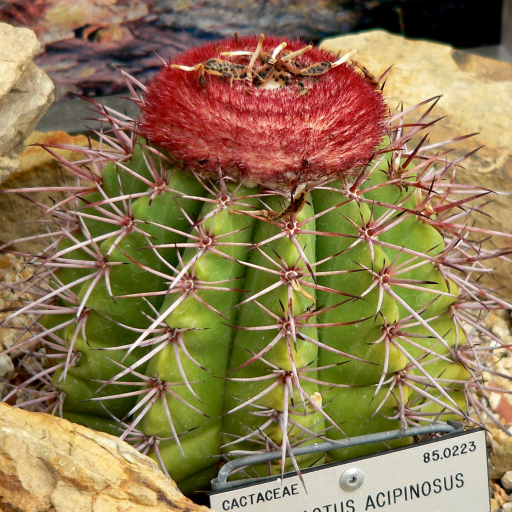
Known as the Friar’s Crown or the Turk’s Cap Cactus, Melocactus zehntneri is a structural masterpiece from the arid Caatinga region of Brazil. This cactus is famous for its "two-stage" life: it looks like a standard green globe for years until it reaches maturity, at which point it grows a bizarre, fuzzy red hat that looks like it was knitted by hand.
🔍 How to Identify
- 🌵 The Body: A globose to slightly cylindrical green stem, divided into 10–15 deep vertical ribs.
- 🎩 The Cephalium: The "crown" at the top is a dense mass of white wool and reddish-pink bristles. This is where the flowers and fruits emerge.
- ⚔️ Radial Spines: Strong, slightly curved spines that hug the body of the cactus, usually appearing in shades of pale grey or brown.
🏡 In Your Garden
- 🏜️ The "Maturity Halt": A fascinating trait of this cactus is that once the cephalium (the hat) starts growing, the green body of the plant stops growing entirely. All its energy is diverted into the crown to produce tiny pink flowers.
- 🚫 Don't Move Me: Melocactus species are notoriously sensitive to repotting. They have delicate, shallow root systems that hate being disturbed. It is best to choose a high-quality, well-draining mineral mix and leave the plant in its container for as long as possible.
- ☀️ Tropical Requirements: Unlike many cacti that enjoy a cold winter dormancy, this Brazilian native needs to stay warm year-round. It cannot tolerate frost and will succumb to rot if kept in damp, cold soil.
⚠️ Safety & Toxicity
- 🩹 Physical Hazard: While not chemically toxic, the spines are stiff and sharp. They can easily puncture skin or get caught in pet fur.
- 🐾 Pet & Child Safety: The plant is generally non-toxic if nibbled, but the spines make it a "look but don't touch" addition to the home. The small, bright fruits that pop out of the cap are technically edible but should be kept away from curious toddlers.
✨ Fun Fact
When this cactus is ready to spread its seeds, it "spits" out small, bright pink, pepper-shaped fruits from its woolly cap. These fruits appear almost overnight, pushing through the fuzz like tiny neon lightbulbs to attract birds and lizards.

Detailed Care Instructions

Place in a bright room that is sun drenched almost all day. Or directly in a south-facing window.

When the top few inches of soil dry out, water your plants. If the top few inches of soil are still moist, do not water your plant. Wait a few days, then poke your finger into the soil to see if anything has changed. Overwatering poses a disease risk, such as the development of fungal diseases in the roots. These plants have adaptations in there leaves that allow them to survive in low water supply.








