Plant Overview
Known as "Water Mint," this moisture-loving perennial is the aromatic ancestor of the Peppermint we use today. Found naturally along stream banks and marshes, it offers a refreshing, spicy fragrance that can transform a soggy corner of your garden into a sensory retreat. Its history stretches back to ancient Greece, where it was often strewn across floors to scent the air as people walked by.
🔍 How to Identify
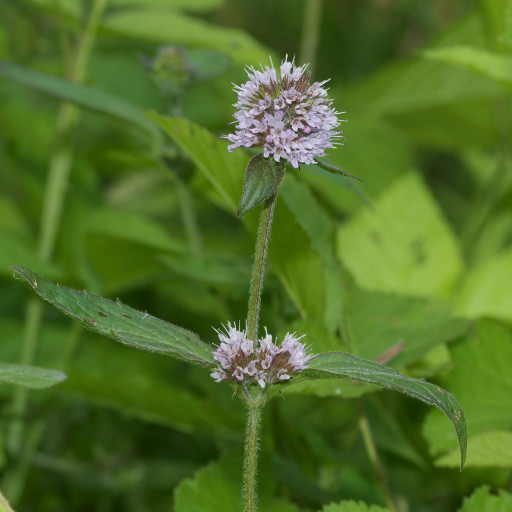
- 🌿 The Leaves: These are ovate to lance-shaped with serrated (toothed) edges. They are often slightly hairy and can turn a deep purple-green when exposed to direct sunlight.
- 🟪 The Blooms: Unlike many mints that grow in tall spikes, Water Mint features dense, ball-shaped clusters of tiny lilac-pink flowers that sit at the very tips of the stems.
- 🟥 The Stem: True to the mint family (Lamiaceae), the stems are distinctly square-sided and frequently show a reddish-burgundy tint.
🏡 In Your Garden
- 💧 Wetland Specialist: This plant doesn't just like water; it thrives in it. It is the perfect choice for the margins of a garden pond or a "boggy" patch where other plants might suffer from root rot.
- 🏃 A Fast Runner: Because it spreads via underground runners (rhizomes), it can be quite aggressive. If you have a small garden, it is best to plant it in a submerged container to keep its "wandering feet" from taking over your entire lawn.
- 🦋 Pollinator Magnet: The nectar-rich flowers are a favorite for bees, hoverflies, and butterflies, making it a functional powerhouse for local biodiversity.
⚠️ Safety & Toxicity
- ✅ Human Use: Water Mint is generally safe for culinary use in teas or garnishes. However, the raw leaves have a much stronger, more pungent flavor than garden spearmint.
- 🐾 Pet Warning: Like many members of the mint family, it contains essential oils that can cause digestive upset or vomiting in cats and dogs if consumed in large quantities.
- 💊 Concentration: Always avoid using pure mint essential oils on the skin or near children without professional guidance, as they are highly concentrated.
✨ Fun Fact
- 🧬 The Secret Parent: If you love the flavor of Peppermint, you have Water Mint to thank! Peppermint (Mentha x piperita) is actually a natural hybrid created by the accidental cross-pollination of Water Mint and Spearmint.

Detailed Care Instructions
| Humidity | High |
| Lighting | Full Sun |
| Toxicity | Poisonous |
| Difficulty | Medium |
| Hibernation | Cold Period |
| Hardiness Zones | 5 - 9 |
To grow Mentha Aquatica (water mint) plants, you can follow these steps:
- Choose a location: Water mint plants thrive in wet and marshy habitats, so select a location that receives full to partial sunlight and has consistently moist soil. They can also be grown in container gardens.
- Prepare the soil: Water mint plants prefer acidic soil with a pH of 6.0 to 7.0. Prepare the soil by adding organic matter such as compost or well-rotted manure to improve drainage and fertility.
- Obtain the plant: Visit a local nursery or garden center to purchase Mentha Aquatica plants. Alternatively, you can propagate them from cuttings.
- Planting process:
- If planting in the ground, dig a hole slightly larger than the root ball of the plant.
- Make sure the top of the root ball is level with the soil surface.
- Place the plant in the hole and fill it with soil, gently firming it around the plant.
If planting in a container, choose a pot with drainage holes and fill it with a mixture of potting soil and compost.
- If planting in the ground, dig a hole slightly larger than the root ball of the plant.
- Watering: Water mint plants require consistently moist soil. Water them regularly to keep the soil evenly moist, especially during dry periods. Make sure to avoid waterlogging, as too much standing water can harm the plant.
- Mulching: Apply a layer of organic mulch around the plants to retain moisture and suppress weed growth. It also helps to insulate the soil and regulate the temperature.
- Fertilization: Water mint plants generally do not require regular fertilization. However, you can apply a slow-release organic fertilizer in early spring to provide nutrients for healthy growth.
- Pruning: Water mint can be aggressive in growth, so it's important to prune it regularly to control its spread. Trim back any excess growth and remove any dead or damaged leaves.
- Pest and disease control: Water mint plants are generally resistant to pests and diseases. However, keep an eye out for issues like aphids or powdery mildew. Treat any problems with appropriate organic pest or disease control measures.
- Harvesting: You can harvest the leaves of water mint plants once they reach full maturity. Harvest them by pinching off the stems just above the set of leaves. Use the fresh leaves for culinary purposes or dry them for herbal teas.
By following these steps, you can successfully grow Mentha Aquatica plants and enjoy their refreshing fragrance and culinary uses.

Place in a bright room that is sun drenched almost all day. Or directly in a south-facing window.

To water this plant, you should ensure that the soil is moist but not waterlogged. It is important to avoid letting the soil dry out completely, but at the same time, you should also avoid overwatering as this can lead to root rot. One way to check for the moisture level is to stick your finger into the soil and see if it feels damp. If it does, then the plant should have enough water. If it feels dry, then you should water the plant. It is also important to water the plant at the base and avoid getting the leaves wet, as this can increase the risk of disease. The frequency of watering will depend on the environment and climate, so it is important to monitor the plant regularly and adjust the watering schedule accordingly.
To fertilize this plant, use a balanced water-soluble fertilizer with an N-P-K ratio of 10-10-10 or 20-20-20. Apply the fertilizer every two weeks, diluting it to half the concentration recommended on the package. Water the plant thoroughly before and after applying fertilizer. Avoid getting fertilizer on the leaves as it can burn them.
When planting Mentha Aquatica, it is important to choose a soil that is slightly acidic with a pH of approximately 6.0 to 7.5. This plant prefers soil that is rich in organic matter, such as compost or well-rotted manure, as it provides the necessary nutrients for growth. The soil should also be well-draining and moist, as this plant requires consistent watering to thrive. It is recommended to avoid soils that are heavy in clay or sand, as they can impede drainage or dry out too quickly. Additionally, adding a layer of mulch around the base of the plant can help retain moisture in the soil and deter weeds.
To propagate this particular plant, the first step would be to obtain cuttings from a mature plant. These cuttings should include both stem and leaf nodes. Next, the cuttings should be placed in a container of water, taking care to ensure that the nodes are submerged. The container should then be placed in a bright, warm location and monitored regularly to ensure the water levels remain consistent. Within a few weeks, the cuttings should begin to develop roots. Once sufficient roots have formed, the cuttings can be transplanted into soil and cared for in the same manner as mature plants.
Common pests of the water mint include Spider mites, fungus gnats, aphids, thrips, whiteflies. Make a habit of checking your water mint frequently for pests so that any infestations can be caught and managed early.








