Plant Overview
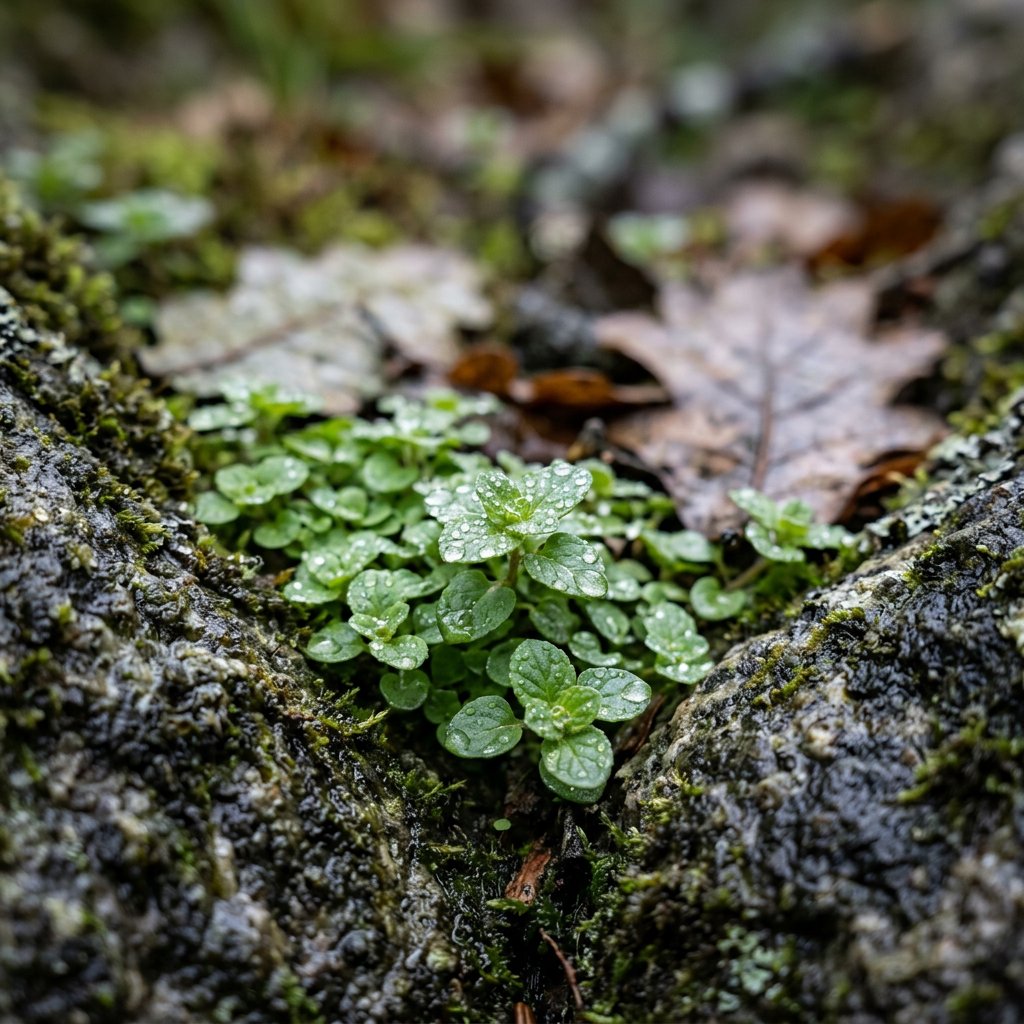
Often called the "Miniature Mint" or "Creeping Mint," Mentha requienii is one of the smallest members of the mint family. Originally hailing from the sun-drenched Mediterranean islands of Corsica and Sardinia, this plant doesn't grow up—it grows out. It creates a lush, moss-like emerald rug that releases a powerful, cooling peppermint punch whenever it is brushed or stepped upon.
🔍 How to Identify
- 🍃 The Leaves: These are incredibly tiny, oval, and bright green. They are often no larger than a pinhead, giving the plant a soft, velvety texture that mimics moss from a distance.
- 💜 The Flowers: In mid-summer, look very closely for microscopic, pale lilac or mauve blossoms. They are so small they often go unnoticed, tucked neatly between the leaf axils.
- 🤏 The Habit: It forms a dense, flat mat that rarely exceeds one inch in height. It spreads via creeping stems that root as they travel across the soil.
🏡 In Your Garden
- 💧 Thirsty Groundcover: Unlike its more aggressive mint cousins, this variety has a very shallow root system and cannot handle drought. It thrives in consistently moist, well-draining soil and prefers "feet" that stay cool and damp.
- 👣 Gentle Footsteps: While it is often marketed as a "steppable" plant for rock gardens or between pavers, it is more fragile than grass. It is best used in low-traffic areas where its refreshing scent can be released without snapping the delicate stems.
- 🌤️ Light Nuance: In cooler climates, it can handle full sun if kept wet, but in hotter regions, it absolutely requires partial shade to prevent the tiny leaves from "scorching" or drying into a crisp.
⚠️ Safety & Toxicity
- 🥗 Edible Status: It is non-toxic to humans and is technically a culinary herb. However, because of its tiny size and ground-hugging habit, it is rarely used in cooking outside of garnishes or specialty infusions.
- 🐾 Pet Caution: Like many plants in the mint family, it contains essential oils (menthol) that can cause digestive upset, vomiting, or diarrhea in dogs and cats if ingested in large quantities.
✨ Fun Fact
If you have ever enjoyed a glass of the bright green liqueur Crème de Menthe, you’ve likely tasted the legacy of this plant! Mentha requienii is the original botanical source used to flavor the famous after-dinner drink.

Detailed Care Instructions
| Color | Light Purple |
| Soil Ph | 5.6-7.0 |
| Humidity | Dry |
| Lighting | Full Sun |
| Toxicity | Non-Toxic |
| Soil Type | Well-Drained |
| Bloom Time | June Through August |
| Difficulty | Medium |
| Plant Type | Perennial |
| Hibernation | Cold Period |
| Mature Size | 1/4 In. Tall |
| Native Area | Sardinia, Corsica, Italy, France |
| Sun Exposure | Full Sun To Part Shade |
| Hardiness Zones | 7-11 |
To grow Mentha Requienii, also known as Corsican mint, follow these steps:
- Start with high-quality seeds or obtain young plants from a nursery.
- Choose a suitable location for the plant. Mentha Requienii prefers partial shade to full sun.
- Ensure that the soil is well-drained and rich in organic matter. It should be slightly acidic with a pH of around 6-7.
- Prepare the soil by loosening it with a garden fork or tiller. Remove any weeds or rocks.
- Sow the seeds or plant the young plants on the prepared soil surface, leaving 6-12 inches of space between them.
- Gently press the seeds or young plants into the soil but avoid burying them too deep.
- Water the plants thoroughly after planting, ensuring that the soil is moist but not waterlogged. Keep the soil consistently moist during the early growth stages.
- Once established, Mentha Requienii requires regular watering but be cautious not to overwater.
- Apply a layer of organic mulch around the plants to help retain moisture and suppress weed growth. This is particularly important during hot, dry periods.
- Fertilize the plants every 4-6 weeks during the growing season with a balanced fertilizer.
- Prune the plant regularly to maintain its compact, dense growth habit. This encourages the production of new foliage.
- Harvest the leaves as needed for culinary or aromatic purposes. Pinch off stems just above a leaf junction to encourage branching and new growth.
- Monitor the plants for pests and diseases, such as spider mites or leaf spot. Treat any issues promptly with organic or chemical controls as necessary.
By following these steps, you can successfully grow Mentha Requienii and enjoy its delightful fragrance and culinary uses.

Place in a window with dappled sun or a spot in the middle of a room. Or directly in a window facing west or east.

Mentha Requienii is a type of herbaceous plant that requires regular watering to thrive. When watering, it is important to avoid over-watering as this can lead to fungal infections and root rot.
To water this plant, start by checking the soil moisture level by sticking your finger about an inch into the soil. If it feels dry to the touch, it’s time to water the plant. Use a watering can or hose with a nozzle attachment to gently pour water onto the soil around the base of the plant, taking care not to wet the leaves.
Water the plant deeply, allowing water to penetrate the soil and reach the roots. Avoid splashing water onto the foliage as this can cause the leaves to develop mildew or other fungal diseases.
Allow the soil to dry out slightly before watering again, as over-watering can lead to waterlogged soil and fungal issues. It’s best to water in the morning or early evening when temperatures are cooler, as this allows the water to soak into the soil before it evaporates.
With proper care, including regular watering, Mentha Requienii can grow into a healthy, productive plant that provides fresh, aromatic leaves for use in cooking or herbal remedies.
To fertilize this plant, start by selecting a water-soluble fertilizer appropriate for herbs or for indoor plants. Dilute the fertilizer in water according to the instructions on the packaging. Apply the fertilizer solution to the soil around the base of the plant, being careful not to get any on the leaves. Use a watering can or spray bottle to apply the fertilizer, and be sure to water the plant well after fertilizing. It is recommended to fertilize once a month during the growing season (spring and summer) for optimal growth and health.
The ideal soil for the plant is one that is rich in organic matter, well-drained, and slightly acidic. A mixture of peat moss, perlite, and vermiculite is suitable, as it provides good drainage and aeration. The soil should be kept moist but not waterlogged, as the plant is sensitive to overwatering. It also prefers partial to full sun and can tolerate light shade. Regular fertilization with a balanced fertilizer will help promote healthy growth and flowering. Additionally, the plant benefits from regular pruning to remove dead or damaged leaves and promote bushier growth.
Mentha Requienii is a plant that can be propagated through several methods such as division, stem or leaf cuttings, or seed germination.
To propagate Mentha Requienii through division, dig up the established plant and separate the root ball into several sections, making sure each section has some roots and leaves. Plant these sections in separate containers or in the ground and water well.
To propagate Mentha Requienii through stem or leaf cuttings, take a cutting from a healthy plant by snipping off a section of stem or a leaf with a nodule. Dip the cutting in rooting hormone and plant it in moist soil, watering it well. Keep the cutting in a warm, humid area and water it regularly until roots and new growth appear.
To propagate Mentha Requienii through seed germination, collect seeds from mature plants and sow them in a damp soil mixture. Cover them with a thin layer of soil, misting regularly to keep the soil moist. Keep the seeds in a warm, bright area and wait for them to sprout.
Common pests of the corsican mint include Spider mites, fungus gnats, aphids, thrips, whiteflies. Make a habit of checking your corsican mint frequently for pests so that any infestations can be caught and managed early.








