Plant Overview
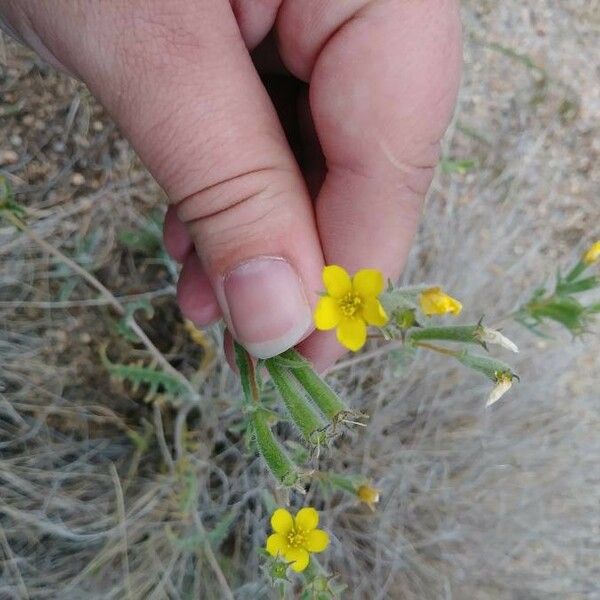
Known as the Yellowcomet, this desert native is a star of the arid American West. While its bright yellow blooms look delicate, it hides a secret superpower: its foliage is covered in microscopic hooks that act like natural Velcro. Often found dancing along sandy roadsides and rocky hillsides, it is a resilient pioneer species that brings life to dry, sun-scorched landscapes.
🔍 How to Identify
- 🌼 The Blooms: Features small, five-petaled flowers in a vivid shade of lemon-yellow. A cluster of many delicate, thread-like stamens often erupts from the center, giving the flower a "fuzzy" look.
- 🍃 The Texture: The lance-shaped leaves are the plant's most famous trait; they are covered in "barbed" hairs (trichomes) that allow them to stick firmly to clothing or animal fur.
- 🦴 The Stems: The stems are characteristically pale, often appearing white or light tan, and can look slightly shiny or brittle as the plant matures.
🏡 In Your Garden
- ☀️ Sun Worshipper: This plant is a true desert dweller. It thrives in intense heat and full sun, making it an excellent choice for xeriscaping or rock gardens where other plants might wither.
- 🏜️ Drainage is Key: Because it is adapted to sandy washes and rocky slopes, it hates "wet feet." It requires extremely well-draining soil and should rarely be watered once established, as it is highly drought-tolerant.
⚠️ Safety & Toxicity
- ✅ Generally Safe: Mentzelia affinis is not known to be toxic to humans, dogs, or cats. It does not contain the dangerous alkaloids found in some other desert wildflowers.
- 🌵 Mechanical Irritation: While not poisonous, the "stickleaf" hairs can be a nuisance. They can cling to pet fur and may cause mild skin irritation or a "scratchy" sensation if handled roughly or if the plant becomes tangled in hair or clothes.
✨ Fun Fact
The "Velcro" effect of the Yellowcomet isn't just a quirk—it's a sophisticated survival strategy! By hitching a ride on passing animals (and unsuspecting hikers), the plant ensures its seeds are carried far and wide, allowing it to colonize new territory across the desert.

Detailed Care Instructions
To grow Mentzelia affinis (also known as blazing star or evening star), you can follow these steps:
- Choose a location: Find a sunny spot in your garden that receives at least six hours of direct sunlight each day. Make sure the soil is well-draining and not soggy.
- Prepare the soil: Loosen the soil with a garden fork or tiller to a depth of about 6-8 inches. Remove any weeds, rocks, or debris from the area.
- Sow the seeds: Scatter the Mentzelia affinis seeds on the prepared soil, trying to ensure even spacing. Lightly press the seeds into the soil, but do not cover them completely, as they need light to germinate.
- Watering: Water the seeds gently using a watering can or a gentle mist setting on a hose. Keep the soil moist but avoid overwatering, as excessive moisture can lead to rotting of the seeds.
- Germination: The seeds generally take about 2-4 weeks to germinate. During this time, continue to keep the soil moist, but avoid waterlogging.
- Thin out the seedlings: Once the seedlings have grown a few inches tall, thin them out to allow proper spacing between the plants. Space them about 12-18 inches apart to ensure adequate airflow and growth.
- Support: Install stakes or small trellises near the plants when they reach a height of 6-8 inches. This will help support the plants as they grow taller.
- Maintain: Water the Mentzelia affinis plants regularly, especially during dry spells. However, make sure not to overwater, as they prefer slightly drier conditions.
- Pruning: If the plants become leggy or untidy, you can prune them lightly to encourage bushier growth and maintain a neat appearance.
- Harvesting seeds: Mentzelia affinis plants produce flat, winged seeds. To collect the seeds, allow the flowers to dry completely and turn brown. Gently shake the flower heads to release the seeds. Store them in a cool, dry place for future planting.
Remember, Mentzelia affinis is a native wildflower and can adapt to a wide range of conditions. However, it thrives best in areas with warm, dry summers and low humidity.

Watering Mentzelia affinis is a process that requires careful attention. The plant prefers moderate watering, which means that it should be watered regularly without overwatering the soil. One way to determine whether the plant needs watering is to check the soil. If the soil is dry to the touch, that is a sign that it should be watered. It is essential to water the plant deeply to ensure that the roots receive adequate moisture. However, it is important not to leave the soil too wet, as this can lead to root rot. One way to prevent overwatering is by checking the soil regularly to ensure that it has dried out before the next watering. Additionally, it is important to water the plant at the base, rather than spraying the leaves, as this can lead to fungal growth. Finally, it is recommended to water Mentzelia affinis early in the morning or late in the afternoon to prevent evaporation. With proper care and attention to watering, Mentzelia affinis can thrive and produce beautiful blooms.
To fertilize this plant, begin by selecting a balanced fertilizer with equal parts nitrogen, phosphorus, and potassium. Administer the fertilizer at a rate of one teaspoon per gallon of water, and apply every two weeks throughout the growing season. Make sure to water the plant thoroughly both before and after applying fertilizer to prevent root burn.
Mentzelia Affinis plant requires a well-draining soil that is rich in nutrients. The soil should have good aeration to promote root development and prevent waterlogging. The pH of the soil should be neutral to slightly acidic. A sandy loam soil is ideal for this plant as it allows water to drain easily and provides the necessary nutrients for growth. Organic matter can also be added to the soil to enhance its fertility. It is recommended to avoid heavy clay soils or soils with high levels of salt, as these can adversely affect the growth of the Mentzelia Affinis plant.
To propagate this species of plant, start by collecting mature seeds from the plant after the flowers have bloomed. It's best to do this in the fall. Next, prepare a seed-starting tray with evenly moistened soil mix and sprinkle the seeds on top. Be sure to keep the tray in a warm and brightly lit area, but out of direct sunlight. As the seedlings grow, thin out the weaker ones to prevent overcrowding. Once they have developed their second set of true leaves, they can be transplanted into larger containers or into the ground outdoors. Be sure to provide adequate water and sunlight to ensure healthy growth.








