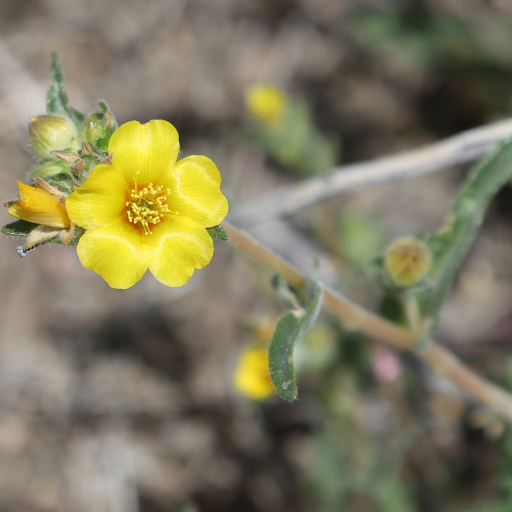
Plant Overview
Known as the Venus Blazingstar, Mentzelia nitens is a desert-dwelling jewel that transforms arid landscapes into a sea of gold during the spring. Its name comes from the way its satiny petals catch the harsh desert sun, appearing almost metallic or neon against the dusty earth. This ephemeral beauty is a favorite for hikers in the American Southwest who look forward to its "blazing" display after winter rains.
🔍 How to Identify
- ✨ Luminous Petals: It features five brilliant yellow petals with a satiny, polished sheen that reflects sunlight, giving the flower a "glowing" appearance.
- 🦴 Ghostly Stems: The stems are remarkably smooth, stark white, and have a reflective, bone-like quality that helps the plant stay cool in the heat.
- 🪝 Velcro Leaves: The foliage is narrow and deeply lobed, covered in tiny, microscopic "barbed" hairs that cause the leaves to stick to clothing or animal fur like natural Velcro.
🏡 In Your Garden
- 🏜️ The Desert Specialist: This plant thrives in sandy, gravelly, or wash-like conditions where most other plants would wither. It requires "dry feet" and will fail in heavy, water-retaining potting soil.
- 🌱 Disturbance Lover: In the wild, it is often found in disturbed soils or along roadsides. In a landscape setting, it appreciates a sunny spot that isn't overly manicured or crowded by larger perennials.
- ⏳ Ephemeral Cycle: Because it is an annual, it puts all its energy into one spectacular spring show. Once it finishes blooming, it will set seeds and naturally die back, waiting for the next year’s rains to return.
⚠️ Safety & Toxicity
- 🟢 General Safety: Mentzelia nitens is generally considered non-toxic to humans and common household pets.
- 🧤 Physical Irritant: While not poisonous, the "hooked" hairs on the leaves can be quite abrasive. They can cause minor skin irritation if handled roughly and are notorious for getting tangled in the fur of long-haired dogs.
✨ Fun Fact
The name Mentzelia honors Christian Mentzel, a 17th-century German botanist and physician, but it’s the "Blazingstar" nickname that truly fits; when the sun hits a field of these flowers at the right angle, they look like a fallen constellation resting on the desert floor.

Detailed Care Instructions

Some plants require more regular watering than others, which should be done every few days. It's critical to maintain the soil moist all of the time. The water requirements of the same plant placed in pots with varying sizes will differ. Because the water in the smaller pot evaporates faster than the water in the larger pot, it will require more watering. Regardless of pot size, the surface should constantly be maintained moist.








