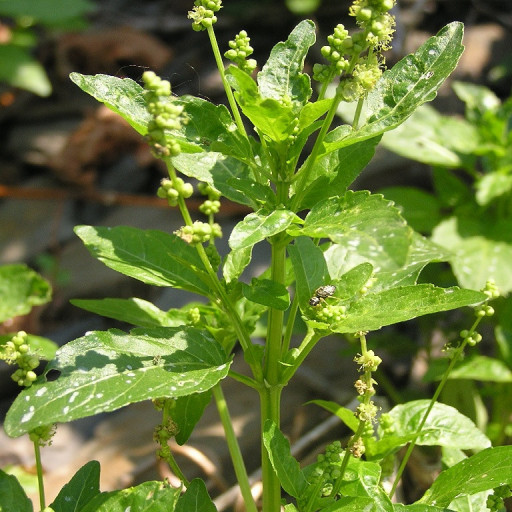
Plant Overview
Commonly known as Annual Mercury or "French Mercury," this humble plant is a frequent visitor to vegetable patches and garden borders across Europe and North Africa. While it lacks the flashy colors of ornamental flowers, it carries a deep history in folk medicine and was once associated with the Roman god Mercury. It is a master of survival, often appearing as a persistent weed that thrives wherever the soil has been recently disturbed.
🔍 How to Identify
- 🍃 The Leaves: Look for bright green, lance-shaped leaves with serrated (toothed) edges that grow in opposite pairs along the stem.
- 🌼 The Flowers: The flowers are tiny and green. Since the plant is dioecious, male plants produce long, upright spikes of yellow-green pollen, while female plants grow small, inconspicuous clusters tucked right where the leaf meets the stem.
- 🌱 The Stem: The plant features a stiff, upright, and somewhat square stem that can grow up to 12-16 inches tall, often branching out near the base.
🏡 In Your Garden
- 🪴 Growth Habit: As an annual, this plant focuses all its energy on quick growth and seed production. It is a "pioneer species," meaning it is often the first to colonize bare soil in your flower beds or vegetable rows.
- 🌬️ Reproduction: It relies heavily on the wind for pollination. If you have a colony of these in your yard, you are likely seeing a mix of male and female plants working together to ensure a new generation for the following spring.
⚠️ Safety & Toxicity
- 🚫 Status: Moderately Toxic.
- 🐾 Details: Annual Mercury contains saponins and hermidin, which can cause gastric distress, vomiting, and diarrhea if ingested. It is particularly dangerous for livestock (like sheep or cattle) if it gets mixed into their forage. Gardeners with sensitive skin should wear gloves, as the sap may cause mild irritation.
✨ Fun Fact
In ancient folklore, Annual Mercury was used in rituals to determine the sex of an unborn child. According to legend, a woman would consume the male plant if she desired a son, or the female plant if she hoped for a daughter—though modern science definitely suggests sticking to more reliable methods!

Detailed Care Instructions
| Humidity | Normal |
| Lighting | Full Sun |
| Toxicity | Poisonous |
| Difficulty | Easy |
| Hibernation | Cold Period |
To grow Mercurialis annua, also known as annual mercury or annuit (a type of flowering plant), you can follow these steps:
- Choosing the right location: Mercurialis annua prefers partial shade to full sun. Find a location in your garden or a container with well-draining soil where it can receive 4-6 hours of sunlight per day.
- Soil preparation: Prepare the soil by adding organic matter like compost or well-rotted manure. This will improve drainage and provide nutrients to the plant.
- Sowing seeds: Sow the seeds directly in the prepared soil in early spring after the last frost. You can either sprinkle the seeds on the ground or sow them in rows with a spacing of about 6-12 inches.
- Watering: Keep the soil moist but not waterlogged. Avoid overwatering as it may lead to root rot. Water regularly, especially during dry spells.
- Mulching: Apply a layer of organic mulch around the plants to help retain moisture and suppress weed growth.
- Fertilization: Mercurialis annua generally doesn't require heavy fertilization. However, you can apply a balanced organic fertilizer once or twice during the growing season if needed.
- Maintenance: Remove any weeds that may compete with the plant for nutrients and space. Regularly check for pests or diseases and take appropriate action if necessary.
- Harvesting: You can harvest the leaves and stems of Mercurialis annua when they are young and tender. Remember to leave enough foliage for the plant to grow and regrow.
- Saving seeds: If you wish to propagate Mercurialis annua in subsequent years, allow some plants to flower and produce seeds. Wait until the seed heads turn brown and dry on the plant, then collect the seeds and store them in a cool, dry place for future sowing.
By following these steps, you should be able to grow Mercurialis annua successfully. Remember to check your local regulations, as this plant may be considered invasive in some regions.

Place in a window with dappled sun or a spot in the middle of a room. Or directly in a window facing west or east.

The Mercurialis Annua plant requires regular watering to maintain healthy growth and avoid wilting. The amount of water required will depend on various factors such as weather, soil type, and the size of the plant.
To water the Mercurialis Annua plant, fill a watering can with cool or room temperature water and slowly pour the water around the base of the plant. Avoid getting water on the leaves as this can cause damage or promote fungal growth.
Ensure that the soil around the plant is moist but not waterlogged. Overwatering can lead to root rot and other problems. It is important to allow the soil to dry out slightly between watering sessions.
During periods of hot or dry weather, it may be necessary to water the Mercurialis Annua plant more frequently to keep the soil moist. It is also important to water the plant thoroughly when first planted or transplanted to help it establish roots and prevent dehydration.
In summary, the Mercurialis Annua plant should be watered regularly with cool or room temperature water, ensuring that the soil is moist but not waterlogged.
To fertilize this plant, you should select a balanced, water-soluble fertilizer with equal amounts of nitrogen, phosphorus, and potassium. Mix the recommended amount of fertilizer into a gallon of water and apply to the soil around the base of the plant every two weeks during the growing season. Be sure to follow the manufacturer's instructions for the correct application rate and frequency.
Mercurialis Annua is a plant that requires well-draining soil with a neutral pH level. The soil should be rich in organic matter and nutrients to support healthy growth and development. It is recommended to use a loamy soil with a mixture of sand, silt, and clay to ensure proper drainage and moisture retention. The soil should also have good aeration to allow oxygen to flow to the roots. It is important to avoid using soil that is too heavy, compacted, or waterlogged, as this can lead to poor plant growth or root rot. A soil testing kit can be used to determine the pH level of the soil and any necessary amendments can be added before planting. Overall, using a high-quality soil mix with adequate drainage and nutrient content is essential for the successful growth of Mercurialis Annua.
To propagate this plant, you will need to collect seeds from the mature plant. Wait until the plant has produced seed pods that have turned brown, indicating that they are mature. Collect the pods and separate the seeds from the chaff.
Next, prepare a seed bed in a well-draining location with plenty of sunlight. You may want to add compost or other organic matter to the soil to improve fertility.
Sow the seeds thinly over the surface of the soil and cover lightly with a layer of soil or sand. Water gently and keep the soil moist but not waterlogged.
Within a few days, the seeds should germinate and begin to grow. As the seedlings grow larger, thin them out so that they are spaced about 6 inches apart.
Once the seedlings are established, you can transplant them to their final location. Be sure to choose a location with similar growing conditions to the seed bed. Water the transplanted seedlings well and continue to provide them with adequate moisture until they are established.
With proper care, your propagated Mercurialis Annua plant should grow into a healthy, mature plant ready to produce its own seeds for future propagation.
Common pests of the herb mercury include Spider mites, aphids, whiteflies. Make a habit of checking your herb mercury frequently for pests so that any infestations can be caught and managed early.








