Plant Overview
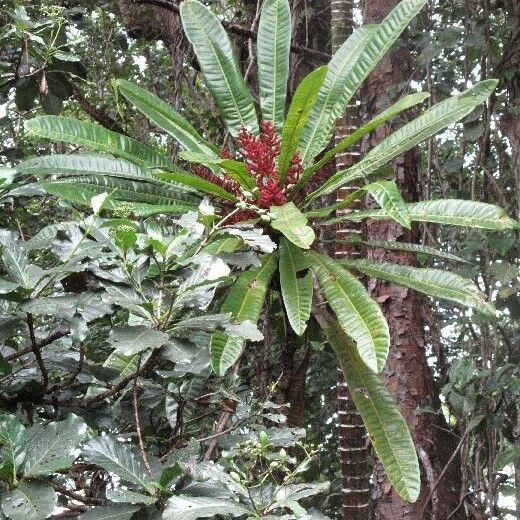
Often referred to as the New Caledonia Broadleaf, Meryta oxylaena is a tropical treasure that looks like it stepped straight out of a Jurassic landscape. Hailing from the lush, biodiverse forests of New Caledonia, this evergreen tree is prized for its massive, architectural foliage that brings an instant "jungle vibe" to any collection. It is a rare find for enthusiasts who crave the prehistoric aesthetic of large, leathery leaves without the commonality of more typical houseplants.
🔍 How to Identify
- 🍃 The Foliage: Features remarkably large, spatula-shaped leaves that can grow quite long. They are a deep, lustrous green with a "plastic-like" sheen that reflects light beautifully.
- 💪 Leaf Texture: The leaves are exceptionally thick and coriaceous (leathery), helping the plant retain moisture in its native tropical environment.
- 🪵 Growth Habit: It typically grows as a single-stemmed small tree or large shrub with a sturdy, pale woody trunk that supports the heavy weight of its canopy.
🏡 In Your Garden
- ☀️ Light Nuances: While it loves brightness, the broad leaves act like solar panels and can scorch easily under intense, direct midday sun. It performs best in dappled light or a "bright indirect" spot where it can soak up energy safely.
- 💧 Thirst & Humidity: Because it originates from New Caledonia's humid forests, it despises dry air. It prefers consistently moist (but never soggy) soil and thrives when grouped with other plants to create a micro-climate of high humidity.
- 🪴 Potting Patience: This plant has a sensitive root system and "hates moving house." Once you find a spot where it is happy, avoid frequent repotting or relocating, as it may drop leaves in protest of the stress.
⚠️ Safety & Toxicity
- 🚫 Status: Generally considered non-deadly, but caution is advised.
- 🐱 Details: Like many members of the Araliaceae family, the sap contains compounds that may cause mild skin irritation or dermatitis in sensitive individuals. It should be kept out of reach of pets and children to prevent accidental ingestion, which could lead to an upset stomach.
✨ Fun Fact
Meryta is a genus of "extremes"—it contains some of the largest simple (undivided) leaves of any plant in the Ivy family. In its native habitat, these massive leaves provide essential shelter for local island fauna during tropical rainstorms!

Detailed Care Instructions








