Plant Overview
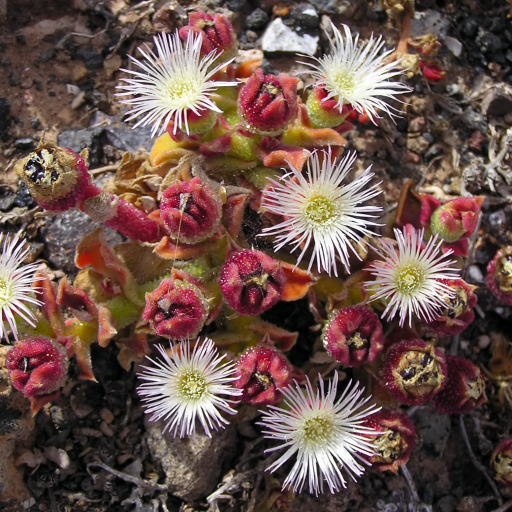
Often called the "Common Ice Plant" or "Diamond Plant," Mesembryanthemum crystallinum looks as if it has been caught in a permanent, shimmering frost. This South African native is a master of desert survival, sparkling in the sun as if draped in tiny jewels. Historically used for everything from soap-making to gourmet salads, it is a resilient succulent that thrives in harsh, salty environments where other plants would wither.
🔍 How to Identify
- 💎 The "Ice" Crystals: The most striking feature is the thousands of tiny, transparent "bladder cells" covering the leaves and stems. These look exactly like frozen water droplets or sugar crystals that never melt.
- 🥬 Fleshy Foliage: The leaves are broad, thick, and wavy-edged. They typically start as a bright lime green but can blush into deep shades of red or purple when exposed to intense sun or drought.
- 🌼 Daisy-like Blooms: It produces delicate, thread-like flowers that range from brilliant white to pale pink, usually peeking out from the foliage during the sunniest parts of the day.
🏡 In Your Garden
- 🌊 The Salt Seekers: This plant is a "halophyte," meaning it actually thrives in salty soil. If you live near the coast, this is a perfect choice, as it handles sea spray and salt-heavy winds with ease.
- 🏜️ Metabolic Magic: The Ice Plant is a biological marvel. It can switch its breathing method (photosynthesis) depending on the weather. When it’s thirsty, it holds its breath during the day to save water, making it nearly impossible to kill through underwatering. Just be sure to provide sandy, fast-draining soil, as it cannot tolerate "wet feet."
⚠️ Safety & Toxicity
- ✅ General Status: Mesembryanthemum crystallinum is generally considered non-toxic to humans and is even used in some international cuisines for its salty, crunchy texture.
- 🐾 Pet Caution: While not strictly poisonous to dogs or cats, the plant contains oxalates. If consumed in very large quantities, it could lead to digestive upset or contribute to kidney stones in sensitive animals. It is best kept as a decorative piece rather than a snack for pets.
✨ Fun Fact
The "ice crystals" on the leaves aren't just for show—they are specialized storage tanks! The plant sucks salt out of the ground and locks it away in these bladders so the salt doesn't poison its own cells. When the plant eventually dies, it releases that salt back into the topsoil, effectively "salting the earth" to prevent competing plants from growing in its territory.

Detailed Care Instructions
To grow a Mesembryanthemum Crystallinum plant, also known as the ice plant or crystalline iceplant, follow these steps:
- Climate: This plant thrives in arid or semi-arid climates, so make sure you can provide appropriate conditions. It can tolerate high temperatures but doesn't do well in regions with high humidity or heavy rainfall.
- Soil: Mesembryanthemum Crystallinum prefers well-draining soil with sandy or gravelly texture. Amend the soil with compost or sand to improve drainage if needed.
- Sunlight: These plants need full sun to partial shade. Place them in an area that receives at least 6-8 hours of sunlight each day.
- Watering: Water the plant sparingly, as it is drought-tolerant. Allow the soil to dry out between watering. Overwatering can cause root rot, so be cautious and avoid waterlogged conditions.
- Propagation: You can propagate Mesembryanthemum Crystallinum from seeds or stem cuttings. If using seeds, sow them directly into the soil after the last frost date. For stem cuttings, take 2-3 inch (5-7.5 cm) stems and allow them to dry for a day. Then plant them in well-draining soil and keep them slightly moist until roots develop.
- Fertilizer: Use a balanced, slow-release fertilizer or a diluted liquid fertilizer during the growing season to provide essential nutrients. Follow the product instructions for dosage and application frequency.
- Pruning: Prune back the plant after flowering to encourage branching and maintain its compact shape. Remove any dead or diseased branches as necessary.
- Pests and Diseases: Mesembryanthemum Crystallinum is generally resistant to pests and diseases. However, keep an eye out for common garden pests like aphids or snails. Treat any infestation promptly using organic pest control methods.
Remember to check for the specific care requirements of your plant variety, as different cultivars may have slight variations. Additionally, observe the plant closely to adjust care according to its growth and external conditions.

Place in a bright room that is sun drenched almost all day. Or directly in a south-facing window.

To water this plant, make sure to let the soil dry out slightly between waterings. It prefers to be watered deeply, allowing the water to soak through the soil and drain out any excess. Overwatering can lead to root rot, so be cautious not to water too frequently. Additionally, this plant prefers well-draining soil, so avoid letting it sit in standing water.
To fertilize the plant, use a high-quality, balanced fertilizer that contains equal amounts of nitrogen, phosphorus, and potassium. Apply the fertilizer once every two weeks during the growing season. Use a diluted solution of fertilizer and water to avoid burning the plant. Water the plant lightly before feeding to prevent fertilizer burn.
Mesembryanthemum Crystallinum is a type of plant that requires a well-draining soil mix that is free of any soil-borne diseases. It is recommended to use a mixture of equal parts of sand, perlite, and peat moss or a cactus potting mix. Avoid using regular garden soil as it retains too much moisture and can cause root rot. Additionally, Mesembryanthemum Crystallinum prefers a soil pH level between 6 and 7. It is recommended to plant this plant in a shallow container that is at least 2 inches deep to allow for proper drainage.
To propagate this plant, you can start by selecting a healthy parent plant that has good growth and is free from any disease or pest infestation.
Next, you will need to take cuttings from the plant. Using a sharp and clean knife or pruning shears, cut a stem from the parent plant that is about 2-3 inches long. Make sure to cut just below a leaf node to encourage new growth.
Remove the lower leaves from the stem, leaving only two to three leaves at the top. This will help the cutting to focus its energy on rooting rather than supporting leaves.
Now it is time to prepare the cutting for planting. Dip the cut end of the stem into rooting hormone powder to encourage the growth of roots.
Fill a small pot with well-draining soil and make a hole in the center using a pencil or your finger. Place the cutting into the hole and gently firm the soil around it.
Water the cutting lightly but thoroughly and place it in a warm, bright location, but out of direct sunlight. Keep the soil evenly moist but not waterlogged.
After a few weeks, new roots should start to form and the cutting will start to grow. Once the plant has established itself and starts to grow vigorously, it can be transplanted into a larger pot or moved to a sunny spot in the garden.








