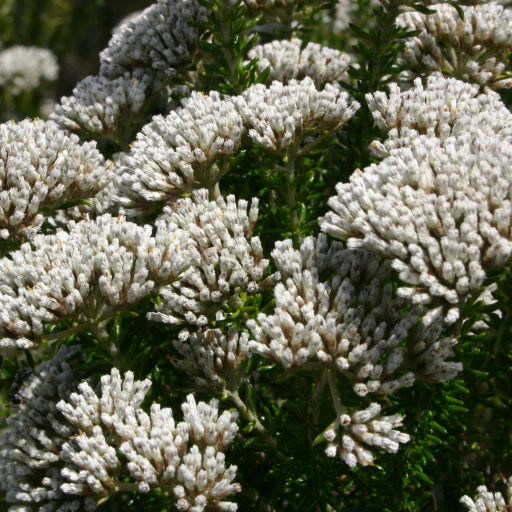
Plant Overview
Commonly known as the White Bristle Bush or Blombos, Metalasia muricata is a resilient, silver-hued beauty native to the coastal dunes and mountain slopes of South Africa. It is a staple of the famous Fynbos biome, often acting as a "pioneer species" that helps stabilize sandy soils. Its honey-scented flowers are a delight to the senses, frequently used in both fresh and dried floral arrangements for their longevity and sweet aroma.
🔍 How to Identify
- 🌿 The Foliage: Look for small, needle-like leaves that are grey-green to silvery in color. The leaves are often "ericoid" (heather-like) and have a distinctive twist or spiral along the stems.
- 🌸 The Blooms: Small, papery flower heads appear in dense, flat-topped clusters at the tips of the branches. They are typically white, though they can sometimes lean toward a soft pink or purple hue.
- 🪵 The Growth Habit: This is a hardy, woody shrub that can grow quite large (up to 2-3 meters), often taking on a wind-swept, sculptural shape when growing near the ocean.
🏡 In Your Garden
- 🌊 Coastal Hero: This plant is incredibly salt-tolerant and wind-resistant, making it one of the best choices for seaside gardens where other plants might wither from the spray.
- 🦋 Wildlife Magnet: Because its flowers produce a rich, honey-like scent, it is a favorite for local pollinators. You can expect frequent visits from bees and various butterfly species when it is in bloom.
- ⏳ Low Maintenance: Once established, it is remarkably drought-tolerant. It prefers well-drained, sandy soil and plenty of sun; however, it dislikes being moved, so choose its "forever home" in your garden carefully to avoid disturbing its root system.
⚠️ Safety & Toxicity
- ✅ General Safety: Metalasia muricata is generally considered non-toxic to humans and common household pets like cats and dogs.
- 🧤 Skin Sensitivity: While not poisonous, the woody stems and needle-like leaves can be slightly scratchy. If you have sensitive skin, wearing gloves while pruning is a good idea to avoid minor irritations.
✨ Fun Fact
The name Metalasia comes from the Greek words meta (reverse) and lasios (woolly), referring to the way the woolly hairs on the leaves point backward. Historically, the dried branches were often used by early Cape settlers to make traditional brooms!

Detailed Care Instructions

Place in a bright room that is sun drenched almost all day. Or directly in a south-facing window.

Some plants require more regular watering than others, which should be done every few days. It's critical to maintain the soil moist all of the time. The water requirements of the same plant placed in pots with varying sizes will differ. Because the water in the smaller pot evaporates faster than the water in the larger pot, it will require more watering. Regardless of pot size, the surface should constantly be maintained moist.








