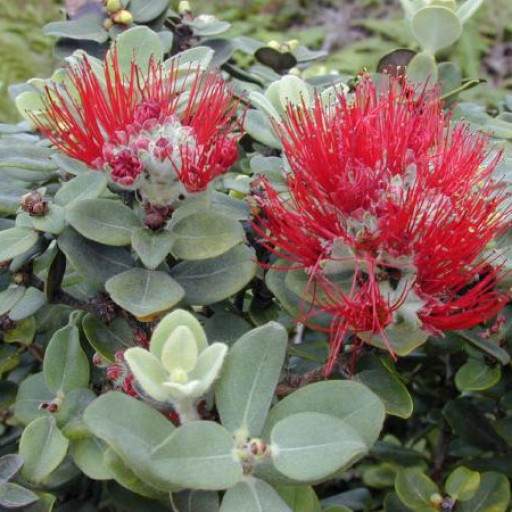
Plant Overview
The ʻŌhiʻa lehua is the beating heart of the Hawaiian wilderness. Known for its incredible ability to be the first plant to grow on fresh, barren lava flows, it is a symbol of resilience and volcanic beauty. In Hawaiian mythology, the tree represents the eternal bond between the handsome warrior ʻŌhiʻa and his beloved Lehua, whom the goddess Pele transformed into the tree and its flower so they could never be parted.
🔍 How to Identify
- 🌺 The Blossoms: Its most striking feature is the "lehua" flower—a burst of colorful, needle-like stamens that look like exploding pom-poms, most commonly in fiery red, but occasionally in yellow or orange.
- 🍃 Leathery Leaves: The foliage is thick, oval, and stiff to the touch. Depending on the environment, the leaves may have a silver-grey fuzz underneath to help the plant trap moisture from the mountain mists.
- 🪵 Shifting Shape: True to its name polymorpha ("many forms"), it can appear as a prostrate, ground-hugging shrub in windswept bogs or a towering 100-foot giant in the rainforest.
🏡 In Your Garden
- 🌋 The Pioneer Spirit: This plant is adapted to volcanic soil and requires exceptional drainage. It hates "wet feet" and will suffer in heavy, compacted clay soils.
- ☀️ Sun Seeker: To produce those iconic pom-pom blooms, it needs high light intensity. In its natural habitat, it stands above the canopy to soak up every bit of the tropical sun.
- 🌱 Root Sensitivity: Like many native island species, it has a delicate root system that dislikes being disturbed. Once planted, it is best to leave it in place rather than attempting to transplant it later.
⚠️ Safety & Toxicity
- ✅ Safe for All: The ʻŌhiʻa lehua is non-toxic to humans, dogs, and cats.
- 🍄 Environmental Warning: While safe to touch, these trees are currently threatened by a fungal disease called Rapid ʻŌhiʻa Death (ROD). If you are in Hawaii, never move ʻŌhiʻa wood or soil between islands or regions to prevent spreading the pathogen.
✨ Fun Fact
According to local legend, if you pluck a lehua flower from the tree, it will begin to rain immediately. The raindrops are said to be the tears of the lovers ʻŌhiʻa and Lehua, mourning their separation!

Detailed Care Instructions
To grow Metrosideros polymorpha, commonly known as the ʻŌhiʻa Lehua plant, you can follow these steps:
- Climate and Location: This plant is native to Hawaii and thrives in tropical or subtropical climates. It prefers a well-drained soil and can tolerate both full sun and partial shade. Ensure that your location provides the right conditions for this plant to grow.
- Soil: The soil should be slightly acidic to slightly alkaline, with a pH range of 6.0 to 7.5. You can conduct a soil test to determine the pH and amend the soil if needed.
- Planting: Plant the ʻŌhiʻa Lehua plant in a hole that is slightly larger than the root ball. Gently place the plant in the hole and backfill it with soil, ensuring that the plant sits at the same depth it was previously planted.
- Watering: Water the plant thoroughly after planting to help establish the roots. Afterward, provide regular watering, especially during dry periods. The plant prefers consistently moist soil but is tolerant of occasional drought.
- Mulching: Apply a layer of organic mulch around the base of the plant to help retain moisture, regulate soil temperature, and suppress weed growth. Avoid piling the mulch against the stem to prevent rot.
- Fertilizing: Apply a balanced slow-release fertilizer during the spring and summer months to promote healthy growth. Follow the instructions on the packaging for the appropriate application rate.
- Pruning: Trim off any dead or damaged branches to maintain the plant's overall health and shape. However, avoid excessive pruning as ʻŌhiʻa Lehua plants have a distinct natural form.
- Pests and Diseases: These plants are generally resistant to pests and diseases. However, be on the lookout for common garden pests such as aphids or scales. Treat them with insecticidal soap or an appropriate organic pesticide if needed.
- Propagation: You can propagate Metrosideros polymorpha through seeds or cuttings. Collect seeds from ripe fruits and sow them in a well-draining potting mix. For cuttings, take semi-hardwood cuttings from healthy plants, dip them in rooting hormone, and plant them in a suitable rooting medium.
Remember to research and follow local regulations and recommendations regarding the planting of non-native species.

Place in a bright room that is sun drenched almost all day. Or directly in a south-facing window.

1. Determine the watering needs of the plant by checking the soil moisture level.
2. Stick a finger into the soil about 2-3 inches deep. If the soil is dry at this depth, it's time to water.
3. Water the plant until the soil is moist but not waterlogged. Allow the soil to drain completely before placing the plant back in its spot.
4. Avoid overwatering the plant, which can lead to root rot and other health problems.
5. Water the plant more frequently during the warmer months when it's growing actively, and reduce watering in the winter when the plant is dormant.
6. Consider using a moisture meter or soil probe to help you determine when the plant needs water.
7. Take note of the plant's response to watering and adjust your watering frequency accordingly.
To fertilize this plant, use a balanced fertilizer with a NPK ratio of 10-10-10 or 15-15-15. Apply the fertilizer in the early spring when new growth starts to appear, and again in mid-summer. Mix the fertilizer with water according to the instructions on the label and apply it to the soil around the base of the plant, being careful not to get it on the foliage. Water the plant well after fertilizing. Avoid over-fertilizing, as this can lead to excessive growth and reduce the plant's flowering.
Metrosideros Polymorpha plant is native to a volcanic island in the Pacific Ocean and is commonly grown as an ornamental plant in many regions around the world. It prefers well-drained soil that is rich in organic matter and has a slightly acidic to neutral pH. The soil should be moist, but not waterlogged, and should have good drainage to prevent waterlogging. A mix of organic compost, sand, and perlite or vermiculite is ideal for creating the perfect soil blend for Metrosideros Polymorpha. It is important to avoid heavy clay soils, as these can cause root rot and other plant diseases. Adding a slow-release fertilizer, such as bone meal or blood meal, to the soil can also help provide nutrients for the plant to grow strong and healthy.
To propagate this plant, you will need pruning shears, rooting hormone, a container with well-draining soil, and a plastic bag. First, take a healthy stem cutting from the plant, around 6 inches in length, making sure to cut just below a node. Remove the leaves from the bottom half of the stem. Dip the cut end of the stem into rooting hormone and tap off any excess. Next, make a hole in the soil with a pencil or similar object and insert the stem cutting. Firmly press the soil around the stem to hold it in place.
Water the cutting lightly and cover the container with a plastic bag to create a humid environment. Place the container in a location with bright, indirect light and maintain a consistent temperature of around 70-75°F. Check the soil moisture regularly and water as needed.
After a few weeks, the stem cutting should start to develop roots. You can test this by gently tugging on the stem - if it resists, roots are likely forming. Once the roots are established and the plant has started to grow, you can gradually acclimate it to normal conditions by removing the plastic bag and gradually moving it into brighter light.








