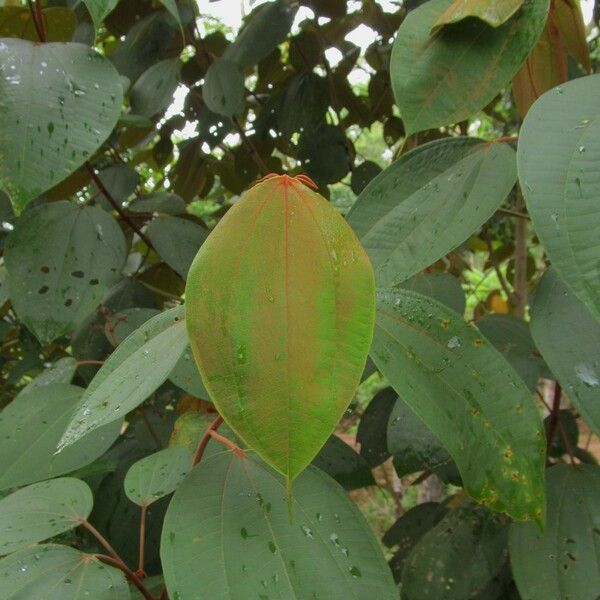
Plant Overview
Often called the Long-Tailed Miconia, this tropical beauty is a standout member of the Melastome family, known for its dramatic, architectural foliage. Hailing from the lush rainforests of Central and South America, it has become a "bucket list" plant for rare foliage collectors. Its specific name, caudata, is a direct nod to its most elegant feature—the long, tapering "tail" at the end of every leaf.
🔍 How to Identify
- 🍃 The "Tail" Tip: The most defining feature is the leaf apex, which stretches into a long, slender point (caudate), helping the plant shed rainwater efficiently.
- 📏 Parallel Veining: It displays the signature "Melastome" vein pattern, with several prominent veins running vertically from the base to the tip, crossed by fine horizontal rungs like a ladder.
- 🌱 Texture & Sheen: The leaves are typically broad and vibrant green, often possessing a subtle velvety texture or a soft metallic shimmer when caught in the right light.
🏡 In Your Garden
- ☁️ Humidity is Essential: Because it originates from misty cloud forests, this plant thrives in high humidity. If the air is too dry, those iconic "tails" will be the first part of the plant to turn brown and crispy.
- 🪴 Breathable Substrate: In the wild, it often grows in rich but airy forest debris. In a pot, it hates "wet feet"; use a mix heavy in perlite, orchid bark, and peat to ensure the roots can breathe while staying damp.
⚠️ Safety & Toxicity
- 🐾 Pet Precaution: While not considered high-risk like lilies, Miconia caudata contains calcium oxalate crystals. If chewed, it can cause mouth irritation, swelling, and drooling in cats and dogs.
- 👶 Child Safety: It is generally safe to touch, but the leaves should not be ingested. It’s best kept on a high shelf or in a dedicated plant cabinet away from curious toddlers.
✨ Fun Fact
The "tail" on the leaf isn't just for looks; it’s a biological engineering marvel called a drip tip. It allows heavy tropical rain to run off the leaf quickly, preventing the growth of fungus and algae that would otherwise block the plant's sunlight!

Detailed Care Instructions

Place in a bright room that is sun drenched almost all day. Or directly in a south-facing window.

Some plants require more regular watering than others, which should be done every few days. It's critical to maintain the soil moist all of the time. The water requirements of the same plant placed in pots with varying sizes will differ. Because the water in the smaller pot evaporates faster than the water in the larger pot, it will require more watering. Regardless of pot size, the surface should constantly be maintained moist.








