Plant Overview
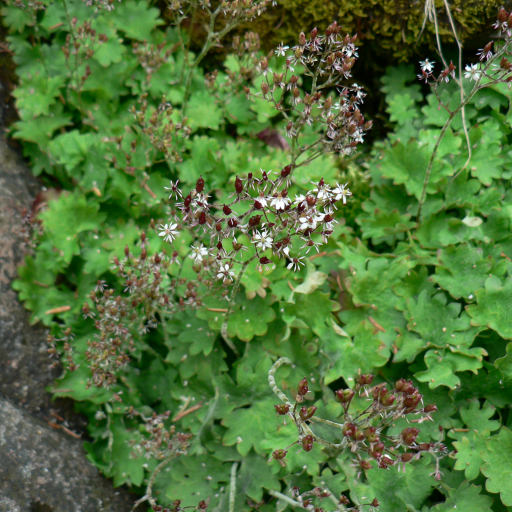
Known affectionately as the Streambank Saxifrage, this delicate mountain dweller looks like it stepped right out of a high-altitude fairy tale. It thrives where the air is cool and the ground is perpetually damp, often found hugging the edges of bubbling brooks or misty waterfalls throughout Western North America. Its name Micranthes literally translates to "small flowers," which perfectly describes the dainty, star-like blossoms that dance above its lush green base.
🔍 How to Identify
- 🦷 Tooth-Edged Leaves: The leaves are circular or kidney-shaped and grow in a tight rosette at the base of the plant. They feature very distinct, sharp "teeth" along the edges, which gives the species its name (odontoloma means "toothed-fringe").
- ❄️ Starry Blossoms: Each flower consists of five bright white, oval petals. Look closely to see ten tiny stamens and a center that often transitions from green to a soft yellow or orange as it matures.
- 📏 The Flower Stalk: The flowers grow on a leafless, reddish-green stalk that is covered in tiny, sticky glandular hairs. This stalk can reach up to a foot in height, lifting the flowers well above the foliage.
🏡 In Your Garden
- 💧 A Thirst for Moisture: In a garden setting, this plant is not a "set it and forget it" species. It requires "wet feet," meaning it must be planted near a water feature, a pond edge, or in a boggy area that never dries out.
- 🏔️ Cool & Shady: Because it is naturally a subalpine plant, it struggles in intense heat. It prefers dappled shade and cool soil. If you live in a warmer climate, it needs a North-facing spot or the protection of larger, moisture-loving ferns to survive the summer.
⚠️ Safety & Toxicity
- ✅ Generally Safe: Micranthes odontoloma is not considered toxic to humans or common household pets like cats and dogs.
- 🌱 Handling: While it lacks irritating oils, the plant is physically delicate. Excessive handling can damage the thin leaves or snap the brittle flower stalks, so it is best enjoyed as a "look but don't touch" addition to your landscape.
✨ Fun Fact
The Saxifrage family name comes from the Latin words saxum (rock) and frangere (to break). While these plants don't actually "break" rocks, they are famous for growing in the tiny cracks of ancient stones, appearing as if they have split the very mountainside to find a place to bloom.

Detailed Care Instructions

Place in a window with dappled sun or a spot in the middle of a room. Or directly in a window facing west or east.

Some plants require more regular watering than others, which should be done every few days. It's critical to maintain the soil moist all of the time. The water requirements of the same plant placed in pots with varying sizes will differ. Because the water in the smaller pot evaporates faster than the water in the larger pot, it will require more watering. Regardless of pot size, the surface should constantly be maintained moist.








