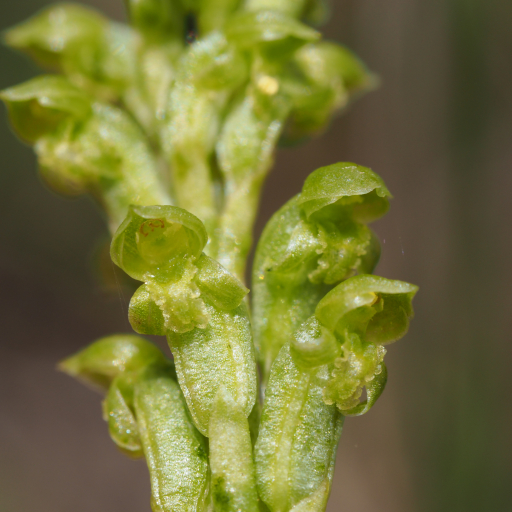
Plant Overview
Known as the Common Onion Orchid, this humble native of Australia and New Zealand is a master of disguise. For most of the year, it masquerades as a stray blade of grass or a wild chive, only revealing its true orchid identity when a tall spike of tiny, emerald-green flowers emerges. It is one of the most widespread and resilient orchids in the Southern Hemisphere, often thriving where other orchids would vanish.
🔍 How to Identify
- 🍃 The "Onion" Leaf: It produces a single, upright, hollow leaf that looks remarkably like a spring onion or chive. This leaf is typically circular in cross-section and often stands taller than the flower spike.
- 🏮 Miniature Flowers: The plant features a dense cluster of 10 to 60 tiny, green, hooded flowers. Each individual bloom is only about 3-4mm wide, requiring a close look to see the intricate orchid structure.
- 📏 Growth Habit: This orchid grows from a small underground tuber. It is a deciduous perennial, meaning it disappears back into the soil during its dormant season before reappearing when the rains return.
🏡 In Your Garden
- 🌱 The Pioneer Spirit: Unlike many fussy orchids, Microtis unifolia is a "pioneer species." It loves disturbed sites and is known to pop up unexpectedly in lawns, gravel paths, or even the cracks of garden pavement.
- 🚫 A "Hands-Off" Guest: This plant relies on a delicate relationship with specific soil fungi to thrive. Because of this, it is notoriously difficult to transplant. If you are lucky enough to have one "volunteer" in your yard, the best care is simply to leave the soil undisturbed.
⚠️ Safety & Toxicity
- ✅ Generally Safe: This orchid is not known to be toxic to humans or common household pets.
- 🐾 Minimal Risk: While it won't harm your dog or cat if they take a curious nibble, the plant itself is quite fragile. Its biggest "danger" is being accidentally mowed over because it blends in so well with common garden weeds!
✨ Fun Fact
🐜 The Tiny Helper: While many flamboyant orchids depend on specific bees or birds for pollination, the Common Onion Orchid is frequently visited by tiny ants and small flightless insects. If no insects arrive, it is also highly efficient at self-pollinating to ensure its survival!

Detailed Care Instructions
To grow Microtis Unifolia, also known as the Fairies Apron orchid, you can follow these steps:
- Lighting: Provide bright, indirect light to the plant. Avoid direct sunlight as it can scorch the leaves.
- Temperature: The ideal temperature range for this orchid is between 60-70°F (15-21°C). Protect it from extreme hot or cold conditions.
- Humidity: Maintain a high humidity level, around 60-70%. You can achieve this by placing the plant on a tray filled with water and pebbles or by using a humidifier.
- Watering: Water the orchid thoroughly when the top inch of the soil feels dry. Make sure that the water drains well to prevent the roots from sitting in water for long periods. Avoid overwatering as it can cause root rot.
- Soil: Use a well-draining orchid potting mix that is specifically formulated for epiphytic orchids. Avoid using regular potting soil as it can retain too much moisture.
- Fertilizer: Feed the orchid with a balanced orchid fertilizer diluted to half its strength. Apply the fertilizer every two weeks during active growth and reduce or stop feeding in winter.
- Repotting: Repot the orchid every 1-2 years or when it outgrows its current pot. Use a slightly larger pot with fresh orchid potting mix. Keep the roots intact and unharmed during the repotting process.
- Dormancy: This orchid usually goes through a dormant period during winter. Reduce watering and allow the plant to rest during this time. Once new growth starts to appear in spring, resume regular care.
- Propagation: Microtis Unifolia can be propagated through division. During repotting, carefully separate the plant into smaller sections with their own set of roots and growth points. Pot the divisions in suitable containers and care for them as you would for a mature plant.
Remember, orchids can be quite temperamental, so be patient and observe the specific needs of the Microtis Unifolia plant to ensure its successful growth.

Place in a window with dappled sun or a spot in the middle of a room. Or directly in a window facing west or east.

To water this plant, it is important to thoroughly saturate the soil. Before watering, check the soil moisture by sticking your finger about an inch deep into the soil. If it feels dry, it is time to water. Use room temperature water and pour it slowly over the soil until it starts to drain out of the bottom of the pot. Be sure to discard any excess water that collects in the saucer underneath the pot. Watering frequency will depend on the specific conditions in your environment, but as a general rule, it is better to underwater than overwater this plant. Allow the top inch or so of soil to dry out before watering again. Additionally, this plant prefers high humidity, so misting the leaves with room temperature water once or twice a week can also be beneficial.
To fertilize Microtis Unifolia, use a balanced fertilizer with an NPK ratio of 10-10-10. Dilute the fertilizer according to the package instructions and water the plant thoroughly with the solution every two weeks during the growing season. Be sure to keep the fertilizer away from the plant's leaves or flowers to avoid burning. Additionally, avoid fertilizing during the plant's dormancy period.
The recommended type of soil for Microtis Unifolia plant is a well-draining, sandy loam soil with a pH level of slightly acidic to neutral. The soil should have good drainage to prevent the roots from becoming waterlogged and suffocated. It is important not to overwater this plant as it prefers slightly drier soil conditions. The roots should be kept moist but not constantly wet. It is also recommended to add organic matter, such as compost or peat moss, to the soil to improve fertility and soil structure. However, the plant should not be over-fertilized as this can cause damage to the roots. In general, the soil should be kept loose, rich in nutrients, and well-drained to ensure the best growth and health of the Microtis Unifolia plant.
To propagate this plant, you will need to obtain a healthy specimen with a well-developed root system. Select a stem with several leaves, taking care not to damage the plant or its roots. Cut the stem at a slight angle with a sterile, sharp blade. Remove any excess leaves or stems from the cutting, leaving only a few healthy leaves at the top. Next, dip the cut end of the stem into a rooting hormone powder to encourage rapid root development. Plant the cutting in a well-draining potting mix or sand mixture and water thoroughly. Cover the pot with a plastic bag or dome to help retain moisture and ensure high humidity levels around the cutting. Place the pot in a warm, bright location without direct sunlight. Water regularly to keep the soil moist but not waterlogged. In a few weeks, roots will begin to develop, and new growth will appear. After several months, the new plant should be established enough to be transplanted into a larger container or the ground.








