Plant Overview
The Mila caespitosa is a hidden gem from the arid valleys of Peru. Often called the "Peruvian Pin Cushion," it is a botanical celebrity for being the only species within its entire genus. Its name is a playful tribute to its homeland, and its golden, bristly appearance makes it look like a tiny, sunbathing hedgehog nestled among the rocky Andean foothills.
🔍 How to Identify
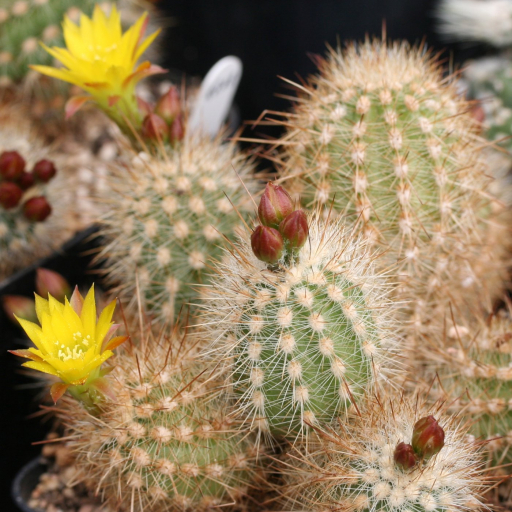
- 🌵 Growth Habit: It grows in low, dense clusters (the meaning of caespitosa), forming small, mounded colonies of cylindrical stems that rarely reach more than a few inches tall.
- ☀️ Spines: Each stem is heavily armored with a dense coat of short, needle-like spines. These range in color from a pale straw yellow to a rich golden-brown, giving the plant a soft, glowing halo in bright light.
- 🌼 Blooms: In late spring or summer, it produces charming, funnel-shaped flowers. These are typically a vibrant lemon-yellow and emerge from the very top of the stems, often appearing larger than the stems themselves.
🏡 In Your Garden
- 🏜️ Drainage Mastery: Originating from the steep, rocky slopes of Peru, this plant is highly sensitive to "wet feet." It thrives in a "gritty" mix—think more pumice and sand than peat—to ensure water moves away from the roots immediately.
- 🌬️ The Airflow Factor: Because it grows in tight mats, moisture can easily get trapped between the individual stems. To prevent rot, keep it in a spot with excellent air circulation, mimicking the mountain breezes of its natural habitat.
⚠️ Safety & Toxicity
- 🛡️ Status: Generally non-toxic and safe for households with curious pets or children.
- 🧤 Physical Hazard: While it lacks the "venom" of some plants, its spines are very fine and numerous. They can easily lodge in skin or paws, causing irritation. Always use tongs or thick gardening gloves when repotting your "Pin Cushion."
✨ Fun Fact
The genus name Mila is actually an anagram of Lima, the capital city of Peru! It was named this because the plant was first found growing in the canyons and valleys just outside the city limits.

Detailed Care Instructions








