Plant Overview
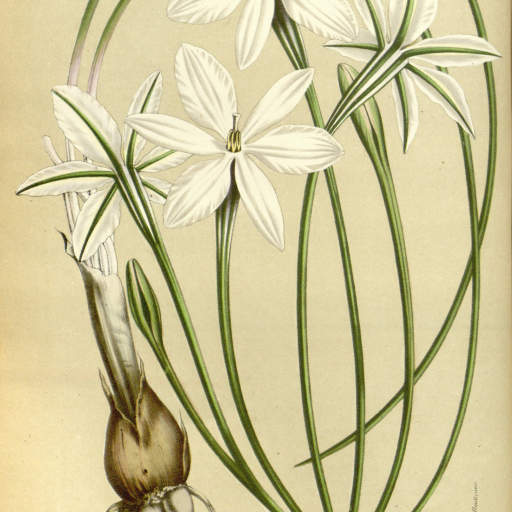
Known affectionately as the Mexican Star, Milla biflora is a desert-dwelling beauty that captures the essence of a midsummer night. This elegant wildflower emerges from underground corms to produce clusters of pristine, lily-like blooms that seem to glow under the moonlight. Native to the high-elevation grasslands of the Southwestern US and Mexico, it is a master of minimalism and grace.
🔍 How to Identify
- 🌸 Star-Shaped Blooms: The flowers are brilliant white, featuring six symmetrical tepals that form a perfect star shape, often reaching 2.5 inches in diameter.
- 📏 Green Mid-Stripes: If you peek at the underside of the petals, you will notice distinct, soft-green longitudinal stripes running from the base to the tip.
- 🌿 Grass-like Foliage: Before the flowers appear, the plant produces a few very narrow, cylindrical leaves that look almost like blades of grass, helping it blend into its natural meadow habitat.
🏡 In Your Garden
- 🏜️ Drainage is Vital: Being a native of rocky slopes and desert grasslands, this plant is highly susceptible to rot if left in soggy soil. It thrives best in "lean" soil with plenty of grit or sand to ensure water moves away from the corm quickly.
- 💤 Respect the Nap: After flowering, the plant will naturally yellow and go dormant. It is crucial to stop watering during this period; the corm needs a dry "rest" to gather energy for the next year’s spectacular show.
⚠️ Safety & Toxicity
- ✅ Low Risk: Milla biflora is generally considered non-toxic to humans and pets, making it a "worry-free" addition to a household garden.
- 🐾 Corm Caution: While not poisonous, the underground corm (the bulb-like structure) is high in starch and fiber; if dug up and eaten by a curious dog, it may cause mild digestive upset simply due to its fibrous nature.
✨ Fun Fact
The Mexican Star is a vespertine bloomer, meaning its intoxicating, sweet fragrance becomes much more powerful after the sun goes down. This is a clever evolutionary trick to attract its primary pollinators: giant hawkmoths!

Detailed Care Instructions
To grow Milla biflora, also known as Mexican star or star lily, follow these steps:
- Climate and soil: Milla biflora thrives in warm climates and requires well-draining soil. It prefers sandy or loamy soil that is slightly acidic to neutral.
- Planting location: Choose a sunny spot in your garden that receives at least six hours of direct sunlight daily. Ensure the location is protected from strong winds.
- Planting time: The best time to plant Milla biflora is in late winter to early spring when the soil is workable and frost-free.
- Planting method: Dig holes that are about two times the size of the bulb's diameter. Place the bulbs in the holes with the pointed end facing upwards, and cover them with soil, leaving the tips slightly exposed. Space the bulbs about 4-6 inches apart.
- Watering: After planting, water the bulbs thoroughly and keep the soil evenly moist until they establish roots. Once established, you can reduce watering, as Milla biflora prefers slightly drier conditions.
- Mulching: Apply a layer of organic mulch around the plants to help retain moisture and suppress weed growth. This will also help protect the bulbs during colder months.
- Fertilizing: Apply a balanced, slow-release fertilizer during the growing season, following the instructions on the package. This will provide the necessary nutrients for healthy growth.
- Maintenance: Remove any weeds or competing vegetation around the plants to prevent them from choking the Milla biflora. Deadhead the spent flowers to promote continuous blooming.
- Overwintering: In colder regions, where the winters are harsh, Milla biflora may need some protection. Cover the plants with a thick layer of mulch or bring potted plants indoors until the temperature warms up again.
- Propagation: Milla biflora can be propagated by dividing the bulbs in early summer when the foliage begins to die back. Separate the bulbs and replant them in desired areas of your garden or share them with other gardeners.
With proper care and a suitable growing environment, your Milla biflora plants should thrive and produce beautiful star-shaped flowers.

Place in a bright room that is sun drenched almost all day. Or directly in a south-facing window.

To water this plant properly, you should observe the soil moisture level and water it accordingly. Make sure to use room temperature or tepid water so as not to shock the roots. Water the plant deeply and thoroughly, allowing water to penetrate the soil and soak the roots. Avoid waterlogging the soil, as this can cause root rot and damage the plant's health. Also, ensure that there is adequate drainage in the pot to prevent standing water. Finally, be mindful of the plant's watering needs during different seasons and adjust accordingly to ensure healthy growth.
To fertilize this plant, apply a balanced liquid fertilizer every two weeks during the growing season (spring and summer). Do not fertilize during the dormant season (fall and winter). Dilute the fertilizer to half strength to avoid burning the roots. Apply the fertilizer directly to the soil around the base of the plant, taking care not to get any on the leaves. Water the plant thoroughly after fertilizing.
For optimal growth and health of the Milla Biflora plant, it is recommended to use a well-draining soil that is rich in organic matter. The soil should be slightly acidic to neutral in pH, with a range of 5.5 to 7.0. It is important to ensure that the soil is not waterlogged, as this can lead to root rot and other issues. Adding perlite or sand to the soil mixture can enhance drainage. Additionally, the soil should be kept moist but not overly wet, and a layer of organic mulch can be added to help retain moisture and suppress weeds. Fertilizing the plant with a balanced fertilizer during the growing season can also promote healthy growth and flowering.
To propagate this plant, you need to follow a few steps:
- Choose a healthy stem that is long enough for you to cut a few sections from it.
- Prepare a clean pair of pruning shears or scissors by wiping them with alcohol to prevent spreading any diseases.
- Cut a few sections of the stem about 4 inches long each, making sure to cut at a 45-degree angle.
- Remove the lower leaves from the stem to expose about an inch of bare stem at the bottom.
- Dip the cuttings in rooting hormone to encourage root growth.
- Fill a pot with well-draining soil and make holes in it using a pencil or a stick.
- Insert the cuttings into the soil, covering the exposed stem with soil, and water it lightly.
- Place the pot in a bright and warm area but avoid direct sunlight.
- Keep the soil moist but not waterlogged and mist the leaves often to help them retain moisture.
- After a few weeks, the cuttings should root and start to grow new leaves, and you can transplant them into separate pots or the ground.








