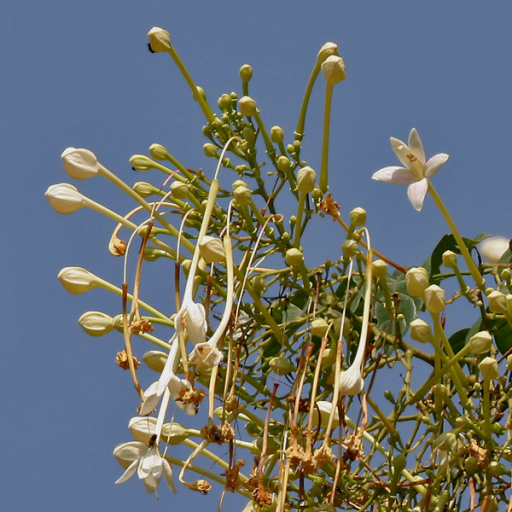
Plant Overview
Known as the "Tree Jasmine" or "Akash Nim," Millingtonia hortensis is a sky-reaching beauty that turns the night air into a sweet-scented perfume. Native to South and Southeast Asia, this elegant tree is often planted near homes so residents can wake up to a literal carpet of fallen, snowy-white blossoms. Its deeply fissured, spongy bark gives it its other popular name: the Indian Cork Tree.
🔍 How to Identify
- 🌳 The Bark: The tree features a very thick, yellowish-gray bark that is deeply cracked and feels corky or spongy to the touch—a key identifier.
- 🎺 The Flowers: Look for long, waxy, tubular white flowers with four delicate petals. They hang in drooping clusters and release an intoxicating honey-like scent, particularly in the evening.
- 🍃 The Foliage: It sports large, compound leaves with many small, pointed leaflets. The canopy is light and airy, allowing dappled sunlight to reach the ground below.
🏡 In Your Garden
- 🏗️ Brittle Beauty: While it grows remarkably fast and reaches impressive heights, its wood is relatively brittle. It is best to plant it away from high-wind corridors or direct structures to prevent falling branches during heavy storms.
- ☀️ Sun & Foundation: This tree is a sun-lover and needs plenty of vertical room to stretch. Because it develops a deep taproot, it is quite drought-tolerant once established but strongly dislikes being transplanted once it has matured.
⚠️ Safety & Toxicity
- ✅ Safe Profile: Millingtonia hortensis is generally considered non-toxic to humans, cats, and dogs. It is a popular ornamental tree in public parks and residential gardens.
- 👃 Scent Sensitivity: The fragrance is incredibly potent. While many find it heavenly, individuals with extreme sensitivities to strong floral scents or heavy pollen may find it overwhelming during the peak flowering season.
✨ Fun Fact
In some cultures, the dried flowers of the Indian Cork Tree are used as a traditional treatment for respiratory issues. Historically, the dried blossoms were even rolled into cigarettes and smoked as an ancient remedy for asthma!

Detailed Care Instructions
To successfully grow Millingtonia hortensis, also known as Indian Corkwood or Tree Jasmine, follow these steps:
- Choose the right location: Select a sunny spot in your garden that receives at least 6-8 hours of direct sunlight every day. Ensure the soil is well-draining.
- Soil preparation: Millingtonia hortensis prefers fertile, loamy soil. Prepare the soil by incorporating compost or well-rotted manure to improve its nutrient content and drainage.
- Planting: Dig a hole twice as wide and deep as the plant's root ball. Place the plant in the hole, ensuring that the top of the root ball is level with the ground. Backfill the hole with soil and firm it gently around the roots.
- Watering: Water the plant deeply after planting and then maintain regular watering as Millingtonia hortensis prefers consistently moist soil. Avoid overwatering, as it can lead to root rot.
- Mulching: Apply a layer of organic mulch around the base of the plant, such as wood chips or compost. This helps retain moisture in the soil and suppresses weed growth.
- Pruning: Regular pruning is beneficial to maintain the desired shape and size of the plant. Prune dead or damaged branches and trim back any excessive growth. Spring is an ideal time for pruning.
- Fertilizing: Feed the plant with a balanced, slow-release fertilizer once every spring. This promotes healthy growth and flowering. Follow the instructions on the fertilizer packaging for the appropriate dosage.
- Pest and disease control: Millingtonia hortensis is relatively pest and disease-resistant. However, occasional infestations of aphids, whiteflies, or mealybugs may occur. Inspect the plant regularly and use proactive measures such as water sprays or organic insecticidal soaps to keep pests in check.
- Provide support: As Millingtonia hortensis grows, it may require support to maintain an upright habit. Install a stake or trellis near the plant and loosely tie the branches to provide support against strong winds.
- Overwintering: In cooler climates, Millingtonia hortensis may not survive frost or freezing temperatures. Consider growing it in a container and bringing it indoors during winter or provide protection with frost blankets or other coverings.
Remember to regularly monitor the plant's growth, soil moisture levels, and overall health to ensure optimal conditions for Millingtonia hortensis.

Place in a bright room that is sun drenched almost all day. Or directly in a south-facing window.

To water this plant, you should first make sure that the soil is slightly damp before watering. It is important not to over-water, as this can cause root rot. You should water the plant deeply, allowing the water to soak into the soil and reach the roots. After watering, allow the soil to dry out slightly before watering again. This plant prefers well-draining soil and regular fertilization during the growing season. Finally, avoid watering the leaves and instead focus the water at the base of the plant to prevent leaf damage and disease.
To properly fertilize this plant, it is recommended to use a balanced, slow-release fertilizer with an N-P-K ratio of 10-10-10 or 12-12-12. Apply the fertilizer at a rate of one tablespoon per gallon of water, and water the plant thoroughly after application. Fertilize every two months during the growing season, which is typically in the spring and summer months. Avoid over-fertilizing, as this can lead to nutrient burn and other issues. Regularly monitor the plant for signs of nutrient deficiencies, such as yellowing or stunted growth.
Millingtonia Hortensis plant prefers a type of soil that is well-draining, moist, and rich in organic matter. It should ideally have a pH of 5.5 to 7.5, which is slightly acidic to neutral. The soil should also be aerated to allow for good root development and growth. To achieve this, you can add some sand or perlite to the soil mix, which will help improve drainage and prevent the soil from becoming too compact. Additionally, adding some organic matter like compost or aged manure will provide the plant with nutrients and improve soil structure. Finally, make sure the soil is not too heavy or clayey, as this can lead to poor drainage and waterlogging, which can harm the plant.
To propagate this plant, you can take semi-hardwood cuttings from a healthy and mature plant. Select a stem that is at least 4 inches long with a few leaves and no flowers. Cut the stem just below a leaf node and remove the leaves from the lower half of the stem. Dip the cut end into rooting hormone and plant the cutting in a container filled with a well-draining soil mix. Water the cutting thoroughly and cover the container with a plastic bag to create a humid environment. Place the container in a warm and bright location but avoid direct sunlight. Check the cutting regularly and mist it if the soil feels dry. After a few weeks, check for roots by gently tugging on the stem. Once roots have formed, you can transplant the cutting to a larger pot or outdoors in a sunny and protected location.








