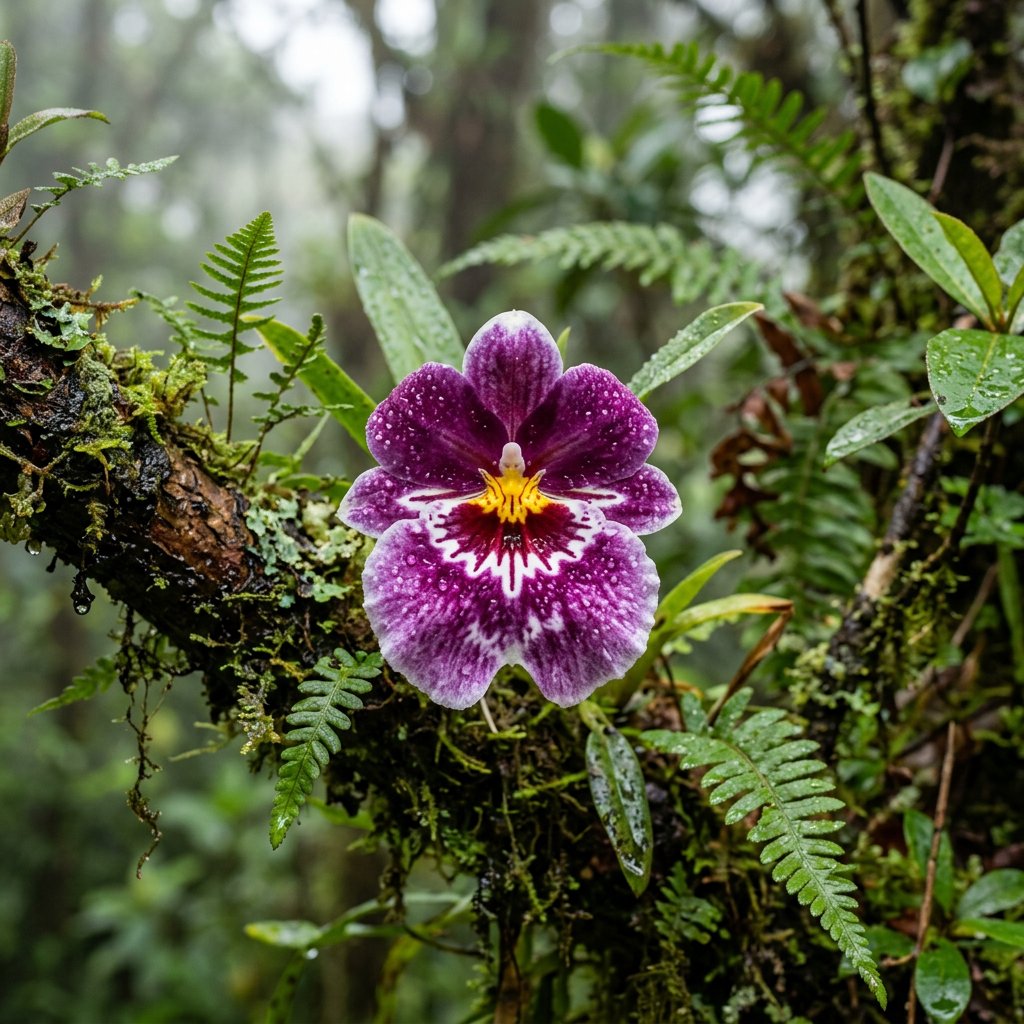
Plant Overview
Known affectionately as the "Pansy Orchid," Miltoniopsis is a crown jewel of the cool-climate orchid world. Native to the high-altitude cloud forests of the Andes in South America, these stunning plants are famous for their flat, expressive blooms that look remarkably like the garden pansy. They are beloved not just for their velvet-textured flowers, but also for their intoxicating, rose-like fragrance that can fill a room on a bright morning.
🔍 How to Identify
- 🌸 Pansy-like Blooms: Large, flat, face-like flowers often featuring a dramatic "waterfall" or "mask" pattern radiating from the center of the lip.
- 🍃 Slender Foliage: Light, almost silvery-green leaves that are thin and fan-shaped, emerging from flattened, tightly packed pseudobulbs.
- 👃 Intense Fragrance: Most varieties produce a powerful perfume, typically described as a mix of rose and citrus, which is strongest during the daylight hours.
🏡 In Your Garden
- ☁️ Cloud Forest Vibes: Because they originate from misty mountains, they prefer "Goldilocks" conditions—consistent humidity and moderate temperatures. They struggle in high heat and prefer a cool breeze.
- 💧 The "Accordion" Warning: Unlike many orchids that enjoy drying out, Miltoniopsis likes to stay evenly moist. If you see the new leaves growing in a pleated, "accordion" shape, it’s a distress signal that the plant is too dry or the humidity is too low.
- 🚿 Sensitive Drinkers: These orchids are particularly sensitive to salt buildup. Using rainwater or distilled water is highly recommended, as tap water minerals can quickly turn their leaf tips brown.
⚠️ Safety & Toxicity
- 🐾 Pet Friendly: You can breathe easy—Miltoniopsis orchids are generally considered non-toxic to cats, dogs, and horses.
- 👶 Safe for Kids: These plants possess no known toxins or irritants, making them a wonderful, safe addition to a family home, though the delicate flowers should be handled gently.
✨ Fun Fact
🎭 The Great Identity Crisis: For years, these were grouped with the genus Miltonia. However, they were eventually given their own genus, Miltoniopsis (meaning "Miltonia-like"). The easiest way to tell the difference? Miltoniopsis has only one leaf growing from the top of each pseudobulb, while Miltonia has two!

Detailed Care Instructions
Here are some tips to help you grow Miltoniopsis plants:
- Lighting: Miltoniopsis plants thrive in bright, filtered light. They prefer slightly lower light levels compared to many other orchids. Avoid direct sunlight, but provide them with bright, indirect light.
- Temperature: These plants prefer cooler temperatures, typically between 60-70°F (15-21°C) during the day and slightly lower at night. Avoid exposing them to extreme temperature fluctuations.
- Humidity: Miltoniopsis orchids require high humidity levels, usually around 50-70%. You can increase humidity by placing a tray of water near the plant or by using a humidifier.
- Watering: It's important to keep the potting medium consistently moist but not waterlogged. Water thoroughly when the top inch of the potting mix feels dry. Avoid letting the roots sit in standing water to prevent root rot.
- Potting medium: Miltoniopsis orchids prefer a well-draining potting mix that retains some moisture. A common mix includes bark, sphagnum moss, and perlite. Repot them every 1-2 years to refresh the medium.
- Fertilizer: Use a balanced fertilizer specifically formulated for orchids. Feed them at about half the recommended strength every two weeks during the growing season (spring and summer). Reduce fertilization during the dormant period (fall and winter).
- Air circulation: Good air circulation is crucial to prevent the growth of fungus or mold. You can achieve this by placing a small fan nearby or by ensuring the plant is not crowded.
- Rest period: Miltoniopsis plants typically undergo a rest period in the fall or winter when growth slows down. During this time, reduce watering and fertilization until new growth starts to emerge.
- Pests and diseases: Watch out for common orchid pests like aphids, mealybugs, or scale. Treat any infestations promptly using insecticidal soap or horticultural oils.
Remember that growing orchids can be a bit challenging, so it's important to observe your plant closely and adjust care accordingly.

Place in a window with dappled sun or a spot in the middle of a room. Or directly in a window facing west or east.

To water this plant, fill a watering can with room temperature water and pour the water gently onto the soil, avoiding getting water on the leaves or crown of the plant. It is important to not let the plant sit in standing water, so make sure to allow any excess water to drain out of the bottom of the pot. This plant prefers to be kept evenly moist, so it may require more frequent watering during hot and dry weather. It's also important to note that this plant dislikes hard water, so using filtered or rainwater is preferable.
- Choose a balanced fertilizer with equal parts nitrogen, phosphorus, and potassium.
- Dilute the fertilizer to half strength or less.
- Apply the fertilizer once a month during the growing season (spring and summer).
- Water the plant thoroughly before fertilizing to prevent salt buildup.
- Apply the fertilizer to the soil around the base of the plant, not directly on the leaves.
- Avoid fertilizing the plant during the dormant season (fall and winter).
- Monitor the plant for signs of fertilizer burn, such as brown or wilted leaves, and adjust the fertilization accordingly.
Miltoniopsis plants prefer a well-draining soil mix that is by nature loose and porous. The soil should have a good balance of organic matter and inorganic matter. It should not be too rich in fertilizers or nutrients, as this can lead to root burn or damage. To create the optimal soil, one can mix together a combination of coarse sand, perlite, peat moss, and vermiculite, with a small amount of charcoal added in to promote drainage. It is also important to maintain proper irrigation practices to keep the soil healthy and the plant thriving.
The best way to propagate this plant is through division. Carefully remove the plant from its container and separate the individual sections with a sterile knife or scissors. Each section should have its own set of roots. Plant these individual sections in a new container with well-draining soil and water thoroughly. Keep the new plants in a bright, but shaded area and avoid direct sunlight until they have established a strong root system. It may take several weeks to see new growth, but with proper care, the new plants should thrive.
Common pests of the pansy orchids include Scale insect, mealybugs, spider mites, thrips. Make a habit of checking your pansy orchids frequently for pests so that any infestations can be caught and managed early.







