Plant Overview
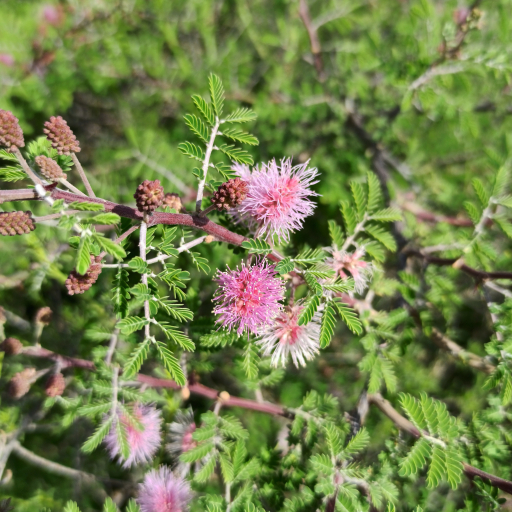
Known colloquially as the "Wait-a-Minute Bush," this resilient shrub earned its name from its sharp, hooked thorns that snag clothing and skin, forcing hikers to stop and untangle themselves. Native to the arid landscapes of the American Southwest and Mexico, it adds a delicate, feathery texture to rugged environments. Despite its "prickly" personality, it is a vital member of the desert community, offering fragrant blooms and acting as a natural protector for smaller wildlife.
🔍 How to Identify
- 🌸 The Blooms: Features fluffy, globe-shaped flower clusters that range from pale white to soft pink. They look like tiny, fragrant pom-poms scattered along the branches during the spring and summer.
- 🌿 The Foliage: Tiny, fern-like leaves (bipinnate) give the plant a light, airy appearance. Like many of its cousins, these leaves may fold slightly in response to intense heat or darkness.
- 🪝 The Thorns: The most distinct feature is the "cat-claws"—short, stout, curved prickles that grow along the stems. They are strategically angled to latch onto anything that brushes past.
🏡 In Your Garden
- 🏜️ Drought Specialist: This plant is an excellent choice for xeriscaping or rock gardens. It thrives in poor, well-draining soil and requires very little supplemental water once its deep root system is established.
- 🦋 Pollinator Paradise: While it may be a foe to your denim jeans, it is a best friend to local ecology. The nectar-rich puffballs are highly attractive to honeybees, native bees, and butterflies.
- 🌱 Natural Fertilizer: As a member of the legume family, it possesses the unique ability to "fix" nitrogen in the soil. It actually improves the quality of the earth it grows in, making it a great "pioneer plant" for damaged landscapes.
⚠️ Safety & Toxicity
- 🌵 Physical Danger: The primary safety concern is the thorns. They are sharp and hooked, capable of causing deep scratches. It should never be planted near narrow walkways or children's play areas.
- 🐾 Pet & Livestock Note: While not considered highly toxic to humans, the foliage and seed pods of many Mimosa species contain mimosine. If consumed in large quantities by horses or cattle, it can lead to hair loss or digestive issues.
- 🧤 Handling Tip: Always wear heavy-duty leather gardening gloves when pruning or relocating this plant to avoid the "wait-a-minute" trap.
✨ Fun Fact
- 🧬 The Name Game: The genus name Mimosa is derived from the Greek word mimos, meaning "actor" or "mime." This refers to the "sensitivity" of many species in the family that "act" by folding their leaves when touched!

Detailed Care Instructions
To grow the Mimosa aculeaticarpa plant, also known as the Catclaw mimosa or wait-a-minute bush, here are some steps to follow:
- Choose the right location: The plant prefers full sun to partial shade. Ensure the area has well-draining soil.
- Prepare the soil: Mimosa aculeaticarpa thrives in sandy or loamy soil. Add organic matter like compost to improve drainage and nutrient content.
- Plant the seeds or seedlings: If using seeds, soak them in warm water overnight before planting. Sow the seeds or plant the seedlings in the prepared soil, following the recommended spacing.
- Water regularly: Keep the soil moist but not waterlogged during the growing season. Once established, the plant can tolerate drought conditions.
- Mulch the base: A layer of organic mulch around the base of the plant helps retain moisture and suppresses weed growth.
- Pruning: As the plant grows, you may need to prune it lightly to maintain shape and remove any dead or damaged branches. Pruning also helps promote healthy growth.
- Fertilize: Apply a balanced slow-release fertilizer in early spring to provide essential nutrients to the plant. Follow the instructions on the fertilizer package for proper application.
- Protect from extreme temperatures: Mimosa aculeaticarpa is adapted to arid regions but may need protection from freezing temperatures. Consider providing a shelter or covering during winter if you live in a colder climate.
- Pests and diseases: Monitor the plant for any signs of pests like aphids or diseases like powdery mildew. Treat as necessary using organic or chemical solutions.
- Enjoy the flowers: Mimosa aculeaticarpa produces beautiful yellow puffball flowers during spring and summer. Enjoy the blooms and watch as the plant grows into a full-size shrub.
Remember to always research and understand the specific needs of the particular plant species you are growing for the best results.

Place in a bright room that is sun drenched almost all day. Or directly in a south-facing window.

The best way to water the plant is to thoroughly saturate the soil around the base of the plant, making sure that the water reaches the root system. It is important to avoid overwatering, as this can lead to root rot and other issues. Instead, water deeply but infrequently, allowing the soil to dry out between waterings. Additionally, it is important to adjust watering frequency and amount based on the specific climate and growing conditions in your area. Overall, careful and attentive watering is essential to ensuring the health and vitality of the plant.
To fertilize this plant, use a balanced fertilizer with equal parts nitrogen, phosphorus, and potassium. Apply the fertilizer once every four to six weeks during the growing season, which is typically spring and summer. Make sure to water the plant thoroughly before and after fertilizing to prevent fertilizer burn. Additionally, avoid over-fertilizing as it can lead to excessive growth and weak stems.
The ideal soil for the Mimosa Aculeaticarpa plant should be well-draining, nutrient-rich, and slightly acidic. It is recommended to use a mixture of soil and sand, along with peat moss or compost to improve drainage and nutrient retention. The soil should be kept moist but not waterlogged, with regular watering during dry spells. Avoid using heavy or compact soil, as it can cause root rot and stunt growth. Additionally, the plant prefers full to partial sunlight and can benefit from regular fertilization during the growing season.
Mimosa Aculeaticarpa can be propagated by taking stem cuttings from a healthy plant. The stem cutting should be taken from a 4-6 inch section of the stem with at least two nodes. The lower leaves should be removed, and the cutting should be dipped in rooting hormone powder. The cutting can then be planted in a well-draining potting mix and kept moist but not overwatered. It should be placed in indirect light and kept at a temperature of around 70-75°F. Roots should start to grow within a few weeks, and the new plant can be gradually acclimated to more light and less moisture as it grows.








