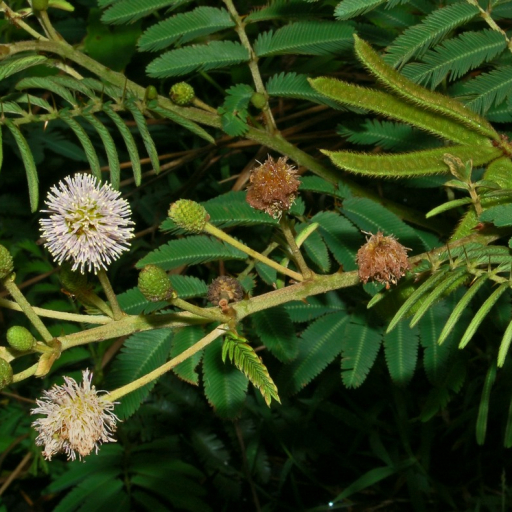
Plant Overview
Often called the "Giant Sensitive Plant" or "Black Mimosa," this leguminous shrub is a master of defense and rapid expansion. While it shares the "bashful" folding-leaf trait with its smaller cousin (Mimosa pudica), this species is a sprawling titan that can dominate wetlands. In many tropical regions, it is viewed as a beautiful but formidable invader that can transform open floodplains into impenetrable, thorny thickets.
🔍 How to Identify
- 🌿 Touch-Sensitive Leaves: The fern-like green leaves are bipinnate and sensitive; they fold inward when touched or when the sun sets, though they are slightly less "dramatic" in their reaction than the common sensitive plant.
- 🌸 Pom-Pom Flowers: It produces small, spherical flower heads that look like fluffy pink or mauve "puffballs" roughly 1 to 2 centimeters in diameter.
- ⚔️ Prickly Stems: The woody stems are heavily armed with sharp, curved thorns (prickles) that make the plant very difficult to handle and help it scramble over neighboring vegetation.
- 🫘 Bristly Pods: It produces flat, segmented seed pods covered in stiff brown hairs. When mature, these pods break into individual squares that are designed to float or stick to fur.
🏡 In Your Garden & Ecology
- 💧 The Wetland King: This plant thrives in "feet-wet" conditions. You will most likely find it lining the banks of rivers, dams, and floodplains, where it uses its massive root system to soak up moisture and stabilize (or clog) banks.
- 🚜 Persistent Growth: It is notoriously difficult to eradicate because it produces thousands of seeds per square meter. These seeds are incredibly hardy and can remain dormant but viable in the soil for over a decade, waiting for the right moisture levels to sprout.
⚠️ Safety & Toxicity
- 🛑 Physical Hazard: The primary danger of Mimosa pigra is its thorns. They are sharp enough to puncture light footwear and cause significant skin lacerations if you walk through a thicket unprepared.
- 🐾 Livestock Risk: The plant contains mimosine, an amino acid that can be toxic to non-ruminant animals and cattle if eaten in large quantities, often leading to hair loss, goiters, and digestive issues.
- 🚫 Invasive Warning: In many countries (like Australia and parts of Africa), it is a prohibited weed. Check local regulations before attempting to cultivate it, as it can escape gardens and devastate local ecosystems.
✨ Fun Fact
- ✨ Botanical Velcro: The seed pods are master hitchhikers! The tiny bristles on the pods act like Velcro, allowing them to stick to the fur of passing animals or the clothes of hikers to travel miles away from the parent plant.

Detailed Care Instructions
| Humidity | Normal |
| Lighting | Full Sun |
| Toxicity | Poisonous |
| Difficulty | Medium |
| Temperature | 18°C - 24°C |
| Hardiness Zones | 5 - 11 |
To grow a Mimosa pigra plant, follow these steps:
- Purchase seeds or a sapling from a reputable nursery or online store. Mimosa pigra plants are considered invasive in some regions, so make sure to check if it is legal to grow them in your area.
- Mimosa pigra plants prefer tropical climates and moist soil. Choose a location in your garden that receives full sun to partial shade and has well-draining soil.
- Prepare the soil by loosening it with a garden fork or tiller. Remove any rocks or debris, as well as weeds or grass.
- Dig a hole that is slightly larger than the root ball of your sapling or deep enough for the seeds. Place the sapling or seeds into the hole and cover with soil, gently firming it around the plant.
- Water the plant thoroughly after planting, ensuring that the soil is moist but not waterlogged. Continue to water regularly, keeping the soil evenly moist.
- Apply a layer of organic mulch around the base of the plant to help conserve moisture and suppress weed growth.
- Prune the plant regularly to maintain its shape and encourage healthy growth. Remove any dead or damaged branches and shape the plant as desired. Mimosa pigra plants have thorny branches, so wear protective gloves when pruning.
- Fertilize the plant every few months with a balanced, slow-release fertilizer according to the package instructions.
- Monitor the plant for any signs of pests or diseases, such as leaf spots or caterpillar infestation. If necessary, use appropriate insecticides or fungicides to control the issue.
- In regions with colder climates, protect the plant during frost or freeze events by covering it with a frost cloth or moving it to a sheltered area.
Note: As mentioned earlier, it is essential to check if growing Mimosa pigra plants is legal in your area as they can be invasive and detrimental to native ecosystems.

Place in a bright room that is sun drenched almost all day. Or directly in a south-facing window.

1. The recommended approach for watering the plant commonly referred to as Mimosa Pigra begins by assessing the moisture level of the soil. To determine whether watering is needed, you can use a soil moisture meter or conduct a visual inspection by checking the top few inches of soil.
2. If the soil feels dry to the touch, it is an indication that the plant requires watering. However, ensure that the plant is not overwatered, as excessive moisture can lead to root rot and other issues.
3. Use a watering can or a gentle hose attachment to water the plant. Start by pouring water at the base of the plant, directly onto the soil, rather than spraying it on the foliage. This ensures that the water reaches the roots where it is needed the most.
4. Water the plant slowly and evenly, allowing the water to seep into the soil. Avoid excessive watering that may result in pooling or runoff. It is best to provide a thorough watering that moistens the entire root ball without saturation.
5. You can adjust the watering frequency depending on factors such as the climate, season, and plant size. Generally, during hot weather or periods of drought, more frequent watering may be required. Conversely, in cooler or rainy seasons, less watering may be necessary.
6. Another aspect to consider is the establishment of the plant. Initially, after planting or transplanting the Mimosa Pigra, it may require more frequent watering to help it establish a strong root system. However, once established, the watering frequency can be reduced.
7. It is advisable to water the plant during the early morning or late afternoon to prevent excessive evaporation and allow the foliage to dry off before nightfall. This timing also helps prevent fungal diseases that can occur if the plant remains wet for extended periods.
8. Regularly monitor the plant for signs of overwatering or underwatering. Overwatering can lead to leaves turning yellow, drooping, or developing root rot. Underwatering may cause wilting, browning of leaves, or stunted growth. Adjust your watering practices accordingly if any of these signs are observed.
9. In addition to watering, consider other factors that contribute to plant health, such as providing adequate sunlight, proper soil drainage, and suitable environmental conditions.
10. If you are unsure about the watering needs of your specific Mimosa Pigra plant, it is recommended to consult with a local horticulturist, gardening expert, or reference reputable plant care resources for further guidance.
To fertilize the Mimosa Pigra plant, follow these instructions:
- Choose a balanced, slow-release fertilizer with equal amounts of nitrogen (N), phosphorus (P), and potassium (K). Check the fertilizer label for the N-P-K ratio.
- Apply the fertilizer in the growing season, typically during spring or early summer when the plant is actively growing.
- Dissolve the recommended amount of fertilizer in water according to the package instructions. Use a watering can or sprayer to apply the fertilizer solution.
- Ensure the soil around the plant is moist before applying the fertilizer. This helps prevent fertilizer burn.
- Slowly pour the fertilizer solution at the base of the plant, directly onto the soil. Avoid getting the fertilizer on the leaves or stems, as it can cause damage.
- Apply the fertilizer evenly around the plant, extending it to the area beneath the outermost branches (drip line).
- Avoid over-fertilizing the Mimosa Pigra plant, as it can lead to excessive growth or burn the roots. Follow the recommended dosage provided on the fertilizer package.
- After applying the fertilizer, water the plant lightly to help the nutrients penetrate into the soil.
- Monitor the plant's response to the fertilizer. If you notice any signs of nutrient deficiency or excessive growth, adjust the fertilization schedule or dosage accordingly.
Remember to always follow the specific fertilizer instructions and consult a local gardening expert for guidance tailored to your specific plant and location.
The ideal soil for Mimosa Pigra plant should possess specific characteristics to support its optimal growth and development. It requires a well-draining soil that can hold moisture without becoming waterlogged. The soil should also have good fertility and be rich in organic matter, providing the necessary nutrients for the plant's vitality.
Additionally, the pH level of the soil should be slightly acidic to neutral, ideally ranging between 6.0 and 7.0. This pH range ensures that the plant can efficiently absorb essential minerals and nutrients from the soil.
Furthermore, the soil texture should be loamy, offering a balanced combination of sand, silt, and clay particles. This type of soil allows for sufficient water retention while still allowing excess water to drain away, preventing waterlogged conditions.
To maintain the health of the Mimosa Pigra plant, it is crucial to avoid heavy clay soils or soils with poor drainage. These conditions can lead to water stagnation and root rot, ultimately causing harm to the plant.
It is advisable to amend the soil before planting by mixing in organic matter such as compost or well-rotted manure. This will enhance soil fertility, improve drainage, and increase the overall nutrient content.
Ultimately, providing a suitable soil composition and environment will contribute to the overall health and vigor of the Mimosa Pigra plant, ensuring its successful growth and survival.
Propagating Mimosa Pigra involves several steps to successfully reproduce the plant. Here is a detailed guide on how to propagate Mimosa Pigra:
- Pruning: Start by pruning the mature plant during the dormant season to encourage new growth. Cut off any dead or damaged branches, and trim back the top growth to create a more compact plant.
- Collection of Seeds: Look for mature seed pods on the plant. These seed pods are elongated and brown or black in color. Harvest the seed pods by gently twisting or cutting them from the plant. Place the seed pods in a paper bag to allow them to dry further.
- Seed Preparation: Once the seed pods have dried completely, gently break them open to release the seeds. It may be helpful to wear gloves during this step as the pods can be prickly. Collect the seeds and discard any damaged or discolored ones.
- Scarification: Some seeds may have a hard outer coating that prevents germination. To improve germination rates, scarify the seeds by gently scraping the outer coating with sandpaper or nicking the seed coat with a sharp blade. This process helps water and air penetrate the seed, promoting germination.
- Soaking: After scarification, soak the seeds in water overnight. This aids in softening the seed coat and encourages germination.
- Sowing: Fill a seed tray or small pots with a well-draining seed starting mix. Plant the scarified and soaked seeds approximately 1/4 inch deep into the soil. Gently cover the seeds with the soil mix.
- Watering and Care: Moisten the soil lightly after sowing the seeds. Avoid over-watering to prevent rotting. Place the seed tray or pots in a warm and bright location, preferably with indirect sunlight. Maintain a consistent temperature between 75-85°F (24-29°C) for optimal germination.
- Germination: Germination time can vary, but usually, the seeds will start to sprout within 1-2 weeks. Keep the soil slightly moist during this period and avoid disturbing the seeds. Once the seedlings emerge, reduce watering frequency and allow the soil to dry out slightly between watering to prevent fungal diseases.
- Transplanting: When the seedlings have developed several sets of true leaves, they are ready to be transplanted into individual pots or a larger container. Ensure the planting medium is well-draining and the pots have drainage holes to prevent waterlogged roots.
- Acclimation: Gradually introduce the young plants to direct sunlight over a week or two. Increase their exposure gradually to prevent sunburn or shock. Continue to provide moisture, but avoid overwatering.
By following these propagation steps, you can successfully reproduce Mimosa Pigra plants from seeds without mentioning the common names associated with the plant.








