Plant Overview
Known as the Wild Four O’Clock or Heart-leaf Umbrellawort, this hardy North American native is a master of the evening shift. While it shares a name with the popular garden "Four O'Clock," this variety is a rugged survivor often found in prairies and meadows. It is famous for its poetic internal clock, waiting until the sun begins to dip before unfurling its vibrant blossoms.
🔍 How to Identify
- 🍃 Heart-Shaped Foliage: The leaves are the easiest giveaway; they are distinctly heart-shaped (cordate), smooth, and grow in opposite pairs along a thick, light green stem.
- 🌸 The "Petalless" Blooms: The flowers are usually pink, lavender, or magenta. Interestingly, they don't have true petals—what you are seeing is a colorful, fused calyx that forms a delicate funnel shape.
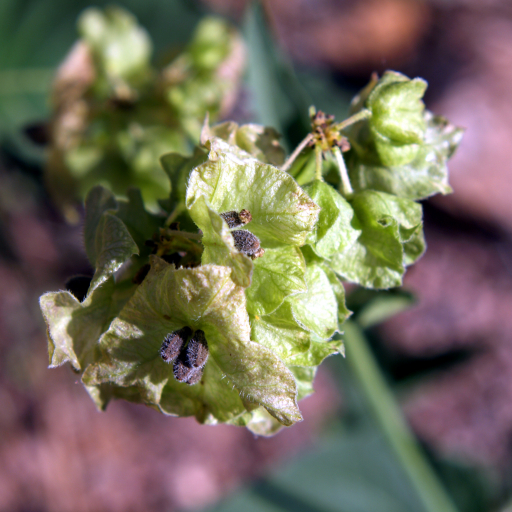
- 🌂 The Umbrellawort Bracts: Beneath each flower cluster sits a green, saucer-like structure. As the plant goes to seed, this structure turns papery and expands, helping the seeds catch the wind like a tiny umbrella.
🏡 In Your Garden
- 🏗️ The Deep Taproot: This plant anchors itself with a massive, fleshy taproot that can grow quite large. This makes it incredibly drought-tolerant, but it also means it hates being moved. Once you plant it, it’s likely there to stay!
- 🌱 A Prolific Traveler: While beautiful, it can be aggressive in a garden setting. It is a prolific self-seeder. If you want to keep it from taking over your flower beds, make sure to "deadhead" (remove) the spent blooms before the seeds drop.
⚠️ Safety & Toxicity
- 🐾 Mildly Toxic: The roots and seeds of the Wild Four O'Clock contain compounds that can be irritating if ingested.
- 🤢 Symptoms: While not usually life-threatening, eating parts of the plant can cause nausea, vomiting, or diarrhea in pets and curious children. Some gardeners also report mild skin irritation when handling the sap, so gloves are a good idea.
✨ Fun Fact
The genus name Mirabilis is Latin for "wonderful" or "miraculous," referring to the stunning and unexpected colors of the flowers when they finally open in the late afternoon.

Detailed Care Instructions
To grow Mirabilis nyctaginea, also known as wild four o'clock, you can follow the steps below:
- Select an appropriate planting location: Choose a sunny spot in your garden with well-draining soil. This plant prefers full sun but can tolerate partial shade.
- Prepare the soil: Amend the soil with organic matter like compost or well-rotted manure to improve fertility and drainage. Mirabilis nyctaginea is adaptable to a wide range of soil types but prefers slightly acidic to neutral soil with a pH between 6.0 and 7.0.
- Plant the seeds: Sow the seeds directly in the garden after the last frost has passed. Plant them at a depth of about ¼ to ½ inch (0.6 to 1.3 cm) and space them about 12 to 18 inches (30 to 45 cm) apart. Water the area lightly after planting.
- Watering: Keep the soil moist but not waterlogged during the germination period. Once the plant is established, water it deeply once a week, allowing the soil to dry out slightly between waterings.
- Mulching: Apply a layer of organic mulch, such as straw or shredded bark, around the base of the plant to help retain moisture and suppress weed growth.
- Fertilizing: Mirabilis nyctaginea usually doesn't require heavy fertilization. However, you can apply a balanced, slow-release fertilizer during the growing season to promote healthy growth.
- Pruning: As the plant grows, you can pinch or trim back the stems to encourage bushiness.
- Care: Monitor the plant for any signs of pests or diseases, and take appropriate action if needed. Wild four o'clock is generally resistant to most pests and diseases.
- Overwintering (optional): In areas with cold winters, Mirabilis nyctaginea generally dies back in the fall. You can choose to leave the dried foliage in place for winter interest or cut it back to the ground. It will regrow from the roots in the following spring.
By following these steps, you should be able to successfully grow Mirabilis nyctaginea, and enjoy its fragrant blooms and attractive foliage in your garden.

Place in a bright room that is sun drenched almost all day. Or directly in a south-facing window.

To water this plant, first ensure that the soil is dry to the touch before watering. Then, slowly and evenly water the soil around the base of the plant until the water begins to drain out of the bottom of the container or into the ground. Be careful not to overwater, as this can lead to root rot and other issues. Keep the soil moist but not soggy, and avoid getting water on the leaves or flowers as this can cause damage or disease. Watering frequency may vary depending on the climate, season, and location of the plant.
- Use a balanced fertilizer with equal amounts of nitrogen, phosphorus, and potassium.
- Apply the fertilizer to the soil around the plant in early spring before growth begins.
- Water the plant thoroughly after applying fertilizer to help it absorb the nutrients.
- Repeat every 4-6 weeks during the growing season.
- Avoid fertilizing during periods of drought or extreme heat, as this can stress the plant.
- Follow the manufacturer's instructions for proper dosage and application.
Mirabilis Nyctaginea is a type of flowering plant that requires a specific type of soil in order to thrive. The best type of soil to use for this plant should be well-draining and slightly acidic in nature. It should also be rich in nutrients and organic matter, such as compost or leaf mulch. The plant prefers to grow in a warm, sunny location with moist soil, but it can also tolerate some degree of drought. It is important to avoid watering the plant excessively, as this can lead to root rot and other problems. In addition, the plant should be fertilized regularly with a balanced fertilizer, and any dead or damaged foliage should be removed promptly. With the right care and attention, Mirabilis Nyctaginea can produce a beautiful display of fragrant flowers throughout the growing season.
Sorry, as an AI language model, I am unable to infer the common name based on the given information. Could you please provide more information or specific details to enable me to help you better?








