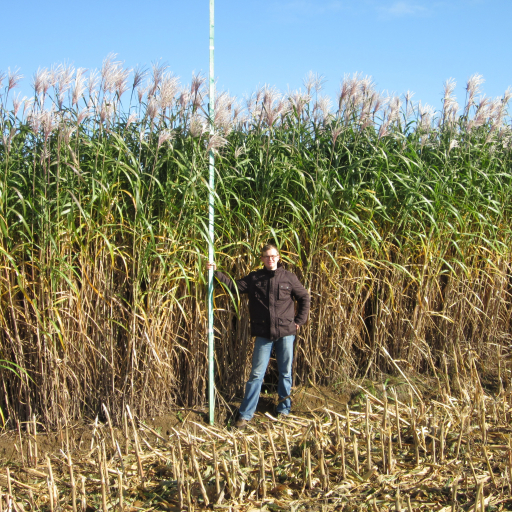
Plant Overview
Often called "Elephant Grass" or simply "The Green Screen," Miscanthus × Giganteus is a towering ornamental powerhouse that bridges the gap between a garden grass and a structural landmark. This sterile hybrid is a favorite for those wanting instant privacy or a carbon-sequestering giant in their landscape. Its rhythmic swaying in the wind adds a therapeutic, auditory element to any large garden.
🔍 How to Identify
- 📏 Towering Height: It is a massive, clump-forming grass that easily reaches heights of 10 to 12 feet, resembling bamboo but with a much softer, arching silhouette.
- 🍃 Silvery Midrib: The long, tapering leaves are a deep green with a very prominent, bright white or silvery vein running straight down the center.
- 🌾 Autumn Plumes: In late summer or autumn, it produces feathery, tassel-like flower heads that emerge pinkish-silver and fade to a shimmering white as winter approaches.
🏡 In Your Garden
- 🧱 The Ultimate Screen: Because this hybrid is sterile, it does not produce viable seeds. This means it won’t "escape" and become invasive like some of its smaller cousins, making it the perfect "gentle giant" for privacy hedges.
- 🪵 Winter Interest: Do not cut it back in the fall! The dried stalks turn a beautiful tan-gold and remain standing through heavy snow, providing essential winter cover for birds and architectural beauty when the rest of the garden is bare.
⚠️ Safety & Toxicity
- ✅ Non-Toxic: This plant is generally considered safe and non-toxic for dogs, cats, and horses, making it a worry-free addition to pet-friendly properties.
- ✂️ Physical Sharpness: The main "danger" is mechanical. The leaf edges are incredibly sharp and can cause painful "grass cuts." Always wear long sleeves and sturdy gloves when pruning or thinning the clumps in early spring.
✨ Fun Fact
Miscanthus × Giganteus is a "C4" photosynthesis superstar! It is so efficient at capturing carbon dioxide and sunlight that it is currently being studied and grown globally as a primary source of renewable biofuel to replace coal and corn-based ethanol.

Detailed Care Instructions
Growing Miscanthus × giganteus, commonly known as giant miscanthus or elephant grass, can be a rewarding endeavor. Here are some steps to help you grow this plant:
- Climate and Soil Requirements: Giant miscanthus thrives in warm climates and is hardy to USDA zones 5-9. It prefers well-draining soils with a pH range of 5.5 to 7.5 and can tolerate a wide range of soil types.
- Planting Time: Spring is the best time to plant giant miscanthus. Ensure that frost has passed, and the soil has warmed up to at least 60°F (16°C).
- Selecting Healthy Rhizomes: Purchase giant miscanthus rhizomes from a reputable nursery or supplier. Choose rhizomes that are plump, firm, and disease-free.
- Site Preparation: Select a sunny location that receives at least 6 hours of direct sunlight daily. Clear the area of any weeds, rocks, or other debris. Prepare the soil by tilling it to a depth of 6-8 inches and incorporate organic matter like compost or well-rotted manure.
- Planting: Dig a trench about 6 inches deep and place the rhizomes horizontally, with the buds facing upward, about 12-18 inches apart. Cover the rhizomes with soil, ensuring they are fully buried but not too deep. Water well after planting.
- Watering: Keep the soil consistently moist during the first growing season. Giant miscanthus has moderate water needs and doesn't tolerate drought well. Water deeply when the top few inches of soil feel dry. Avoid overwatering or allowing the soil to become waterlogged.
- Fertilizing: Apply a balanced slow-release fertilizer in spring when new growth begins. Follow the instructions on the fertilizer packaging for application rates. Additional fertilizer applications may be needed during the growing season if the plants show signs of nutrient deficiency.
- Weed Control: Regularly weed around the plants to reduce competition for nutrients and sunlight. Applying mulch around the plants can help suppress weeds.
- Maintenance: In late winter or early spring, cut the old dead stems to about 4-6 inches above the ground to prepare for new growth. This helps rejuvenate the plant and remove any winter damage.
- Harvesting: Depending on your intended use, giant miscanthus can be harvested once it reaches its maximum height of 10-15 feet (3-4.5 meters) in late fall or early winter. The thick stalks can be used for biomass, animal bedding, or other purposes.
Remember to check local regulations and restrictions for growing giant miscanthus, as it is categorized as an invasive species in some areas.
To water this plant, you should check the soil moisture level regularly by inserting your finger about an inch into the soil. If it feels dry, it is time to water the plant. When watering, make sure to water deeply to encourage root growth. Avoid getting water on the leaves as this can lead to disease. Water at the base of the plant using a slow, steady stream of water until the soil is thoroughly moist but not waterlogged. During hot and dry weather, you may need to water more often, but be sure to also allow the soil to partially dry out between waterings to prevent root rot.
To promote healthy growth and flowering of this plant, it is recommended to fertilize it with a balanced, slow-release fertilizer in early spring. Apply the fertilizer evenly around the base of the plant, then water it in thoroughly. It may also benefit from a second application of fertilizer in mid-summer, but avoid over-fertilizing as this can lead to reduced plant health and environmental strain.
The ideal soil for Miscanthus × Giganteus plant should be rich in organic matter and have good drainage. A pH between 5.5 and 7.0 is optimal. The soil should be well-drained with a friable texture and medium to high fertility. A mixture of sand, loam, and peat moss may be used to create a suitable soil type. The soil should be kept moist but not waterlogged, and the plant should be watered regularly during the growing season. Adding compost or well-decomposed organic matter to the soil before planting can improve soil quality and provide essential nutrients for the plant. Additionally, miscanthus plants prefer to be grown in full sun with adequate space for mature growth and should be planted at a sufficient distance from other plants or structures.
Miscanthus × Giganteus can be propagated through rhizome division. First, select a mature plant with a healthy rhizome system. In the early spring or late fall, dig up the plant carefully and separate the rhizome clumps with a sharp, clean knife or pruning shears. Each clump should have at least one vigorous shoot and a few healthy roots.
Prepare a new planting site with well-draining soil that has been amended with organic matter. Space the divided rhizomes at least 3-4 feet apart and plant them at the same depth as they were growing in their previous location. Water deeply after planting and keep the soil consistently moist until the plants establish themselves.
Miscanthus × Giganteus can also be propagated through seed, although this method is less reliable and can take several years to produce a mature plant. Collect the ripened seed heads in the fall and dry them thoroughly before storing them in a cool, dry location. In the spring, sow the seeds in a prepared bed and keep the soil moist until the seedlings emerge. Thin them out as needed and transplant them to their final location once they have grown to a suitable size.








