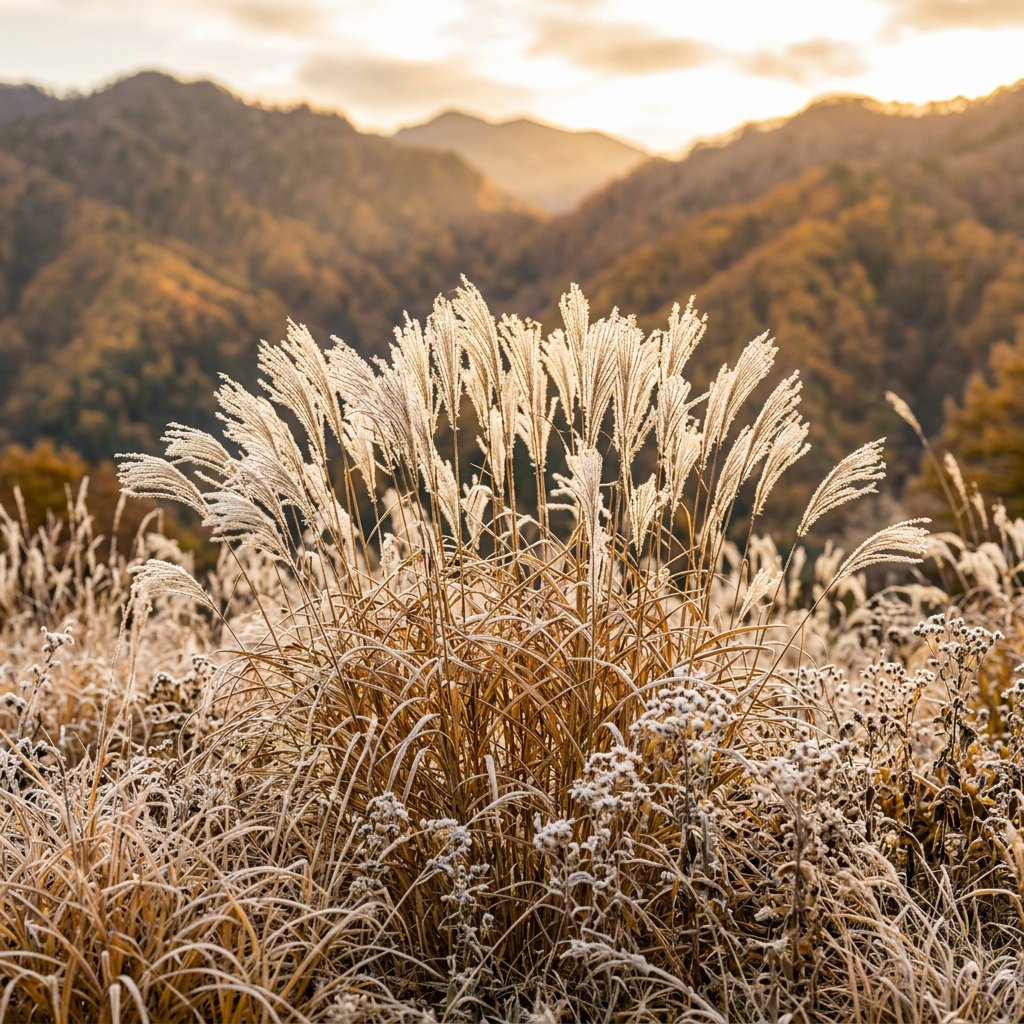
Plant Overview
Often called Maiden Grass or Chinese Silver Grass, this elegant perennial is a staple of the "New Perennial" movement in landscape design. Native to East Asia, it is celebrated for its shimmering plumes that dance in the slightest breeze, earning it a spot as one of Japan’s "Seven Herbs of Autumn." It is the perfect choice for gardeners looking to add texture, movement, and a touch of late-season drama to their outdoor spaces.
🔍 How to Identify
- 🌿 The Foliage: Long, narrow leaf blades that gracefully arch outward, often featuring a distinct silvery-white stripe running down the center (the midrib).
- 🌾 The Plumes: Silky, feathery flower heads appear in late summer, transitioning from coppery-pink to a shimmering silvery-white as they dry into the winter.
- 🏗️ The Habit: It grows in tidy, dense clumps that can reach impressive heights, providing a vertical "fountain" effect that remains sturdy even in wind.
🏡 In Your Garden
- 🌞 Stay in the Light: While it’s a hardy survivor, this grass needs full sun to maintain its structural integrity; if grown in too much shade, the stems will lose their strength and "flop" over.
- ❄️ The Golden Rule of Pruning: Resist the urge to cut it back in the fall. The dried stalks provide architectural beauty during snowy months and offer vital shelter for birds and beneficial insects during the winter. Trim it back to about 6 inches in early spring before new growth starts.
⚠️ Safety & Toxicity
- 🩹 Sharp Edges: While the plant is non-toxic, the leaf margins are remarkably sharp and can cause "paper cut" style irritations on bare skin. Always wear long sleeves and gloves when handling or pruning.
- 🐾 Pet Safety: It is generally considered non-toxic to cats, dogs, and horses, though its tough, fibrous leaves may cause minor stomach upset if a curious pet decides to chew on them.
✨ Fun Fact
In Japanese culture, Miscanthus (known as Susuki) is a central symbol of the Tsukimi (Moon Viewing) festival. It is believed that the tall stalks resemble the rice plant, and placing them in the home acts as a charm to ensure a bountiful harvest and ward off evil spirits.

Detailed Care Instructions
There are a number of non-invasive native plants in the US that can be planted instead of using zebra grass. These include Switchgrass (Panicum virgatum), Indian Grass (Sorghastrum nutans), and Big Bluestem (Andropogon gerardii ).
Does zebra grass help prevent erosion?
Zebra grass, along with other ornamental grasses, can help prevent erosion due to their clumping and deep root systems which hold the soil in place.
Is zebra grass flammable?
Ornamental grasses tend to be more flammable than other plants due to the fact that they have dry and dead stalks in the cooler months. If you're in a high-risk fire area, take this into consideration before planting this type of plant.
| Color | Commonly Purple Or Reddish Silver |
| Soil Ph | Tolerates A Variety |
| Humidity | Normal |
| Lighting | Full Sun |
| Soil Type | Tolerates A Variety |
| Bloom Time | Late Summer/Early Fall |
| Difficulty | Easy |
| Plant Type | Herbaceous Perennial |
| Hibernation | Cold Period |
| Mature Size | Usually Up To 2 Meters, But Occassionally Up To 4 Meters |
| Native Area | Japan, China, Korea And Taiwan |
| Sun Exposure | Full Sun/Partial Shade |
| Hardiness Zones | 5 To 9 |
To grow Miscanthus Sinensis, also known as Maiden Grass, follow these steps:
- Location: Choose a sunny area in your garden that receives at least 6 hours of direct sunlight per day. Maiden Grass can also tolerate partial shade, but it may result in less vigorous growth and fewer blooms.
- Soil Preparation: Prepare the soil by removing any weeds or grass from the area. Loosen the soil with a garden fork or tiller to a depth of about 8-10 inches. Mix in some organic matter like compost or well-rotted manure to improve drainage and fertility.
- Planting: Dig a hole twice as wide as the root ball of the Miscanthus Sinensis plant. Place the plant in the hole, ensuring that the top of the root ball is level with the soil surface. Fill in the hole with soil, gently firming it around the roots to remove any air pockets. Water thoroughly after planting.
- Watering: Keep the soil evenly moist, especially during the first growing season. Water deeply but infrequently, allowing the soil to partially dry out between waterings. Once established, Maiden Grass can tolerate some drought, but regular watering will promote healthier growth.
- Mulching: Apply a layer of organic mulch around the base of the plant to retain moisture, suppress weed growth, and regulate soil temperature. Maintain a mulch depth of about 2-3 inches, but ensure it does not touch the stem of the plant.
- Fertilization: Miscanthus Sinensis is not a heavy feeder, but you can apply a slow-release balanced fertilizer in spring to provide essential nutrients. Follow the package instructions for the specific fertilizer you choose.
- Pruning: Cut back the foliage of Maiden Grass in late winter or early spring before new growth emerges. Trim the plants to a height of 4-6 inches above ground level. This will encourage vigorous growth and prevent the plant from becoming sparse and untidy.
- Division: Every few years, as the clump expands, you can divide the plant to prevent overcrowding. Dig up the clump in early spring or late fall, and using a sharp spade, cut it into smaller sections with roots attached. Replant the divisions in prepared soil, spacing them about 3-5 feet apart.
By following these steps, you can successfully grow Miscanthus Sinensis and enjoy its beautiful reed-like foliage and feathery plumes.

Place in a window with dappled sun or a spot in the middle of a room. Or directly in a window facing west or east.

Miscanthus Sinensis is a type of ornamental grass that requires sufficient watering to survive and thrive. When watering this plant, it is important to ensure that the soil is moist but not saturated.
One way to determine whether the soil needs watering is to stick your finger into the soil up to the first knuckle. If the soil feels dry at this depth, it is time to water the plant.
When watering Miscanthus Sinensis, it is best to avoid getting water on the foliage, as this can lead to fungal diseases. Instead, try to water the soil around the base of the plant, and water deeply enough to ensure that the roots are getting enough water.
It is also important to avoid overwatering the plant, as this can lead to root rot. To prevent overwatering, be sure to allow the soil to dry out slightly before watering again.
In general, the watering needs of Miscanthus Sinensis will vary depending on factors such as the climate, soil type, and location of the plant. However, with proper attention and care, this ornamental grass can thrive and add beauty to any garden or landscape.
To fertilize this plant, apply a balanced fertilizer with equal parts nitrogen, phosphorus, and potassium in the early spring before new growth appears. Avoid over-fertilizing, and use a slow-release fertilizer for longer-lasting results. Water the plant thoroughly after applying the fertilizer to ensure that the nutrients reach the roots.
The best soil for Miscanthus Sinensis plants is well-drained, fertile soil with a pH between 5.5 and 6.5. The soil should be loamy and rich in organic matter, allowing for adequate root growth and water retention. Sandy soils should be amended with organic matter to improve water retention, and clay soils can benefit from the addition of sand or gravel to improve drainage. The plant prefers soil that is slightly moist but not waterlogged, so it is important to avoid planting in areas with poor drainage. It can tolerate a wide range of soil types, but the quality of the soil will affect the plant's growth and appearance. Therefore, it is recommended to use nutrient-rich soil for optimal growth and development of the plant.
Miscanthus sinensis plant is a beautiful ornamental grass that can be easily propagated by division. To propagate the plant, you will need to wait until it is in its active growth phase, which is usually in the spring or early autumn. When the plant is in this stage, you can dig up the clump and carefully separate the individual plants. Make sure to use a clean, sharp tool to prevent damaging the roots and the original plant.
Once you have separated the plants, you can replant them in fresh soil in a location that has good drainage and plenty of sunlight. Keep the soil moist but not wet, and avoid overwatering as this can lead to root rot. The new plants should start to establish themselves within a few weeks, and you will begin to see new growth.
Propagation by seed is also possible but can be more challenging. The seeds are usually harvested in the late summer or early autumn and require stratification to germinate. They also need to be kept consistently moist during germination.
Overall, division is the easiest and most reliable way to propagate Miscanthus Sinensis plants, allowing you to enjoy their beauty in multiple areas of your garden.
Common pests of the zebra grass include Thrips. Make a habit of checking your zebra grass frequently for pests so that any infestations can be caught and managed early.








