Plant Overview
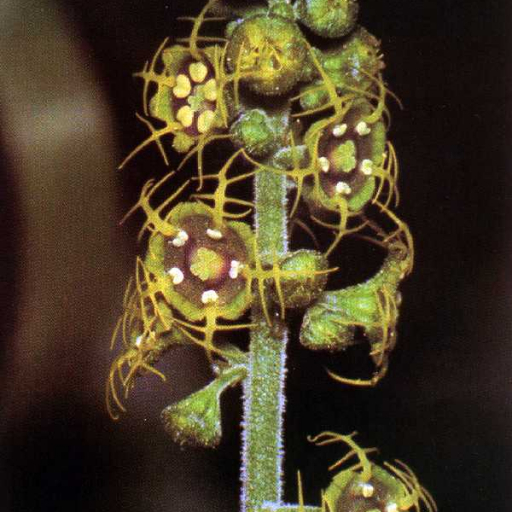
Known as the Five-stamen Bishop's Cap or Fivestamen Mitrewort, this delicate wildflower is a hidden treasure of the moist, cool forests of Western North America. Its name, Mitella, is a Latin diminutive for "mitre," referring to the way its tiny seed pods resemble a bishop’s ceremonial hat. Often overlooked due to its tiny size, it rewards the observant hiker with some of the most intricate floral architecture in the plant kingdom.
🔍 How to Identify
- ❄️ Snowflake Petals: The flowers are truly remarkable; each tiny, greenish-yellow petal is branched into fine, needle-like segments, making them look like miniature, living snowflakes or intricate lace.
- 💚 Heart-Shaped Foliage: The leaves are mostly basal (growing at the bottom), featuring a soft, heart-shaped outline with shallow lobes and wavy, scalloped edges.
- 📏 Slender Stems: It sends up a thin, leafless flowering stalk that can reach about 12 inches high, carrying a loose row of those unique, star-shaped blossoms.
🏡 In Your Garden
- 💧 Moisture Seekers: In a garden setting, this plant is a "specialist." It thrives in damp, boggy conditions or near water features where the soil never fully dries out. It is a perfect choice for a dedicated woodland or shade garden.
- 🌲 Cool & Shady: This isn't a plant for the summer sun. It prefers the deep, dappled shade of evergreen canopies. Because it has a shallow root system, it relies on a consistent mulch of leaf litter to keep its "feet" cool and hydrated.
⚠️ Safety & Toxicity
- ✅ Generally Safe: Mitella pentandra is not known to be toxic to humans or common household pets like cats and dogs.
- 🌿 Low Irritation: While it doesn't possess thorns or stinging hairs, it is best enjoyed visually rather than consumed, as wild plants can sometimes cause mild digestive upset if ingested in large quantities by curious pets.
✨ Fun Fact
If you look at the flower through a magnifying glass, you'll see why it’s called pentandra—it is one of the few species in its family to have exactly five stamens positioned directly opposite the petals, whereas most of its "Bishop's Cap" cousins have ten!

Detailed Care Instructions
To successfully grow Mitella pentandra (also known as bog bishop or mitrewort), follow these steps:
- Choose the right location: Mitella pentandra prefers to grow in part shade to full shade, particularly in moist or wet soil conditions. Select a spot in your garden or landscape that receives partial sunlight or is shaded for most of the day.
- Prepare the soil: Mitella pentandra prefers slightly acidic soil. Test your soil's pH levels and adjust if necessary. Add organic matter such as compost or leaf mold to improve drainage and nutrient content.
- Planting: Dig a hole that is slightly larger than the rootball of your Mitella pentandra plant. Place the plant in the hole, ensuring that the crown is level with or slightly above the soil surface. Backfill the hole, gently firming the soil around the roots.
- Watering: Keep the soil consistently moist, but not waterlogged. Water your Mitella pentandra regularly, especially during dry periods. Aim for a damp, well-drained soil.
- Mulching: Apply a layer of organic mulch around your Mitella pentandra plant to help retain soil moisture and prevent weed growth. However, avoid piling the mulch directly against the stem to prevent rot.
- Fertilization: Mitella pentandra does not require heavy feeding. If your soil lacks nutrients, you can apply a balanced organic fertilizer in spring according to the product's instructions. Avoid using excessive amounts of fertilizer, as it may damage the plant.
- Maintenance: Mitella pentandra is generally low-maintenance, but you should regularly check for pests or diseases. Remove any dead or damaged foliage to maintain the plant's appearance. In autumn, cut back any spent flower stalks to the base of the plant.
- Propagation: Mitella pentandra can be propagated through seeds or division. Seeds can be sown indoors or directly in the ground in early spring. To divide the plant, wait until the clump has become crowded, then carefully separate the root ball into smaller sections and replant them.
By following these guidelines, you can successfully grow Mitella pentandra and enjoy its delicate flowers and attractive foliage in your garden.

Place in a window with dappled sun or a spot in the middle of a room. Or directly in a window facing west or east.

Mitella Pentandra is a plant that requires moderate watering. When watering, it is important to ensure that the soil is not waterlogged as this can lead to root rot. It is best to water the plant thoroughly, allowing all of the soil to become moist, but then allowing the top layer of soil to dry out before watering again. The plant should be placed in an area with good drainage and should not be left in standing water. Overwatering can cause the leaves to turn yellow and ultimately lead to the plant's death. Additionally, if the plant is placed in direct sunlight, it may require more frequent watering as the soil can dry out more quickly.
To properly fertilize this plant, apply a balanced organic fertilizer every 4-6 weeks during the growing season. Be sure to water the plant thoroughly before and after fertilizing to help distribute the nutrients evenly. Additionally, avoid over-fertilization as this can result in excessive growth or damage to the plant.
The ideal soil for Mitella Pentandra plant is a well-draining, moist soil that is rich in organic matter and has a pH of around neutral to slightly acidic. It should be a loamy soil that is not too heavy or compacted. The plant prefers a slightly shady environment with some filtered sunlight, so the soil should be kept consistently moist but not soggy. Adding organic matter such as compost or leaf mold to the soil can help promote healthy growth and improve drainage. It is also important to avoid over-fertilizing the plant, as this can lead to root rot and other problems. Overall, selecting the right soil is essential for ensuring that Mitella Pentandra thrives and produces beautiful foliage and flowers.
The propagation process of this plant can be accomplished by taking stem cuttings or divisions. To begin with, choose a healthy mature plant from which to take cuttings or divisions. Make sure the plant is well-watered and in good health before beginning the process.
For stem cuttings, select a stem that is at least 4-5 inches long and cut it just below a leaf node. Remove any leaves from the bottom half of the stem and dip the cut end in rooting hormone before placing it in a pot filled with moist potting soil. Keep the soil moist and place the pot in a bright but indirect light. After a few weeks, the stem should begin to grow roots and new leaves, indicating successful propagation.
For division, gently push a trowel or shovel into the soil around the base of the plant and lift the entire root system out of the soil. Gently separate the roots into two or more sections, making sure each section has a portion of the plant stem and a healthy root system. Replant each division in a new pot or in a different part of the garden, making sure to keep the soil moist until the plant establishes itself.
Both methods of propagation can be successful, and it is recommended to propagate this plant in the spring when new growth begins. With proper care and patience, Mitella Pentandra can be easily propagated and grown into a beautiful and healthy plant.








