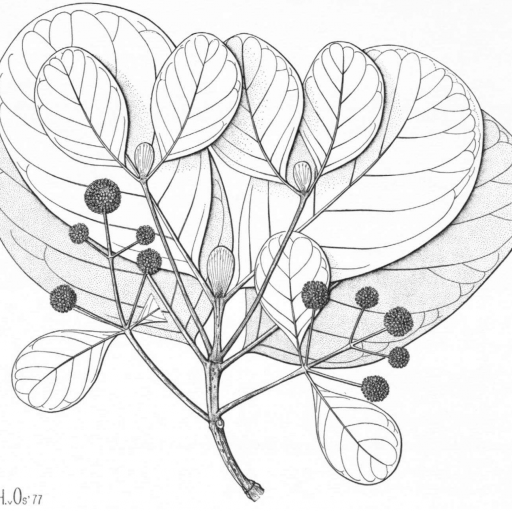
Plant Overview
Often called the African Abura, Mitragyna stipulosa is a majestic "swamp giant" native to the humid wetlands of Tropical Africa. A member of the Rubiaceae (Coffee) family, it is a close relative of the famous Kratom tree. In its native habitat, it acts as a natural pillar for marshy ecosystems, standing tall where other trees would succumb to "wet feet."
🔍 How to Identify
- 🍃 Large Foliage: The leaves are broad, elliptical, and remarkably large, often featuring prominent, pale veins that create a ribbed texture.
- 👂 Distinct Stipules: Its most defining feature is the pair of large, leafy "stipules" at the base of the leaf stalks, which look like green ears protecting the developing buds.
- ⚪ Spherical Blooms: It produces creamy-white or yellowish flowers bunched into dense, ball-shaped clusters that look like tiny, fuzzy globes hanging from the branches.
🏡 In Your Garden
- 💧 The Swamp Lover: Unlike most garden trees that fear root rot, this species thrives in waterlogged, muddy soil. It is a specialist for boggy areas or the edges of ponds where drainage is poor.
- 🌍 Tropical Ambience: Because it grows rapidly in high humidity, it is often used in large-scale tropical landscaping to create a dense, leafy canopy quickly, though it requires significant space to spread its wings.
⚠️ Safety & Toxicity
- 💊 Alkaloid Content: Like its cousins in the Mitragyna genus, this plant contains various alkaloids. While it has a history in traditional medicine, it should never be ingested without professional guidance.
- 🐾 Pet Safety: There is limited data on its specific toxicity to domestic animals, but due to its chemical makeup, it is best kept out of reach of curious pets who like to chew on large leaves.
✨ Fun Fact
The name stipulosa refers to the plant's unusually large stipules. These "leaf-like" sheaths act as a biological raincoat, shielding the tree's delicate new terminal buds from the intense tropical downpours of the African rainforest.

Detailed Care Instructions








