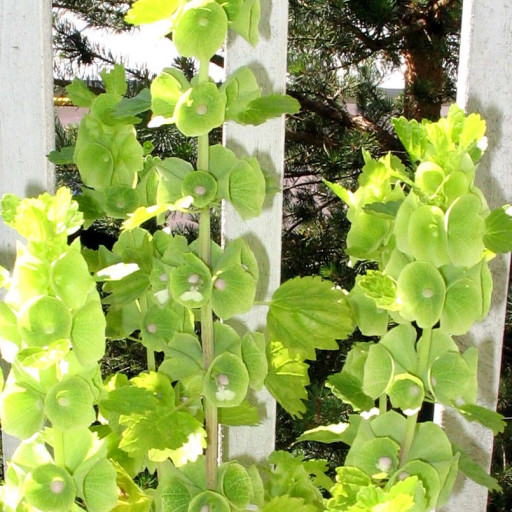
Plant Overview
Known widely as "Bells-of-Ireland" or "Shellflower," Moluccella laevis is a symbol of good luck and a vintage staple of Victorian-style gardens. Despite its name, this plant doesn’t hail from the Emerald Isle but is actually native to the dry hills of Turkey, Syria, and the Caucasus. Its striking architectural shape and unusual lime-green hue make it a favorite for both garden borders and high-end floral arrangements.
🔍 How to Identify
- 🔔 The "Bells": The most iconic feature is the large, apple-green, funnel-shaped calyxes (modified leaves) that look like tiny bells clustered along the stem.
- 🌸 Hidden Flowers: If you peek deep inside each green bell, you will find the true flowers—tiny, fragrant, white blossoms that sometimes feature a hint of lavender.
- 🌿 Spiky Stems: The plant grows in tall, unbranched vertical spikes that can reach up to 3 feet in height, providing a dramatic structural element to any landscape.
🏡 In Your Garden
- 🌱 Handling with Care: This plant develops a deep taproot very quickly, which means it "sulks" or often dies if moved. It is best to sow seeds directly into the garden soil rather than starting them in pots and transplanting.
- 💨 Wind Protection: Because the stems are tall and top-heavy with bells, they are prone to flopping over after a heavy rain or high winds. Planting them in dense clusters or providing light staking will keep them standing tall.
- ☀️ Temperature Nuance: While they love the sun, they are cool-season annuals. In regions with scorching summers, they may begin to turn brown and go to seed early; they thrive best during the mild temperatures of spring and early summer.
⚠️ Safety & Toxicity
- 🌵 Prickly Texture: While Moluccella laevis is not known to be poisonous, it is covered in tiny, sharp spines along the stems and bells that can cause skin irritation or small punctures.
- 🐾 Pet Safety: It is generally considered non-toxic to cats and dogs. However, the prickly texture usually serves as a natural deterrent, keeping curious pets from trying to eat it.
✨ Fun Fact
Bells-of-Ireland are a "perpetual" favorite for dried floral displays. If you hang the stalks upside down in a dark, dry place, the green bells will turn a beautiful, papery parchment color and hold their shape for years!

Detailed Care Instructions
The vibrant green color and the bell-like shape evoke an association with Celtic symbols, hence the name. The plant is not native to Ireland.
Are Bells of Ireland cold-hardy?
Bells of Ireland are a hardy annual—they prefer cooler weather in the spring, that’s why they can be grown as low as in USDA zone 2 for a summer bloom, after which they die back. By the time winter comes around, they are gone so they question of overwintering them does not even arise, and they won’t survive freezing temperatures.
Are Bells of Ireland poisonous?
Bells of Ireland are not known to be poisonous.
| Color | White, But The Green Calyx Is What Is Valued |
| Soil Ph | 6.5 To 7.5 |
| Humidity | High |
| Lighting | Full Sun |
| Soil Type | Well-Drained, Evenly Moist |
| Bloom Time | July To September |
| Difficulty | Medium |
| Plant Type | Annual |
| Hibernation | Cold Period |
| Mature Size | Bells Of Ireland Stands 3 Feet Tall. The Compact 'Pixie Bells' Variety Attains A Height Of 2 Feet |
| Native Area | Turkey |
| Sun Exposure | Full Sun To Partial Shade |
| Hardiness Zones | Technically, 2 To 11, But Plant Performs Better At Northern End Of That Range |
To grow Moluccella laevis, also known as Bells of Ireland, you can follow these steps:
- Start with the seeds: Purchase Moluccella laevis seeds from a reputable source or collect them from mature plants. The seeds are small and dark brown. Scarify the seeds by lightly nicking the seed coat or soaking them in warm water overnight, as this will help with germination.
- Soil preparation: Prepare the soil for planting by loosening it with a garden fork or tiller. Bells of Ireland prefer well-draining soil. If your soil tends to be heavy, amend it with organic matter like compost or peat moss to improve drainage.
- Sowing the seeds: Sow the scarified seeds directly into the ground in late winter or early spring, after the last frost has passed. Alternatively, you can start the seeds indoors about 6-8 weeks before the last expected frost date. Sow the seeds in trays or pots filled with seed-starting mix, placing them 1/8 inch deep and lightly covering with soil.
- Providing the right conditions: Bells of Ireland thrive in full sun, so choose a spot that receives at least 6-8 hours of direct sunlight each day. Water the seeds or seedlings regularly, keeping the soil moist but not waterlogged. It is important to keep them consistently moist throughout the germination process.
- Transplanting: When the seedlings are about 2-3 inches tall and all danger of frost has passed, you can transplant them outdoors. Space them about 12-18 inches apart to allow for their growth and to provide good air circulation.
- Watering and maintenance: Water the plants regularly, especially during dry periods, and avoid letting the soil dry out completely. Mulching around the plants can help retain moisture and suppress weed growth. Support the tall stems with stakes or trellises to prevent them from drooping or bending.
- Fertilizing: Moluccella laevis doesn't require much fertilizer. Apply a balanced, slow-release fertilizer once or twice during the growing season following the manufacturer's instructions. Over-fertilizing can encourage excessive foliage growth rather than flower production.
- Pests and diseases: Bells of Ireland are relatively pest and disease resistant. However, keep an eye out for aphids, slugs, snails, and spider mites. If necessary, use organic insecticides or hand-pick pests to control infestations.
- Harvesting: The tall, green stalks of Bells of Ireland produce spiky, bell-shaped flower clusters. Harvest the flowers for floral arrangements once they have fully matured and the green color has turned papery and light brown. Cut the stems at the base and hang them upside down in a dark, cool place to dry if desired.
By following these steps, you should be able to grow Moluccella laevis plants successfully and enjoy their beautiful, distinctive bell-shaped spikes of green flowers.

Place in a bright room that is sun drenched almost all day. Or directly in a south-facing window.

To water this particular plant, you should first consider the environment it is growing in and the amount of rainfall it receives. The soil should be kept consistently moist, but never waterlogged. When watering, it is best to water deeply and thoroughly, saturating the root zone. This can be achieved by watering slowly and allowing the water to soak in rather than flooding the surface. It is recommended to water early in the morning or late in the evening to avoid evaporation and allow the plant to absorb the water. Be careful not to get water on the leaves and avoid watering during periods of high humidity or when the plant is dormant.
To fertilize this plant, apply a balanced fertilizer with an equal amount of nitrogen, phosphorus, and potassium once every two weeks during the growing season. Water the plant thoroughly before fertilizing to prevent damage to the roots. Avoid over-fertilization as it can cause excessive growth and reduce flower production.
The ideal soil for the plant in question should be well-draining and nutrient-rich, with a slightly acidic to neutral pH level between 6 and 7.5. It should be rich in organic matter, such as compost or well-rotted manure, and should also have good aeration to promote healthy root growth. Avoid using soils that are heavy, compacted, or clay-based, as these can cause waterlogging and root rot. Additionally, the soil should be moist, but not waterlogged, and should be kept consistently moist throughout the growing season. Finally, it is recommended to add a layer of mulch to the surface of the soil to help retain moisture and suppress weed growth.
Propagation of this plant can be done through both seed and vegetative methods. One can take stem cuttings to propagate the plant vegetatively. Cuttings should be taken from healthy and disease-free plants. Cuttings should have at least two pairs of leaves and should be dipped in rooting hormone before planting in well-draining soil mix. The soil should be moist, and the cutting should be kept in a shaded area until new growth appears.
To propagate the plant from seed, one should collect fresh seeds from the plant, which are usually available in late summer. These seeds should be cleaned and dried before planting. The seeds should be planted in well-draining soil mix and kept in a warm and well-lit environment until the seeds germinate. Moluccella Laevis plant grows easily from seed and can reseed itself in the garden.
Common pests of the bells-of-ireland include Spider mites, whiteflies. Make a habit of checking your bells-of-ireland frequently for pests so that any infestations can be caught and managed early.








