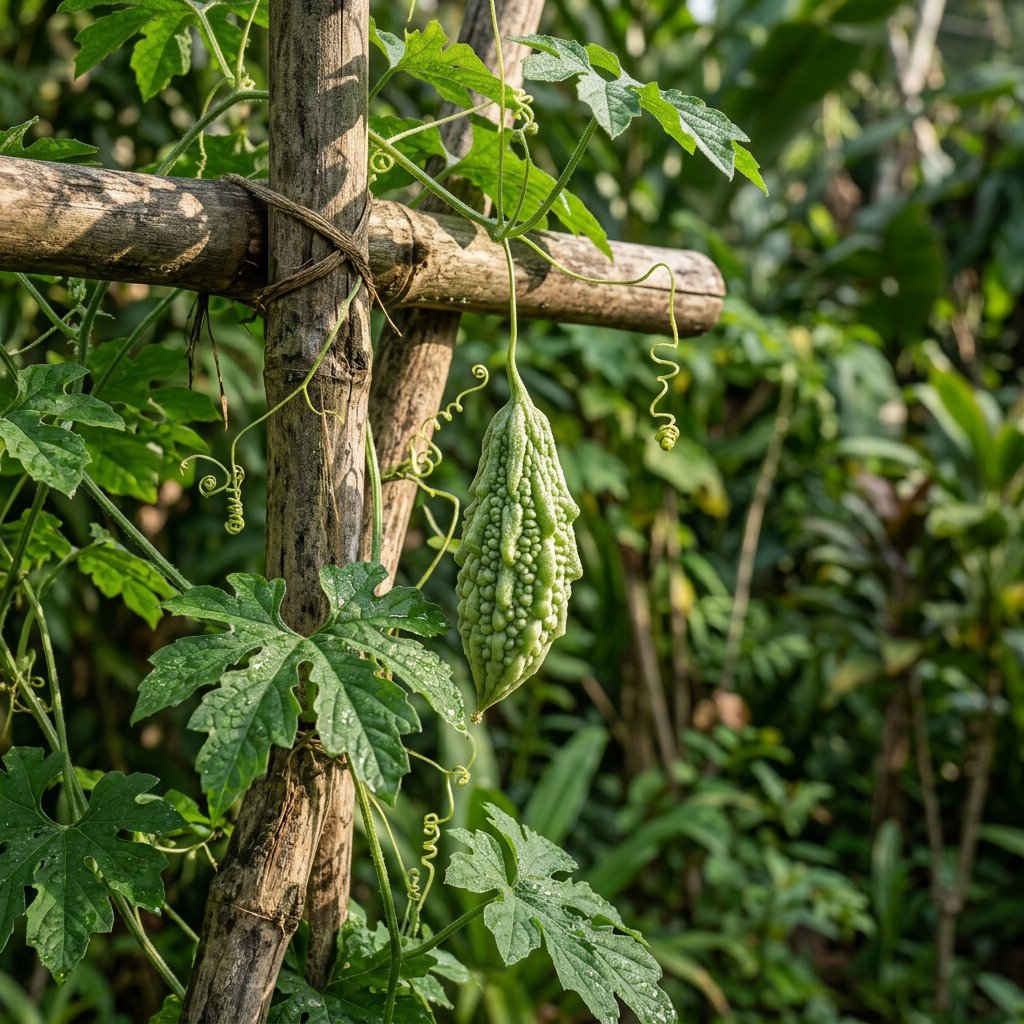
Plant Overview
Often called the "Bitter Melon" or "Balsam Pear," Momordica charantia is a fast-growing tropical vine famous for its distinctively warty fruit and polarizing flavor. While many gardeners grow it for its medicinal reputation and unique culinary uses, others simply enjoy the lush, emerald privacy screen it provides. In many cultures, this plant is a staple of the "bitter is better" philosophy, believed to cool the body during sweltering summer months.
🔍 How to Identify
- 🍃 Lobed Foliage: The leaves are deeply "palmate," meaning they look like a hand with 5 to 7 pointed fingers. They give off a distinct, slightly musky scent when crushed.
- 🌼 Yellow Flowers: It produces small, delicate yellow blossoms that are either male or female. You’ll notice the female flowers have a tiny "miniature melon" at their base before they even open.
- 🥒 Warty Fruit: The most recognizable feature is the oblong fruit covered in bumpy, "wart-like" ridges. It starts green and matures into a bright, splitting orange vessel that reveals ruby-red seeds.
🏡 In Your Garden
- 🧗 The Climbing Habit: As a vigorous climber, this plant requires a sturdy trellis or fence. It uses delicate, coiled tendrils to "hook" onto surfaces, making it excellent for vertical gardening in small spaces.
- ☀️ Heat Seekers: Bitter Melon thrives in "tropical-esque" conditions. If your night temperatures drop too low, the plant will pout and stop growing. It needs deep, rich soil because its fast growth requires a lot of "fuel" (nutrients).
- 🐝 Pollination Needs: Since male and female flowers are separate, you need bees to move pollen between them. If your garden is quiet, you might need to play "bee" yourself with a small paintbrush to ensure fruit develops.
⚠️ Safety & Toxicity
- 🚫 Pet & Child Warning: While the green fruit is a common vegetable, the ripe orange fruit and the red seeds can be toxic to dogs, cats, and small children if ingested in significant amounts. They may cause vomiting or diarrhea.
- 🩸 Blood Sugar Note: This plant contains compounds that naturally lower blood glucose. While beneficial for some, individuals on diabetes medication should consult a doctor, as it can cause blood sugar levels to drop too low (hypoglycemia).
✨ Fun Fact
In some parts of Asia, the Bitter Melon is known as the "Cooling Vegetable." Despite its intense bitterness, it is a culinary superstar in Okinawan cuisine—a region famous for the longevity of its inhabitants—where it is the star ingredient in a stir-fry called Goya Chanpuru.

Detailed Care Instructions
| Humidity | Normal |
| Lighting | Full Sun |
| Difficulty | Easy |
| Hibernation | Cold Period |
| Temperature | 20°C - 30°C |
| Hardiness Zones | 10 - 11 |
To grow Momordica charantia, commonly known as bitter gourd or bitter melon, you can follow these steps:
- Obtain seeds: Purchase seeds from a local nursery or online supplier. Ensure they are fresh and viable.
- Prepare soil: Bitter gourd plants thrive in well-draining soil. Prepare the soil by loosening it and removing any weeds or debris.
- Germinate seeds: Soak the seeds in warm water overnight to soften their hard seed coat, which will aid in germination.
- Sow seeds: In a pot or directly in the ground, create small holes about 1 inch deep. Place a seed in each hole and cover it with soil. Space seeds or seedlings at least 6 feet apart as bitter gourd plants require significant space to grow and spread.
- Sunlight: Choose a sunny location for your bitter gourd plant. It requires at least 4-6 hours of direct sunlight daily.
- Watering: Bitter gourd plants require regular watering to maintain moist soil. However, avoid overwatering, as it can lead to root rot. Water deeply when the top inch of soil feels dry.
- Trellising: Bitter gourd is a climbing vine and benefits from the support of trellises or similar structures. Install a trellis or provide a framework for the plant to climb as it grows.
- Fertilization: Apply organic compost or well-balanced fertilizer every few weeks to provide the plants with essential nutrients. Follow the manufacturer's instructions for proper dosage.
- Pruning: As the bitter gourd plant grows, regularly prune the lateral shoots to promote healthy growth and improve fruit production.
- Pest control: Monitor your plants for pests like aphids, mealybugs, or spider mites. Use organic pest control methods when necessary, like neem oil or insecticidal soap.
- Harvesting: Bitter gourd fruits are usually ready for harvest 60-70 days after planting. Harvest them when they are firm, green, and before they turn yellow or orange. Use a clean, sharp knife or shears to cut the fruits from the vine.
Following these guidelines will help you successfully grow your own Momordica charantia plants and enjoy the benefits of its unique and nutritious fruit.

Place in a bright room that is sun drenched almost all day. Or directly in a south-facing window.

The plant in question requires regular watering to thrive, as it prefers a consistently moist soil. However, it is important to avoid overwatering, as this can lead to root rot and other issues. The best approach is to water deeply but infrequently, allowing the soil to partially dry out between watering sessions. Additionally, it is important to avoid getting water on the leaves or stem of the plant, as this can increase the risk of fungal infections and other problems. Watering at the base of the plant and using a watering can or drip irrigation system is recommended. Finally, it is important to pay close attention to the plant's specific watering needs depending on its location, soil type, and other factors, as these can influence how much water it requires.
- Before fertilizing, ensure that the soil is moist but not waterlogged.
- Use a balanced fertilizer with equal amounts of nitrogen, phosphorus, and potassium.
- Mix the fertilizer with water according to package instructions.
- Water the plant thoroughly before applying the fertilizer solution.
- Apply the fertilizer solution directly to the soil around the plant, not on the leaves or stems.
- For best results, fertilize every 4-6 weeks during the growing season.
- Monitor the plant for signs of fertilizer burn or overfertilization, such as yellowing leaves or stunted growth.
- Adjust the fertilizer application rate or frequency accordingly.
The ideal soil for the plant in question should have a pH range of 6.0 to 7.5 and should be well-draining. A mix of sandy loam soil and organic matter such as compost or peat moss can enhance the soil's water-holding capacity. Additionally, the soil should be fertile and rich in nutrients such as nitrogen, phosphorus, and potassium. Regular fertilization can be done using a balanced fertilizer. It is also recommended to mulch around the plant to retain soil moisture and reduce weed growth. Overall, the soil should promote healthy root growth, allow for sufficient oxygen exchange, and provide the necessary nutrients to support the plant's growth and development.
Momordica Charantia is a tropical vine that produces green, cucumber-like fruits that are used in traditional medicine and cuisine. It can be propagated through seeds or through stem cuttings.
To propagate this plant through stem cuttings, first select a healthy stem that is free from any signs of disease or damage. Cut the stem near the base using a sharp, sterile knife or scissors. Make sure that the cutting is at least 6 inches long and has several nodes or leaves.
Remove the leaves from the lower half of the stem to expose the nodes. Dip the cut end of the stem in a rooting hormone solution to promote root growth. Then, plant the cutting in a pot filled with a well-draining soil mix. Water the cutting thoroughly and place it in a warm, bright location, but out of direct sunlight.
Water the cutting regularly, keeping the soil moist but not waterlogged. After a few weeks, you should see new growth emerging from the nodes on the stem. Once roots have formed and the cutting has established, you can transfer it to a larger pot or directly into the ground.
With proper care, your propagated Momordica Charantia plant should continue to grow and produce fruits for years to come. So, this is the way to propagate Momordica Charantia plant.
Common pests of the bitter gourd include Spider mites, thrips, whiteflies. Make a habit of checking your bitter gourd frequently for pests so that any infestations can be caught and managed early.








