Plant Overview
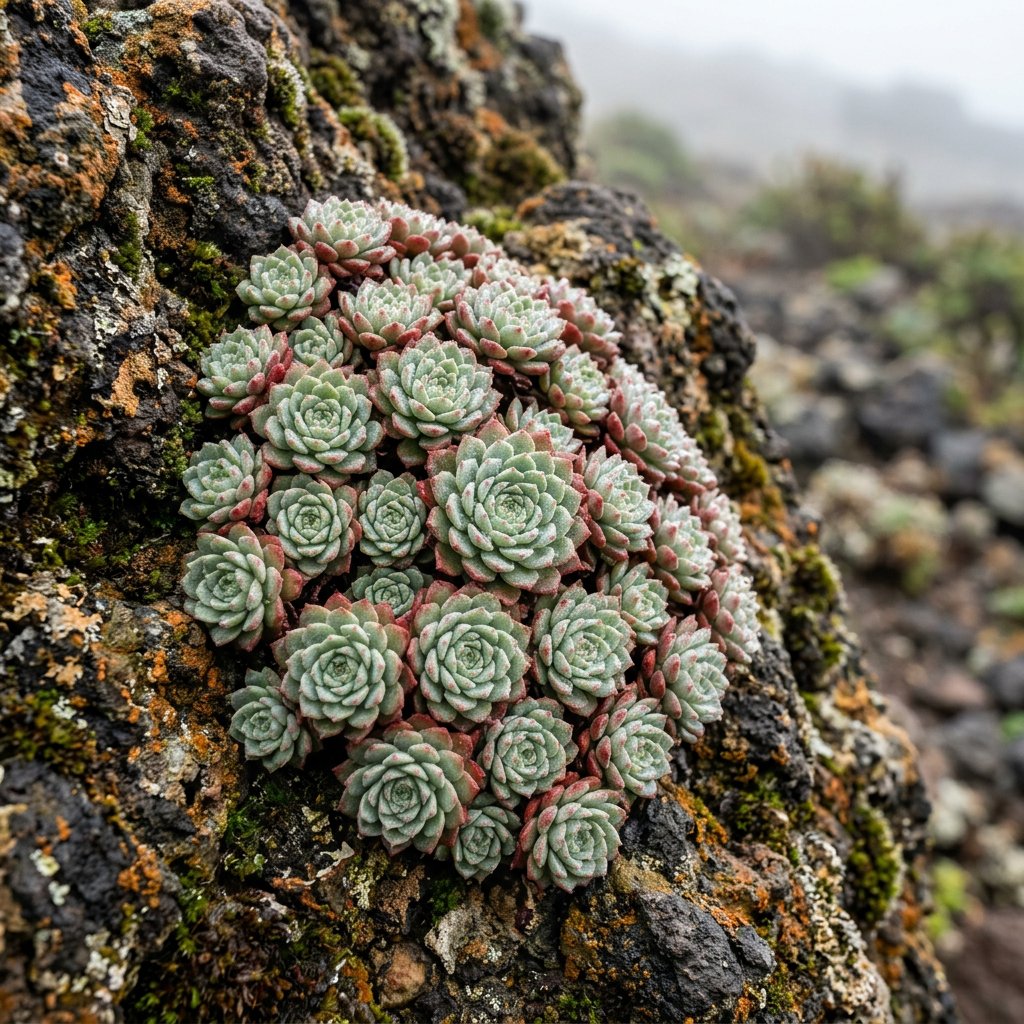
Often called the "Miniature Pinecone" or "Lichen-Succulent," Monanthes polyphylla is a tiny architectural wonder from the volcanic cliffs of the Canary Islands. It forms dense, carpet-like mounds that look more like a colony of sea coral or ancient moss than a traditional succulent. Its geometric precision and "alien" aesthetic make it a prized jewel for collectors of miniature plants and fairy garden enthusiasts.
🔍 How to Identify
- 🌵 The Rosettes: Look for incredibly small, tightly packed rosettes—often no wider than a fingernail—that resemble soft, green pinecones or tiny artichokes.
- 🍃 Leaf Texture: The leaves are cylindrical, fleshy, and slightly bumpy, typically appearing in shades of emerald green that can blush purple or bronze when exposed to bright light.
- 🌸 The Bloom: During its flowering season, it sends out thin, wiry stalks topped with star-shaped, purplish-brown flowers that look like tiny satellite dishes surveying the landscape.
🏡 In Your Garden
- 🪨 Crevice Dwellers: In the wild, these plants are "lithophytes," meaning they grow in the cracks of damp rocks. At home, they hate deep, boggy pots; they thrive best in shallow, gritty containers with plenty of pumice or lava rock to mimic their volcanic origins.
- ☁️ Mist & Shade: Unlike many succulents that crave desert heat, Monanthes prefers "bright shade" and cooler air. They are sensitive to scorching sun and appreciate a little extra humidity, reminiscent of the misty coastal cliffs they call home.
⚠️ Safety & Toxicity
- 🐾 Non-Toxic: This species is generally considered safe and non-toxic for both humans and household pets like cats and dogs.
- 🤏 Fragility Warning: While not poisonous, the plant is physically delicate. The tiny rosettes can easily snap off if handled roughly or bumped, so it is best kept in a protected spot away from high-traffic areas.
✨ Fun Fact
The name Monanthes is derived from the Greek words monos (single) and anthos (flower), though ironically, a healthy colony of Monanthes polyphylla can produce dozens of tiny blooms at once, creating a miniature forest of stars!

Detailed Care Instructions
| Humidity | Dry |
| Lighting | Part Sun |
| Difficulty | Medium |
| Temperature | 14°C - 24°C |
| Hardiness Zones | 9 - 11 |
To grow Monanthes Polyphylla, also known as Polycarpaea corymbosa, you can follow these steps:
- Choose the right conditions: Monanthes Polyphylla is native to the Canary Islands and thrives in warm temperatures and bright light. It can tolerate some shade, but it needs a minimum of 6 hours of sunlight per day. The ideal temperature range is between 65-80°F (18-27°C).
- Select a suitable container: Use a well-draining container with drainage holes to prevent waterlogging. A shallow terracotta pot can be a good choice as it allows excess water to evaporate.
- Potting mix: Use a well-draining succulent or cactus potting mix. You can also make your own by combining equal parts of regular potting soil, perlite, and coarse sand.
- Plant the cutting or seeds: Monanthes Polyphylla can be propagated through stem cuttings or seeds. If using cuttings, choose a healthy stem and let it dry for a day or two. Plant the cutting into the potting mix, burying it about an inch deep. If using seeds, sow them on the soil surface and lightly cover them.
- Watering: Water the plant deeply but infrequently. Allow the soil to dry out completely between watering to prevent root rot. Overwatering can be detrimental to the plant's health. During the winter months, reduce the watering frequency further.
- Fertilization: Monanthes Polyphylla has low fertilizer requirements. Apply a balanced liquid fertilizer diluted to half the recommended strength every two to four weeks during the growing season (spring and summer). Avoid fertilizing during the winter months.
- Pruning: Regular prunings are not necessary for this plant. However, if you notice any dead or damaged foliage, you can trim it off.
- Pests and diseases: Monanthes Polyphylla is generally resistant to pests and diseases. However, it's always a good idea to inspect the plant regularly for signs of pests like aphids or mealybugs. If you notice any, treat them promptly.
- Repotting: Every 1-2 years, you may need to repot the Monanthes Polyphylla to provide it with fresh soil. Choose a slightly larger pot and be careful while transplanting to avoid damaging the delicate roots.
- Propagation: Over time, Monanthes Polyphylla will produce offsets that can be gently separated from the parent plant and potted up to create new plants.
Remember to observe your plant closely and adjust care according to its specific needs. Enjoy the process of growing and nurturing your Monanthes Polyphylla plant!

Place in a window with dappled sun or a spot in the middle of a room. Or directly in a window facing west or east.

To water this plant, it is recommended to first check the soil moisture level by sticking a finger about an inch deep into the soil. If it feels dry, then it's time to water. When watering, pour water slowly at the base of the plant until it begins to drain out the bottom of the pot. It is important not to overwater the plant as it is susceptible to root rot. Allow the soil to dry out slightly before watering again, and adjust watering frequency based on the environment, such as humidity and temperature.
To fertilize the Monanthes Polyphylla plant, use a balanced fertilizer with a ratio of 10-10-10 during the growing season. Dilute the fertilizer with water to half strength, and apply it to the soil every two weeks. Do not fertilize during the plant's dormant period, which is usually during the winter months. Avoid applying fertilizer directly to the plant's leaves or stem, as it can cause damage.
Succulent plants like Monanthes polyphylla generally grow well in well-draining soil that allows excess water to drain away quickly. A suitable soil mix for succulents should have a high proportion of gritty or sandy materials such as sand or perlite, as well as organic matter like coconut coir or vermiculite, which can help retain moisture and nutrients.
One good soil mix for succulent plants is a mixture of three parts of coarse sand or perlite to one part of organic matter. This mixture provides good drainage and aeration while retaining enough moisture and nutrients for the plant to grow.
It is also essential to avoid using heavy, clayey soils or soils that retain too much water, as this can lead to root rot and ultimately, the death of the plant.
To propagate this plant, you will need to follow a few simple steps. First, you will need to take a cutting from the plant. Using a sterilized pair of scissors or pruning shears, carefully cut off a stem that is between 4-6 inches long. Make sure to choose a stem that has at least a few leaves on it.
Next, you will need to prepare a pot with well-draining soil. Moisten the soil slightly, but be careful not to make it too wet. Using a pencil or a small stick, create a hole in the soil that is deep enough to accommodate the stem.
Take the cutting and remove any leaves that are close to the bottom of the stem. Dip the cut end of the stem into a rooting hormone powder to help it establish roots. Place the stem into the hole you created in the soil, making sure that it is secure.
Finally, cover the pot with a clear plastic bag or a transparent container to create a humid environment. Place the pot in a location where it will receive bright but indirect sunlight. In a few weeks, check the cutting to see if it has rooted by gently tugging on it. Once a solid root system has established, you can remove the plastic or container, and the plant is ready to be cared for as usual.
Common pests of the monanthes polyphylla include Mealybugs, aphids. Make a habit of checking your monanthes polyphylla frequently for pests so that any infestations can be caught and managed early.








