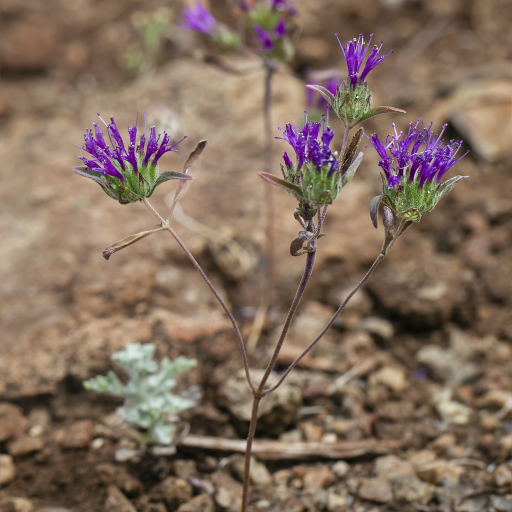
Plant Overview
Often called Douglas’ Monardella or Douglas' Mint, this pint-sized powerhouse is a California native that thrives where other plants struggle. Known for its intense, spicy mint fragrance and its papery, purple-veined "crowns," it is a favorite for those seeking to invite local pollinators into a rugged landscape. It is a plant that wears its heart on its sleeve—or rather, its beauty in its intricate, protective bracts.
🔍 How to Identify
- 💜 The Bracts: The most striking feature; look for large, papery, leaf-like structures under the flower head that are often translucent with deep, dramatic purple veins.
- 🌸 Bloom Style: Tiny, tubular flowers in shades of pink to lavender, packed tightly into a dense, spherical head that sits atop a slender stem.
- 🍃 Scented Foliage: Small, narrow, grey-green leaves that release a sharp, refreshing minty aroma when brushed or crushed.
🏡 In Your Garden
- ⛰️ The Leaner, The Better: This plant is a "specialist" that often grows in rocky or serpentine soils. In a garden setting, it hates "cushy" treatment; avoid heavy fertilizers and rich potting soil, which can cause the plant to become leggy or succumb to root rot.
- 🦋 Pollinator Buffet: It is a high-value target for native bees, clearwing moths, and butterflies. Because it blooms when many other wildflowers have faded, it acts as a vital late-season nectar filling station.
⚠️ Safety & Toxicity
- ✅ Low Risk: Monardella douglasii is not known to be toxic to humans or common household pets. It belongs to the Mint family, which is generally characterized by aromatic, non-poisonous oils.
- 👐 Contact Caution: The high concentration of essential oils (thymol and monardellin) that give it a great scent can occasionally cause mild skin irritation or "mint-burn" in people with very sensitive skin if the leaves are crushed against the flesh.
✨ Fun Fact
This species was named after the legendary Scottish botanist David Douglas. While he is most famous for the massive Douglas Fir tree, he was equally fascinated by these tiny "Wild Mints" of the California hills, documenting them during his perilous plant-hunting expeditions in the early 1830s.

Detailed Care Instructions
To grow Monardella douglasii, also known as Douglas's monardella, follow these steps:
- Choose the right location: Select a location that receives full sunlight for at least six hours a day. The plant prefers a well-draining soil that is sandy or loamy.
- Planting: Begin by preparing the soil. Loosen it up by removing any weeds, rocks, or debris. Dig a hole slightly larger than the plant's root ball. Place the Monardella douglasii into the hole, ensuring that the top of the root ball is level with the surrounding soil. Backfill the hole and gently firm the soil around the plant.
- Watering: After planting, water the monardella thoroughly. Provide regular watering during the establishment phase, especially during hot and dry periods. Once established, the plant is drought-tolerant but will still benefit from occasional deep watering.
- Mulching: Apply a layer of organic mulch around the base of the plant to help retain moisture, regulate soil temperature, and suppress weed growth. Leave a small space around the stem to prevent excess moisture and possible rotting.
- Pruning: Monardella douglasii benefits from occasional pruning to maintain its shape and promote new growth. Prune the plant after the flowering period, usually in late spring or early summer. Remove any dead or damaged foliage and trim back overgrown branches.
- Fertilization: Monardella douglasii typically does not require fertilization. However, if the plant appears weak or lacks vigor, fertilize it with a balanced, slow-release fertilizer in early spring. Follow the manufacturer's instructions for proper application.
- Pest and disease control: Monardella douglasii is generally resistant to pests and diseases. However, keep an eye out for common garden pests such as aphids or spider mites. If necessary, treat them with organic insecticidal soap or neem oil following the product's instructions.
- Propagation: Monardella douglasii can be propagated through seeds or stem cuttings. For seeds, collect them in late summer or early fall and sow them into well-draining soil. For stem cuttings, take 4-6 inch long cuttings from healthy stems in late spring or early summer. Remove the lower leaves and place the cuttings in a rooting medium. Keep them in a warm and humid environment until roots develop.
Remember to always research and follow specific care instructions for Monardella douglasii as circumstances might vary depending on your location and climate.

Place in a bright room that is sun drenched almost all day. Or directly in a south-facing window.

Monardella douglasii is a plant that requires regular watering to thrive. The best way to water this plant is to provide it with a deep watering once a week, instead of shallow watering more frequently. In order to conserve water, it's important to only water the root zone of the plant, and avoid watering the leaves or flowers. The soil around the plant should be kept moist, but not waterlogged, which can lead to root rot. In addition, it's important to monitor the weather conditions and adjust watering accordingly, watering more during hot and dry periods, and less during cooler and wetter periods. Finally, it's important to avoid overwatering, as this can lead to wilting, yellowing leaves, and other symptoms of stress. By following these guidelines, it is possible to keep your Monardella douglasii healthy and thriving.
To fertilize this plant, first make sure it is established and at least one year old. Apply a slow-release, low-nitrogen fertilizer in early spring while the plant is actively growing. Use a fertilizer with an NPK ratio of approximately 5-10-10. Apply the fertilizer according to package instructions, being careful not to over-fertilize as this can lead to burning of the foliage and decreased plant health. It is also beneficial to add a layer of organic mulch around the base of the plant to retain moisture and add nutrients as it breaks down over time.
Monardella douglasii is a plant that is native to California. It requires well-drained soil that is rich in organic matter and has a slightly acidic pH between 5.5 and 7.5. The soil should be nutrient-dense with high levels of nitrogen, phosphorus, and potassium. It is best to use a loamy soil type that allows for good drainage and does not become waterlogged. However, this plant can also tolerate sandy soils and clay soils as long as they are not too compacted or have poor drainage. It is recommended to avoid using heavy soils that are prone to waterlogging. Additionally, adding compost or other organic matter to the soil can improve its fertility and drainage properties. Overall, the soil should be well-prepared and amended before planting the Monardella douglasii to ensure its best growth and health.
To propagate this plant, take cuttings during the summer months when the plant is actively growing. Select a healthy stem that is at least 6 inches long, and remove the lower leaves from the cutting. Dip the cut end of the stem into rooting hormone powder and plant it in moist soil. Keep the soil consistently moist and provide bright but indirect light. Roots should begin to develop within a few weeks. After the new plant has established itself, transplant it to a permanent location in well-draining soil.








