Plant Overview
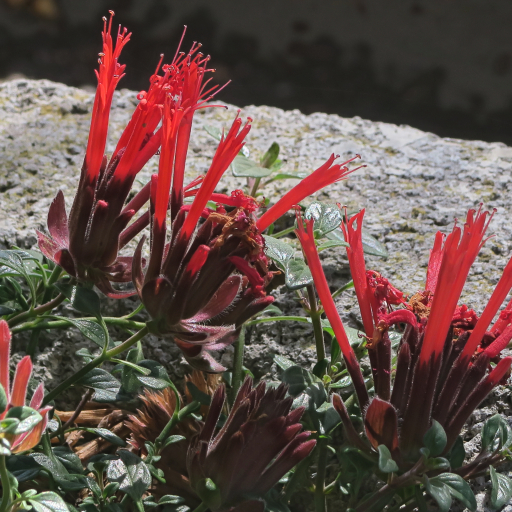
Often called the Hummingbird Trumpet or Scarlet Monardella, this stunning California native is like a firecracker for the garden floor. Unlike many of its bushy mint-family cousins, this species stays low to the ground, offering a lush green carpet that suddenly erupts into brilliant, long-throated red flowers. It is a prized choice for those looking to add high-impact color to rock gardens or native landscapes.
🔍 How to Identify
- 🌺 Flaming Trumpets: The flowers are exceptionally long (up to 1.5 inches), tubular, and a vivid scarlet red, appearing in dense, pom-pom-like clusters.
- 🍃 Minty Foliage: The small, oval leaves are a deep, glossy green and release a spicy, pleasant mint-like fragrance when crushed or brushed against.
- 📏 Prostrate Growth: It grows as a creeping groundcover, usually staying under 6 inches in height while spreading slowly to create a dense, textured mat.
🏡 In Your Garden
- 🪨 The Drainage Rule: This plant is a "rock garden" specialist. It absolutely requires sharp, fast-draining soil; if its roots sit in heavy, soggy clay, it will likely fail. Planting it on a slope or in a raised crevice is often the key to success.
- 🥤 Summer Sips: While it is drought-tolerant once established, it prefers a little more "refreshing" moisture than other California natives. A bit of afternoon shade in inland heat will help prevent the foliage from scorching.
⚠️ Safety & Toxicity
- ✅ Safe Selection: Monardella macrantha is considered non-toxic to humans and common household pets.
- 🐾 Pet Friendly: As a member of the Lamiaceae (Mint) family, it lacks the harmful alkaloids found in many ornamental plants, making it a safe addition to yards shared with curious cats and dogs.
✨ Fun Fact
The long, narrow shape of the Scarlet Monardella flower is no accident; it is a perfect example of "ornithophily" (bird-pollination). The flowers have evolved specifically to fit the long beaks of hummingbirds, who are attracted to the color red—a hue that most bees actually have trouble seeing!

Detailed Care Instructions
To grow Monardella macrantha, also known as Scarlet Coyote Mint, you can follow these steps:
- Climate and Sunlight: Determine if your region and climate are suitable for growing Monardella macrantha. It is native to western North America and thrives in full sun to partial shade. It prefers moderate to dry climates and is adapted to sandy or rocky soils.
- Soil Preparation: Prepare the soil by removing any grass or weeds from the planting area. Monardella macrantha prefers well-draining soil, so adding organic matter like compost or sand can improve drainage if necessary.
- Planting: Plant Monardella macrantha in spring or fall. Dig a hole that is slightly larger than the root ball of the plant. Gently place the plant in the hole and backfill with soil, ensuring that the top of the root ball is level with the soil surface.
- Watering: Water the newly planted Monardella macrantha deeply, ensuring the soil is evenly moist. Once established, it is fairly drought-tolerant and can survive on natural rainfall.
- Mulching: Apply a layer of organic mulch around the base of the plant to help retain moisture and suppress weed growth. However, make sure the mulch doesn't touch the stem to prevent rot.
- Maintenance: Monardella macrantha doesn't require extensive maintenance. Just make sure to remove any weeds that may compete for nutrients. Deadhead the flowers after they bloom to encourage continued flowering.
- Pests and Diseases: Monardella macrantha is generally resistant to pests and diseases. However, it can be susceptible to powdery mildew in areas with high humidity. If needed, treat with an appropriate fungicide.
- Propagation: Monardella macrantha can be propagated through seeds or stem cuttings. Seeds can be sown in late fall or early spring, while stem cuttings can be taken in early summer. Provide proper care to encourage successful propagation.
- Enjoying the Plant: Once established, Monardella macrantha will produce vibrant, scarlet-red flowers that attract pollinators like bees and butterflies. Enjoy the beauty and fragrance of the plant while it adds color to your garden.
Remember to research and follow any specific growing guidelines for your region, as slight variations in climate and growing conditions can affect the success of your Monardella macrantha plant.

Place in a bright room that is sun drenched almost all day. Or directly in a south-facing window.

Monardella macrantha is a plant that requires regular watering to thrive, especially during its growing season. When watering, be sure to avoid getting water on the leaves as this can lead to fungal growth and damage to the plant. It is recommended to water deeply but infrequently, allowing the soil to dry out slightly between waterings. Additionally, it is important to provide well-draining soil and proper drainage to prevent water from pooling around the roots. During hot and dry weather, it may be necessary to increase watering frequency to prevent the plant from drying out.
To fertilize this plant, use a balanced fertilizer with equal amounts of nitrogen, phosphorus, and potassium. Apply the fertilizer in early spring when new growth appears. Do not over-fertilize, as it can lead to excessive growth and reduce the plant's resistance to pests and diseases. Always follow the manufacturer's instructions for application rates and timing.
Monardella Macrantha plant prefers well-draining soil that is rich in organic matter. It requires a slightly acidic soil pH of around 6.0 to 6.5. The soil should be moist but not waterlogged as this can cause root rot. A sandy loam soil with good drainage is ideal for this plant. The addition of compost or peat moss can help to improve soil structure and provide necessary nutrients. It is also essential to avoid heavy clay soils as they tend to retain water, leading to root rot. Overall, a well-drained, nutrient-rich soil with a slightly acidic pH is the best choice for Monardella Macrantha plant.
Monardella Macrantha is a type of perennial plant that can be propagated through several methods. One way is by using cuttings from mature plants. Before taking cuttings, it is important to ensure that the parent plant is healthy and disease-free. Cut a stem about six inches long and remove the lower leaves. Dip the cut in rooting hormone and plant it in a pot with moist potting soil. Cover the pot with a plastic bag and place it in a warm, bright location. Water it regularly and remove the plastic bag once the plant starts to grow.
Another propagation method is by division. This involves digging up the parent plant and separating the root ball into smaller sections. Make sure each section has a good amount of roots and foliage. Replant each section in its own pot or location in the garden and water it well.
Finally, Monardella Macrantha can also be propagated through seeds. Collect seeds from mature plants and sow them in a pot or directly in the garden. Cover the seeds with a thin layer of soil and keep the soil moist. The seeds should germinate within two to four weeks.
Regardless of the propagation method chosen, it may take some time for the newly propagated plant to establish itself. Be patient and continue to care for it regularly until it becomes fully established.
Common pests of the red monardella include Spider mites, aphids, thrips. Make a habit of checking your red monardella frequently for pests so that any infestations can be caught and managed early.








